
Key Takeaways
Shipping electronics from Shenzhen is easier to control when product details, compliance needs, freight mode, and delivery responsibilities are defined before the cargo is ready.
- Separate prototype, pilot, and production shipping requirements.
- Confirm dimensions, weights, batteries, wireless features, and shipment volume early.
- Match air, sea, rail, express, or consolidated freight to the actual cargo.
- Protect electronics with suitable packaging, labeling, documentation, and insurance.
- Treat customs, final delivery, and performance measurement as part of one process.
Plan the shipment around your electronics product
The right shipping plan begins with the product rather than a carrier schedule. A prototype may need speed and careful handling, while a production order may require a lower-cost method and more disciplined volume planning. Shenzhen offers access to several transport options, but the useful choice depends on the product, destination, readiness date, and import responsibilities. Before asking for a rate, establish what is being shipped and what a successful delivery looks like.

Define the prototype, pilot, and production phases
A prototype shipment often consists of a small number of high-value units, samples, development boards, or components. A pilot run adds repeatability: you need to test packaging, documentation, pickup timing, and receiving procedures before the quantities grow. Production shipments then introduce purchase-order accuracy, container planning, inventory forecasts, and more formal quality checkpoints. Keeping these phases separate prevents a production freight assumption from distorting an urgent engineering shipment.
For each phase, record the cargo-ready date, acceptable delivery window, quantity, destination, and tolerance for delay. The shipping method can change as the product moves from testing to regular replenishment. That change is normal; it should be deliberate rather than caused by a last-minute booking problem.
Confirm product dimensions, weight, and shipping volume
Request a current packing list from the supplier and verify it against the actual cartons. Record carton count, gross and net weight, length, width, height, and total cubic volume. Electronics can be compact but surprisingly expensive to move when cartons are oversized, poorly stacked, or billed by dimensional weight. If several suppliers are involved, collect the same information from each one before combining the figures.
A practical quotation request should include product photos, the supplier pickup address, destination city and delivery address, cargo-ready date, preferred method, carton dimensions, gross weight, and CBM. Request a quote only after these details are as complete as possible, or clearly mark estimates so the rate can be revised when measurements change.
Identify batteries, wireless features, and other regulated components
Electronics may contain lithium batteries, magnets, liquids, chemicals, or radio and wireless functions. The presence, type, watt-hour rating, installation status, and packaging of a battery can affect the available transport method and required paperwork. Wireless products may also require destination-country approvals or labeling, depending on the product and market. Ask the manufacturer for technical specifications and safety documents instead of relying on a product nickname.
Make a written special-cargo declaration before booking. A forwarder can then assess handling and documentation requirements, but the shipper remains responsible for providing accurate product information. Concealing a battery or other regulated component can lead to rejected cargo, inspection delays, or safety risks.
Choose delivery terms and destination responsibilities
Incoterms define which party arranges transport, export handling, insurance, import clearance, and delivery at different stages. Confirm whether the supplier is quoting EXW, FOB, CIF, DAP, DDP, or another term, and compare that term with the service you are actually buying. A low factory price can leave you responsible for inland pickup and export charges; a delivered price may include responsibilities that still need to be checked carefully.
Write down the handover point, named importer, destination address, customs broker, and who pays duties and taxes. This simple responsibility map reduces duplicate bookings and prevents a shipment from arriving at a port with nobody authorized to clear it.
Prepare electronics for export from Shenzhen
Export preparation is mostly an exercise in consistency. The product description, invoice, packing list, shipping instructions, and customs declarations should describe the same cargo in compatible terms. Missing or contradictory information can create more delay than the physical movement from a Shenzhen supplier to the airport or port. A forwarder should receive the working documents early enough to review them before the cargo misses a cutoff.

Gather commercial and technical product information
Start with a plain-language product description that identifies what the item is, what it does, and whether it is a complete device, component, kit, or accessory. Add model numbers, quantities, unit values, total values, country of origin, manufacturer information, and photos. Technical data should cover batteries, power ratings, wireless functions, and any safety or test reports relevant to the destination.
Avoid vague descriptions such as “electronic goods.” A clear description helps the forwarder, customs broker, carrier, and receiving team understand the shipment without guessing. It also makes later discrepancy checks easier when the same model appears across several purchase orders.
Verify HS codes, country-of-origin rules, and export requirements
HS classification influences customs treatment, duty assessment, and documentation. The correct code depends on the product’s function and construction, not simply on the supplier’s preferred wording. Confirm the classification with a qualified customs professional or broker where the product is complex, newly developed, or subject to special controls.
Country-of-origin information should also be reviewed rather than copied automatically from a template. Check destination rules for conformity markings, radio approvals, battery requirements, labeling, and importer records. Requirements vary by country and product category, so a forwarder’s document review supports the process but does not replace destination-specific professional advice.
Build a complete document package for the freight forwarder
A useful package normally includes the commercial invoice, packing list, purchase order, shipping instruction, supplier contact details, pickup address, and destination details. Add battery declarations, safety data, test reports, certificates, and authorization letters when the product or route requires them. The exact set will depend on the cargo and destination, but early completeness gives the logistics team time to identify gaps.
Kunpeng Freight provides import paperwork assistance and customs documentation support as part of its China-to-destination logistics coordination. That capability fits this stage because document intake and cargo details need to be aligned before export handling begins. The forwarder should still receive truthful specifications from the shipper and manufacturer.
Coordinate suppliers, inspections, and cargo handover
A supplier should not release cartons to a driver without a confirmed pickup window, carton count, and contact person. If several vendors are shipping together, use one consolidation plan with separate purchase-order references and clear receiving instructions. A pickup record should confirm what was collected, from where, and in what condition.
For a broader view of supplier collections and consolidation, the supplier pickup process is a useful reference. Kunpeng Freight coordinates supplier pickup, cargo inspection, and consolidation, allowing the shipment record to be built around verified counts and measurements rather than an unconfirmed estimate. Those checks are especially useful when a pilot shipment contains mixed models or partial cartons.
Choose the right freight method
Freight mode is a trade-off between time, cost, volume, handling, and route availability. Air and express services can suit small urgent shipments, while ocean freight usually becomes more practical as production volume rises. Rail and road can be relevant for particular destinations and inland legs. A quote should explain what is included, which charges are estimated, and where the responsibility changes hands.
Compare air freight, sea freight, express, and rail options
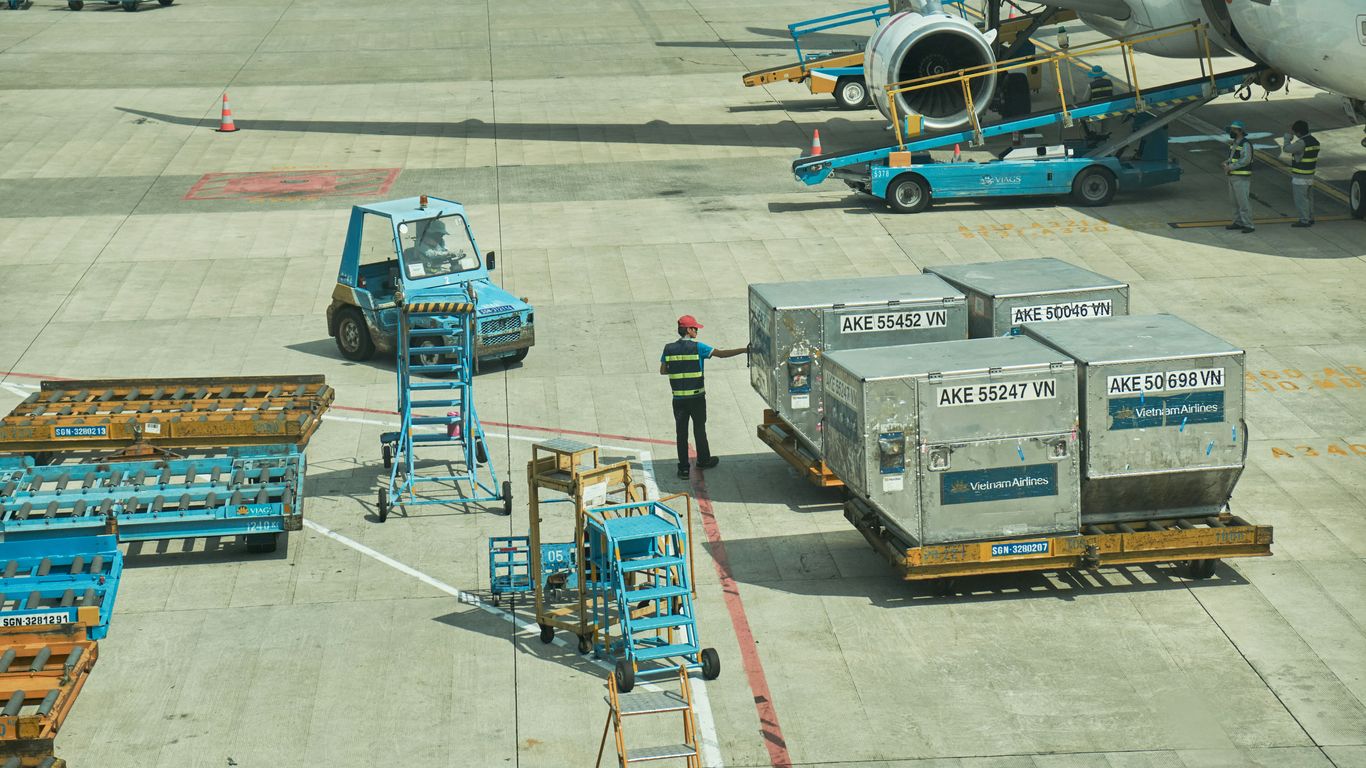
Express courier is convenient for small parcels and samples, but pricing and restrictions can make it unsuitable for larger or regulated consignments. Air freight generally offers a faster international movement option for urgent or high-value cargo, though airport handling and dimensional weight affect the total. Ocean freight is well suited to larger volumes, with LCL for shared space and FCL for a dedicated container. Rail may provide a middle position between air and sea on selected China-to-Europe or China-to-Russia routes.
The comparison should include pickup, export handling, origin charges, main transit, destination charges, customs, and final delivery. Kunpeng Freight covers air, sea, rail, road, and express options, so the decision can be made against the complete route rather than only the headline transport rate. The electronics shipping guide also provides a useful background comparison of air and sea approaches.
Use air freight for prototypes and urgent pilot runs
Air freight is often considered when the shipment is small, valuable, time-sensitive, or needed for a test window. It can reduce the time inventory spends in transit, but the premium must be weighed against the value of keeping engineers, customers, or a production line waiting. A prototype may justify that premium; a repeat order with flexible timing may not.
Confirm airport cutoffs, battery acceptance, packaging, and destination delivery before booking. If the cargo is not ready, or the documents are incomplete, paying for air service will not remove the underlying delay. The right comparison is the time from supplier handover to usable inventory, not only flight duration.
Select ocean freight for larger production shipments
Ocean freight becomes more attractive when cartons or pallets occupy enough volume to offset fixed origin and destination charges. LCL combines cargo with other shipments and can suit smaller production lots, while FCL reserves a container for one shipper. Both require attention to port cutoffs, container loading, moisture protection, and destination handling.
For larger orders, sea freight from China describes supplier pickup, consolidation, ocean transit, export documentation, and destination coordination as connected steps. The final choice should account for the delivery window and inventory carrying cost, not just the ocean rate.
Evaluate consolidated shipments against dedicated containers
Consolidation can combine goods from multiple suppliers and reduce the need to book unused container space. It also creates an additional receiving and checking stage, so every carton needs a reliable reference and the shipment needs a clear release plan. A dedicated container can simplify custody and loading when the volume, timing, and product mix justify it.
The decision becomes clearer when the shipment is modeled by total CBM, carton dimensions, supplier readiness, handling requirements, and destination fees. Do not compare an LCL quote with an FCL quote without checking whether both include equivalent services.
Balance transit time, cost, and delivery reliability
A useful freight decision records the acceptable arrival range, the financial impact of delay, the cargo’s handling sensitivity, and the costs that are excluded from the initial quote. Carrier schedules can change, and customs inspections can add uncertainty even when the export booking is correct. Build a reasonable buffer into pilot and production planning rather than treating the quoted transit range as a guarantee.
Keep a written reason for the selected mode. That record helps the next shipment start from evidence instead of habit, especially when demand, carton sizes, or destination requirements change.
Package and protect electronics in transit
Electronics can be damaged without visible crushing. Shock, vibration, moisture, static electricity, temperature changes, and loose internal parts all deserve attention. Packaging should protect the device through loading, transfers, warehouse handling, and final-mile delivery, not merely make the carton look secure at the factory. Test the proposed packing method before scaling a production order.

Prevent shock, moisture, static, and temperature damage
Use internal cushioning suited to the product’s weight and fragility, with no movement inside the retail or master carton. Add moisture protection where the route and packaging call for it, and use antistatic materials for sensitive components. Screens, connectors, switches, and exposed boards may need separate protection even when the main enclosure is strong.
Ask whether the product can tolerate stacking, vibration, and repeated handling. A packaging inspection should check seals, cushioning, carton strength, and pallet stability. Small changes made before dispatch are usually easier than filing a claim after delivery.
Handle lithium batteries and dangerous goods correctly
Battery shipments require accurate classification, packaging, labels, and supporting documents. Confirm whether batteries are installed in equipment, packed with equipment, or shipped separately, and provide the required technical information. The carrier and route may impose additional restrictions, especially for damaged, defective, or high-capacity batteries.
Never combine an undeclared battery with ordinary cargo to simplify a booking. Give the forwarder the battery type, quantity, watt-hour details, and relevant test documentation so the shipment can be assessed honestly. Special cargo may change the available mode, price, and departure schedule.
Design cartons and pallets for international transport
Carton design should reflect the product’s dimensions and the handling environment. Leave enough room for protective material without creating excessive empty volume, and make the outer cartons strong enough for stacking when required. Pallets should be stable, wrapped appropriately, and compatible with the destination’s receiving equipment and rules.
Before dispatch, compare the packed dimensions with the quotation. A revised carton size can change billable weight, CBM, pallet count, and even the practical freight mode. Record the final measurements, not the supplier’s earlier estimate.
Label serial numbers, quantities, and handling instructions
A receiving team should be able to identify every carton without opening it. Use model numbers, purchase-order references, carton sequence numbers, quantities, gross weight, and destination marks. Serial-number records are useful for high-value units, warranty control, and investigation when cartons arrive short or mixed.
Handling labels can reinforce orientation, fragile handling, moisture protection, and battery-related instructions where appropriate. They cannot replace compliant dangerous-goods marks or customs information. Labels should match the packing list so a physical inspection can be reconciled quickly.
Arrange cargo insurance and inspection checkpoints
Insurance should be considered against the cargo value, route, handling exposure, and exclusions in the policy. Confirm whether coverage begins at supplier pickup or at another handover point, and understand the evidence required for a claim. Photos taken during pickup, consolidation, loading, and delivery create a useful condition record.
Kunpeng Freight’s process can include cargo counts, photographs, and measurements before consolidation, which gives the shipper a clearer checkpoint record. Insurance does not prevent damage, but documented condition and packing details can make the response more orderly when an exception occurs.
Manage customs clearance and final delivery
International freight does not end when the vessel, aircraft, or train departs Shenzhen. Import documents, customs valuation, duties, taxes, brokerage, and delivery appointments all affect when inventory becomes available. The destination country’s rules and the importer’s registration status must be considered before the shipment is booked. A clear handoff between the forwarder, broker, and receiving warehouse prevents avoidable gaps.
Prepare import documents for the destination country
The destination file should contain the commercial invoice, packing list, transport document, product descriptions, HS codes, origin details, and any permits or conformity records that apply. Make sure names, quantities, values, and model references agree across documents. If the importer of record, broker, and delivery address differ, state those relationships clearly.
Some electronics require additional radio, safety, energy, or battery documentation. Requirements depend on the product and market, so verify them before dispatch rather than waiting for a customs query. Keep digital copies organized by shipment and purchase order.
Calculate duties, taxes, brokerage fees, and landed cost
Landed cost is broader than the international freight charge. Include supplier pickup, export documentation, origin handling, main transport, insurance, destination handling, customs brokerage, duties, taxes, storage, delivery, and possible inspection charges. Where a rate is provisional, identify the assumption behind it, such as weight, CBM, exchange rate, or classification.
A simple landed-cost model makes mode comparisons more useful. It also shows whether a faster shipment protects a launch date or whether a slower shipment is financially sensible for replenishment. Recalculate when carton dimensions, declared value, Incoterms, or destination fees change.
Understand DDP, DAP, FOB, and other Incoterms
DDP generally assigns more delivery and import responsibilities to the seller or arranging party, while DAP usually leaves import clearance and related charges with the buyer. FOB concerns delivery to the named port and export obligations, but it does not automatically mean the buyer has purchased a complete door-to-door service. EXW can leave the buyer responsible for substantial origin work.
Read the named place and the cost inclusions, not only the three-letter abbreviation. Ask who is importer of record, who pays duties and taxes, and where risk transfers. These answers should appear in the quotation and shipping instructions.
Coordinate customs clearance with warehouse delivery
The broker needs the documents before arrival, and the delivery team needs the release status, receiving hours, appointment rules, and precise address. Warehouses and fulfillment centers may impose carton, pallet, labeling, and booking requirements that differ from a normal business delivery. Confirm these details while the cargo is still at origin.
Kunpeng Freight coordinates import paperwork assistance and final delivery planning across the China-to-destination flow. That role is most useful when customs status, release instructions, and delivery scheduling are kept in one shipment record rather than passed between disconnected parties.
Track exceptions, delays, and damaged shipments
Tracking should show meaningful milestones: supplier pickup, cargo received, measurements confirmed, export documents submitted, departure, arrival, customs status, release, and final delivery. When a milestone changes, record the cause, responsible party, next action, and expected decision point. A delay without an owner tends to become a longer delay.
For damage or shortage, preserve photographs, carton numbers, seals, packing records, delivery receipts, and inspection notes. Notify the relevant carrier, insurer, supplier, and receiving team promptly. The objective is not only to resolve one shipment but also to identify whether the cause was packaging, handling, documentation, or inventory control.
Build a repeatable process to ship electronics from Shenzhen
A single successful shipment is useful; a repeatable one is far more valuable. Document the decisions that affected cost, timing, compliance, and receiving, then turn those decisions into checkpoints for the next order. The process should be practical enough for a small pilot and structured enough to support production volume. This is how a company can ship electronics from Shenzhen without rebuilding the plan every time.
Create a shipment workflow from factory to customer
Map the movement from purchase order approval to supplier release, pickup, inspection, consolidation if needed, export handling, main transport, customs clearance, and final delivery. Assign an owner to each stage and define the information required to move forward. Include a decision point for special cargo and a separate path for urgent or incomplete shipments.
A documented workflow also helps when several suppliers contribute to one order. The full logistics process provides an example of an end-to-end structure covering pickup, export documentation, multiple transport modes, import paperwork, and final delivery. Use the same logic internally, even if the actual route changes.
Set quality, documentation, and dispatch checkpoints
Set a pre-booking check for product details, a pre-pickup check for readiness and cartons, and a pre-dispatch check for measurements, labels, documents, and photos. These checkpoints should be short and consistent. They are not a substitute for product testing; they ensure that the cargo presented to the logistics chain matches the shipment plan.
For electronics, the checklist should also confirm battery status, packaging integrity, serial-number records, and destination-specific requirements. A shipment should not be released merely because the factory says it is ready if the supporting information is still incomplete.
Measure freight performance and total landed cost
Review actual results against the quote and plan. Useful measures include pickup accuracy, document corrections, time from cargo-ready to departure, customs holds, damage or shortage incidents, delivery appointment performance, and final landed cost. Separate carrier delays from supplier readiness problems and customs issues so the corrective action is relevant.
Keep the review factual. A higher freight charge may have been justified by an urgent pilot, while a recurring dimensional-weight surprise may indicate a packaging problem. The point is to improve decisions, not to reduce every shipment to one headline rate.
Improve forecasting for pilot and production volumes
Forecasting should include expected prototypes, pilot batches, production orders, reorder points, and seasonal demand. Share approximate volume and cargo-ready dates early enough to compare consolidation, air, sea, rail, or express options. If the product is still changing, identify which dimensions and battery details are provisional.
A forecast is not a promise. It is a planning signal that helps reserve capacity, coordinate suppliers, and identify when a small shipment is likely to become a larger one. Update it as engineering and sales information improves.
Choose a freight forwarding partner for long-term scaling
Assess a forwarder by how clearly it handles the ordinary details: supplier communication, pickup evidence, measurements, document review, special-cargo declarations, quote assumptions, customs coordination, and final delivery. Ask how exceptions are reported and who remains accountable when several parties are involved. A responsive team is useful, but responsiveness should be supported by a visible operating process.
Kunpeng Freight positions its service around one accountable China-to-destination flow, including supplier pickup, cargo inspection and consolidation, export handling, multiple freight modes, import paperwork assistance, customs documentation support, and final delivery coordination. For an importer, that scope is worth evaluating against the shipment’s actual route and requirements rather than assuming every service is needed for every order.
A Practical Next Step
When your product details, packing information, and destination responsibilities are ready, send them to a freight forwarding team for a route-specific review. A clear quote should explain the selected mode, assumptions, included services, and charges that may vary after final measurements or customs assessment.
Conclusion
Moving electronics from prototype to production requires a freight plan that changes with volume while keeping documentation, cargo protection, and delivery ownership consistent. Confirm the product facts first, choose the mode against the real deadline and landed cost, and use checkpoints to make every shipment easier to repeat.
Frequently Asked Questions
What information is needed to ship electronics from Shenzhen?
Provide the product description, model, quantity, carton count, dimensions, gross weight, CBM, supplier pickup address, destination address, cargo-ready date, and preferred freight method. Declare batteries, wireless functions, magnets, liquids, and other regulated components at the quotation stage.
Is air freight or sea freight better for electronics?
Air freight is commonly considered for smaller, urgent, or high-value shipments, while sea freight is often more cost-efficient for larger volumes. The appropriate choice depends on timing, volume, handling requirements, route, and total landed cost.
Can electronics with lithium batteries be shipped internationally?
Many can be shipped, but the available method depends on the battery type, watt-hour rating, installation status, packaging, route, carrier rules, and required documents. Accurate declarations and compliant labels are essential.
What is the difference between LCL and FCL shipping?
LCL, or less than container load, combines your cargo with other shipments. FCL, or full container load, uses a dedicated container. Compare them using volume, fixed charges, handling exposure, readiness dates, and destination costs.
How should electronics be packaged for export?
Use cushioning that prevents movement, antistatic protection where needed, moisture control appropriate to the cargo, strong outer cartons, and stable pallets. Confirm the final packed dimensions and test the packaging before a larger production run.
Who pays customs duties and taxes?
The answer depends on the agreed Incoterm, named place, and importer-of-record arrangement. Confirm in writing who handles import clearance and who pays duties, taxes, brokerage, storage, and delivery charges.
How can shipment delays or damage be managed?
Track operational milestones, assign an owner to each exception, and preserve photos, carton numbers, packing records, delivery receipts, and inspection notes. Early reporting gives the carrier, broker, supplier, and insurer better evidence for resolution.