Key Takeaways
Weihai can be a practical starting point for buying fishing tackle, but successful importing depends on more than finding a factory. Product specifications, cargo preparation, freight selection, and destination-country compliance should be planned together.
- Weihai offers access to fishing rods, reels, lines, lures, hooks, and related accessories from specialized suppliers.
- Supplier checks should cover factory capability, samples, quality controls, packaging, and export experience.
- Ocean, LCL, air, express, rail, and multimodal freight each suit different cargo profiles.
- Accurate dimensions, weights, documents, and Incoterms make freight quotations more useful.
- Consolidation and early documentation review can reduce avoidable handling and customs problems.
Why Weihai is a strategic sourcing hub for fishing tackle
Weihai is widely associated with fishing tackle production and supporting businesses in Shandong. For international buyers, that concentration can make it easier to compare factories, develop private-label products, and assemble mixed orders. The commercial advantage is not automatic, however; supplier capability and shipment planning still determine the final result.
Weihai’s fishing tackle manufacturing ecosystem
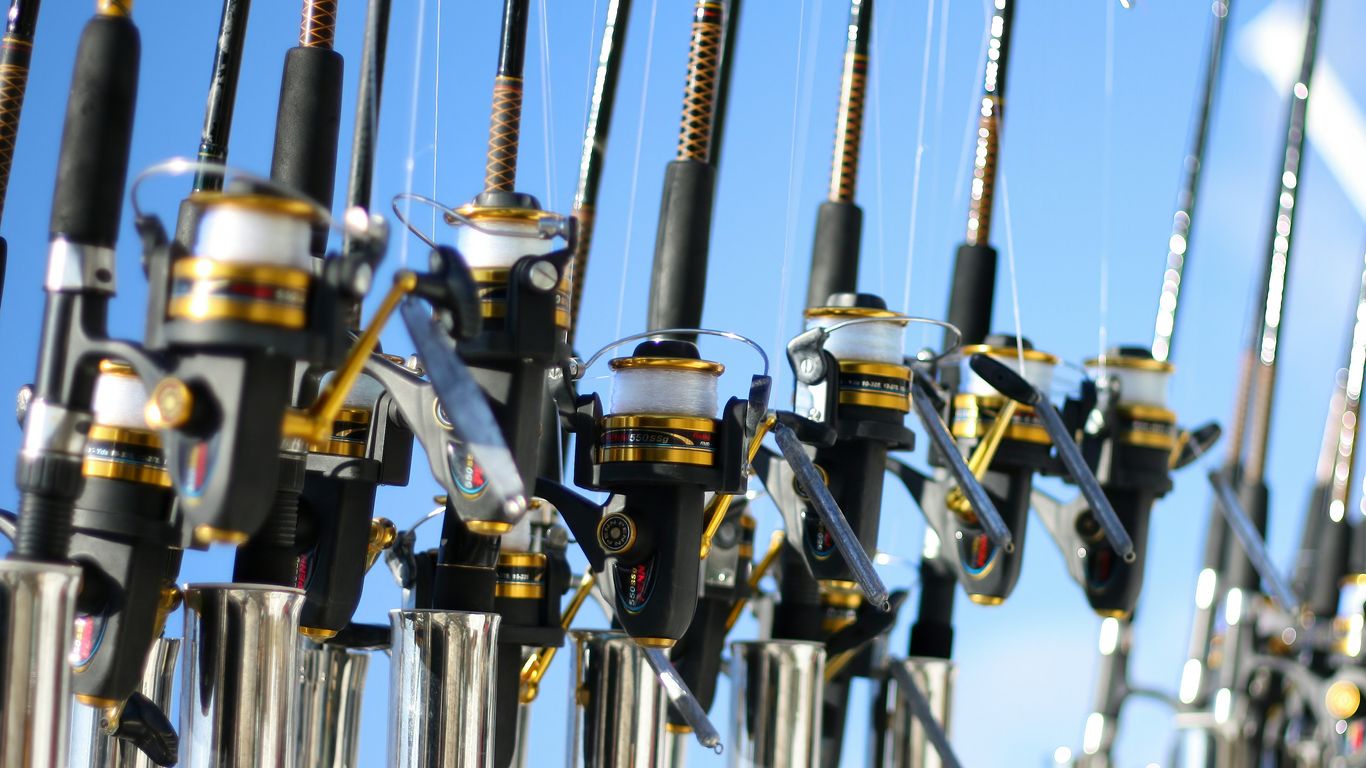
The local ecosystem includes factories, component suppliers, trading companies, and exporters serving different parts of the fishing market. Some businesses focus on rods or reels, while others supply terminal tackle, lines, lures, tools, and packaging. Buyers should confirm whether a prospective partner manufactures the item, coordinates production through other factories, or mainly handles export sales.
A useful starting point is to compare the supplier’s product catalogue with its actual equipment, staffing, and inspection process. Fishing tackle suppliers may offer OEM or ODM arrangements, but those terms should be defined in writing rather than treated as proof of production depth.
Product categories available from local suppliers
Depending on the supplier, buyers may find rods, reels, fishing line, hooks, snaps, bait accessories, lures, knives, cases, and other related equipment. The correct category mix depends on the intended market and the technical requirements of each product. A reel order, for example, needs different checks from a long, fragile rod shipment.
Product descriptions should state materials, dimensions, finishes, performance requirements, colours, logo placement, and included accessories. Avoid relying on a catalogue photograph alone, particularly when several models look similar but use different components.
Benefits of consolidating purchases in Weihai
Purchasing from several nearby suppliers may allow a buyer to combine goods before export rather than arranging separate international shipments. Consolidation can simplify receiving, carton counting, export paperwork, and delivery planning, though it also introduces a need for coordinated cargo readiness.
The forwarder should receive each supplier’s address, contact person, carton details, and expected ready date. A warehouse receiving plan can then match delivered cartons to the purchase order and identify shortages or visible damage before international dispatch.
When direct factory sourcing may not be the best fit
Direct sourcing is not always suitable for small, highly customized, or technically regulated orders. A trading company or sourcing agent may be more practical when the buyer needs several product categories, modest quantities, translation support, or one commercial contact for multiple factories.
The decision should be based on total landed cost and management effort, not only the factory quotation. Buyers should also account for sample fees, moulds, packaging artwork, inspections, domestic collection, consolidation, and the time required to resolve discrepancies.
How to identify and evaluate fishing tackle suppliers
Supplier evaluation should begin before freight is booked. A forwarder can coordinate collection and documents, but the importer remains responsible for confirming that the goods match the purchase agreement and destination requirements. A short, documented review is usually more useful than a long list of unverified claims.

Finding manufacturers, exporters, and sourcing agents
Search through trade platforms, industry directories, referrals, and local sourcing contacts, then request a complete company profile. Ask for the legal company name, factory or warehouse address, principal products, export markets, payment terms, and the name of the person responsible for quality and shipping.
A sourcing agent may be helpful when several factories must be compared, but the agent’s fee, authority, and responsibility for defects should be clear. Do not assume that a polished online listing proves ownership of production equipment.
Checking factory capabilities and product specialization
Request photos or videos of relevant production areas, packaging lines, warehouses, and inspection stations. More importantly, ask questions that relate directly to the order: monthly capacity, material sources, tooling ownership, model change controls, and the process for handling rejected components.
For rods, inspect blank construction, guides, ferrules, finishes, and protective packaging. For reels, review body materials, drag components, handle attachment, corrosion considerations, and functional testing. The supplier should be able to explain what it controls internally and what it purchases from subcontractors.
Reviewing certifications, quality systems, and export experience
Certificates should be checked for the correct legal entity, product scope, validity, and issuing organization. Depending on the destination and product, the buyer may also need test reports, material declarations, labelling information, or evidence of previous export shipments.
The review should include references to comparable products and destinations, not just a general statement that the supplier exports worldwide. Keep copies of approvals and agreed specifications with the purchase file so that production, inspection, and customs information remain consistent.
The same habit of checking scope and terms is useful in other research contexts, whether reviewing privacy practices, sports streaming options, bathroom remodeling services, charitable giving models, or children’s books. The subject changes, but the need to distinguish a documented service from an assumption remains.
Comparing quotations beyond the unit price
A useful quotation separates product cost from tooling, packaging, inland transport, export charges, and freight. It should also identify the currency, payment schedule, validity period, production lead time, inspection terms, and Incoterm.
| Quotation item | Why it matters | What to confirm |
|---|---|---|
| Product price | Establishes the manufacturing cost | Model, material, finish, and quantity |
| Packaging | Affects protection and chargeable volume | Carton dimensions and inner protection |
| Inland collection | Covers movement to the consolidation point | Pickup address and loading conditions |
| Export and freight charges | Determines the transport budget | Port, mode, route, and destination charges |
| Inspection or rework | Controls quality-related exposure | Scope, timing, and responsibility |
After comparing these lines, calculate a provisional landed cost for the actual order. This is more reliable than selecting the supplier with the lowest unit price and discovering later that packaging, collection, or destination fees were excluded.
How to prepare fishing tackle orders for international shipment
Good freight planning begins with a cargo file that is specific enough for a carrier and customs broker to understand. Fishing tackle can vary widely in dimensions, materials, value, and fragility, so generic carton estimates are rarely sufficient. Share updates when production changes the packing method or ready date.
Defining specifications, quantities, and packaging requirements
Create a purchase-order schedule listing each SKU, description, quantity, unit price, net weight, gross weight, carton count, and carton dimensions. Add product photographs or drawings where models could be confused. For rods, record packed length and protection requirements; for reels and small accessories, record inner-pack quantities and stacking limits.
Packaging should prevent bending, abrasion, crushing, and moisture exposure. Ask the supplier to confirm whether cartons are suitable for palletizing and whether mixed SKUs will be separated and marked clearly.
Ordering samples and conducting pre-production checks
A pre-production sample establishes a physical reference for colour, dimensions, assembly, finish, and packaging. Record the approved sample number and keep photographs of details that may be difficult to describe in words.
Pre-production checks should confirm the bill of materials, artwork, carton markings, and inspection standard. If the order is large or customized, an independent inspection before final payment can identify recurring defects while corrective action is still possible.
Managing private-label, customization, and minimum order quantities
Private-label orders require written approval of logos, labels, packaging artwork, barcodes, warnings, and ownership of tooling or moulds. Minimum order quantities may apply separately to the product, colour, logo, packaging, or a new component.
Discuss these limits before approving the quotation. A smaller first order may reduce inventory exposure but could carry higher unit costs or prevent full customization. The right balance depends on expected demand, testing requirements, and the cost of a later correction.
Creating a production and inspection timeline
Work backward from the required arrival window, allowing time for production, inspection, domestic pickup, consolidation, export clearance, transit, and destination delivery. Carrier schedules and customs reviews can change, so a buffer is more sensible than planning against a single promised date.
A practical order timeline includes the following checkpoints:
- Specification and artwork approval
- Sample approval and purchase-order release
- Production completion and inspection
- Carton measurement, pickup, and warehouse receiving
- Export booking, document review, and final dispatch
This sequence gives the buyer and forwarder clear handoff points. It also makes it easier to explain where a delay occurred if the cargo is not ready as planned.
Choosing the right freight solution from Weihai
The suitable mode depends on volume, urgency, cargo value, dimensions, destination, and documentation. A full container may provide control for a large order, while mixed cartons may be better suited to LCL or a consolidated shipment. Rates and schedules must be checked against current cargo details rather than assumed from an earlier quotation.
Ocean freight for full-container and large-volume orders
Ocean freight is generally considered for large or less time-sensitive orders, especially when cartons or pallets can be loaded efficiently. FCL provides a dedicated container, while the economics of that option depend on how much space the cargo actually uses and the route available.
Before booking, confirm container type, loading date, cargo readiness, gross weight, packing method, and destination delivery requirements. A forwarder should also explain origin handling, documentation, port charges, and the destination costs that are not included in the ocean rate. Sea freight options can be compared using these real shipment details.
Less-than-container-load shipping for mixed cargo
LCL can suit orders that do not fill a container or that combine cartons from several suppliers. The cargo is handled through a consolidation process, so accurate marks, carton counts, and measurements are especially important.
The buyer should ask about warehouse receiving deadlines, minimum chargeable volume, origin handling, consolidation fees, deconsolidation, and destination delivery. LCL may be practical for a first order, but repeated small shipments should be reviewed against a larger consolidated or FCL plan.
Air freight and express delivery for urgent or lightweight shipments
Air freight may be appropriate for urgent stock, samples, high-value goods, or cargo with a favourable value-to-weight ratio. Express delivery is usually considered for smaller parcels when speed and simplified handling matter more than the transport cost.
Measure and weigh the finished cartons because chargeable weight may be calculated by volume rather than scale weight. For a comparison of air services and supplier pickup, air freight planning provides a useful reference point without replacing a shipment-specific quote.
Rail and multimodal options for selected destinations
Rail or multimodal transport may suit selected routes, particularly where the destination, cargo volume, and timing make it a middle option between ocean and air. Availability, border procedures, terminal handling, and final-mile arrangements vary by route.
Ask for the complete route and service scope rather than comparing only a headline transit estimate. Rail freight planning can help frame questions about consolidation, customs, and delivery for suitable European or Russian destinations.
How to ship fishing tackle from Weihai efficiently
To ship fishing tackle from Weihai efficiently, treat the movement as one connected workflow from supplier handover to final delivery. The forwarder needs verified cargo data, while the buyer needs visibility into receiving, booking, documents, and exceptions. Small errors at pickup can become expensive corrections after loading.
Selecting the right export port and inland transport plan
The export plan should identify the collection points, loading date, port or terminal, cargo handover terms, and whether the shipment will be consolidated. Weihai-origin cargo may require an inland movement that affects cost and schedule, so compare the full route rather than assuming the nearest port is the best choice.
Provide supplier addresses and loading restrictions early. A coordinated China freight service can align pickup, export documentation, consolidation, and final delivery within one operating plan.
Consolidating rods, reels, lines, lures, and accessories
Mixed tackle orders need a receiving procedure that separates SKUs and records carton condition. Long rods should be kept away from heavy cartons where possible, while small reels, lines, and accessories should be counted against the packing list.
Ask the warehouse to photograph received cargo, record measurements, and report missing or damaged cartons before export booking. This creates evidence for supplier follow-up and gives the forwarder more accurate information for the final quote.
Matching Incoterms to your level of logistics control
EXW may leave the buyer responsible for more origin arrangements, while FOB generally places the seller’s delivery obligation at the named port under the agreed terms. CIF includes certain freight and insurance responsibilities but does not automatically cover every destination charge or import obligation.
The term should match the buyer’s experience, supplier relationship, and ability to coordinate pickup and export work. Review Incoterms guidance alongside the quotation so that responsibilities are understood before payment and booking.
Planning around sailing schedules, transit times, and peak seasons
Transit time is only one part of the schedule. Production readiness, warehouse cutoffs, port congestion, vessel changes, holidays, customs inspections, and destination delivery appointments can all affect the final arrival date.
Build a realistic buffer and ask for milestone updates at cargo receipt, booking confirmation, loading, departure, arrival, customs release, and delivery. Where stock is tied to a promotion or seasonal fishing demand, split urgent replenishment from the main order instead of rushing the entire shipment.
Customs, documentation, and product compliance
Customs clearance depends on accurate product descriptions, classification, valuation, origin information, and destination-country rules. Fishing tackle should not be described only as “fishing goods” if the shipment contains several distinct product types. Early document review gives the importer time to correct inconsistencies before cargo arrives.
Commercial invoices, packing lists, and bills of lading
The commercial invoice should identify the seller, buyer, product descriptions, quantities, values, currency, Incoterm, and country of origin. The packing list should reconcile SKU quantities, cartons, weights, dimensions, and marks. The bill of lading or airway bill must match the shipping instructions and consignee details.
Check spelling, addresses, carton counts, and declared values across every document. If supplier invoices and the final shipping file disagree, customs or the carrier may request clarification and delay release.
Import duties, taxes, and customs valuation
Duty and tax depend on the destination, product classification, origin, customs value, and local rules. Rods, reels, line, hooks, lures, and tools may not share the same classification, so use the importer’s broker or customs adviser where the code is uncertain.
Do not estimate landed cost from freight alone. Include origin handling, documentation, insurance, duty, tax, brokerage, port or terminal charges, storage, delivery, and possible inspection-related costs.
Material and labeling requirements for fishing products
Labels may need product identity, materials, quantity, country of origin, importer details, warnings, or language required by the destination market. Materials such as metals, plastics, rubber, coatings, and adhesives should be documented when regulations or buyer policies require disclosure.
Confirm labelling before production, especially for private-label goods. Changing labels after manufacture can create rework, relabelling, or disposal costs that were avoidable with an approved artwork file.
Special considerations for batteries, chemicals, and restricted components
Some tackle-related shipments may include batteries, liquids, adhesives, oils, magnets, or chemical treatments. These items can affect carrier acceptance, packing, marks, declarations, and the documents needed for transport.
Declare unusual components before requesting a final rate. A restricted-cargo review should be completed before pickup, since restricted cargo support may require product details, safety data, photographs, and packaging information.
Controlling landed costs and reducing shipping risks
Landed cost is the amount required to move compliant goods from the supplier to the intended delivery point. Freight is only one line in that calculation. A shipment can have a reasonable product price and still become uneconomic if cartons are oversized, documents are incomplete, or destination charges were omitted.
Calculating freight, handling, insurance, and destination charges
Request an itemized quotation based on confirmed carton dimensions, gross weight, cargo value, pickup address, destination address, and required service. Compare the same scope across options so an ocean quote with destination delivery is not mistaken for a port-only rate.
A working cost sheet should include product cost, domestic transport, consolidation, export handling, freight, insurance, duty, tax, customs brokerage, destination handling, storage risk, and final delivery. Landed cost guidance can help structure this review before an order is released.
Protecting rods, reels, and fragile components during transit
Long rods need rigid or reinforced packaging with adequate end protection and separation from heavy cartons. Reels and metal components should be immobilized and protected from abrasion, while lines and small accessories should be packed to prevent loose movement and counting errors.
Ask for photos of the finished load or warehouse condition where practical. Packaging changes should be approved before dispatch, because adding protection at the warehouse may change dimensions and chargeable weight.
Using cargo insurance and documenting shipment conditions
Insurance decisions should reflect the cargo value, fragility, route, contract terms, and exclusions. Keep commercial invoices, packing lists, inspection records, photographs, and receiving notes together with the policy information.
If damage is found, record it immediately with clear photographs, carton marks, quantities, and delivery remarks. Do not discard packaging before the carrier, insurer, or supplier has had a reasonable opportunity to inspect the evidence.
Tracking delivery performance and resolving freight exceptions
Track milestones rather than relying on a single estimated arrival date. Useful records include pickup completion, warehouse receipt, booking, loading, departure, transshipment where relevant, arrival, customs status, and final delivery.
When an exception occurs, ask what happened, which party controls the next step, what documents are needed, and when the next update will be provided. A structured workflow such as shipment coordination helps keep supplier, forwarder, broker, and consignee responsibilities visible.
Conclusion
Sourcing in Weihai can work well when procurement and logistics are planned as one process. Verify the supplier, approve the product and packaging, measure the finished cargo, compare freight modes, and prepare destination documents before dispatch. For a shipment-specific review of pickup, consolidation, freight, or delivery requirements, request a shipping quote with the supplier address, cargo details, destination, and preferred timing.
Frequently Asked Questions
Is Weihai suitable for sourcing fishing tackle?
Weihai is a recognized fishing-tackle manufacturing area with suppliers covering categories such as rods, reels, line, lures, hooks, and accessories. Suitability depends on the product specification, order size, supplier capability, and destination requirements.
How should I verify a fishing-tackle supplier?
Check the supplier’s legal identity, production or warehouse address, relevant equipment, product specialization, sample quality, inspection process, export history, and references. Confirm that certificates and test reports apply to the correct company and product.
What information is needed for a freight quote?
Provide the pickup address, destination, product description, carton count, dimensions, gross weight, cargo value, ready date, and preferred transport mode. Declare batteries, liquids, chemicals, magnets, or other unusual components at the quotation stage.
Should fishing tackle ship by sea or air?
Sea freight is often considered for larger or less urgent orders, while air or express may suit urgent, lightweight, high-value, or sample shipments. The decision should account for volume, chargeable weight, urgency, route, destination charges, and customs requirements.
Can orders from multiple Weihai suppliers be consolidated?
They can often be consolidated when suppliers deliver to a coordinated warehouse or loading point. The plan should include supplier addresses, ready dates, carton marks, packing lists, and receiving checks so all cargo is accounted for before export.
What documents are commonly required?
Common documents include a commercial invoice, packing list, bill of lading or airway bill, and any certificates, declarations, permits, or test reports required by the destination. Product descriptions and quantities should match across the shipping file.
How can I reduce damage during fishing-tackle shipping?
Use packaging matched to the product: rigid protection for long rods, immobilization and abrasion protection for reels, and organized inner packs for small accessories. Inspect or photograph cargo at receipt and record visible damage before international dispatch.