
Key Takeaways
Jinjiang offers a deep footwear manufacturing network, but successful importing depends on more than finding a factory.
- Vet suppliers through documents, samples, production checks, and clear commercial terms.
- Prepare accurate product, packing, invoice, origin, and HS-code information before pickup.
- Match air, sea, rail, multimodal, or express shipping to the shipment’s volume and urgency.
- Confirm how cargo will move through regional gateways such as Xiamen and who handles each document.
- Calculate landed costs and plan for inspections, delays, damage, shortages, and claims.
1. Why Jinjiang is a strategic footwear sourcing hub
Jinjiang, in Fujian, has developed an unusually complete footwear ecosystem. Materials, component suppliers, molds, stitching, assembly, packaging, and export services can often be found within the same wider manufacturing region. That density gives brands more opportunities to compare suppliers and coordinate product development. It also means that careful verification matters, because a large cluster contains factories with very different capabilities.
A useful starting point is this Jinjiang footwear overview, which describes the city’s broad manufacturing base and material supply chain. The figures commonly cited for local production are estimates rather than a guarantee for any individual factory, so buyers should focus on the supplier and order they can actually verify.
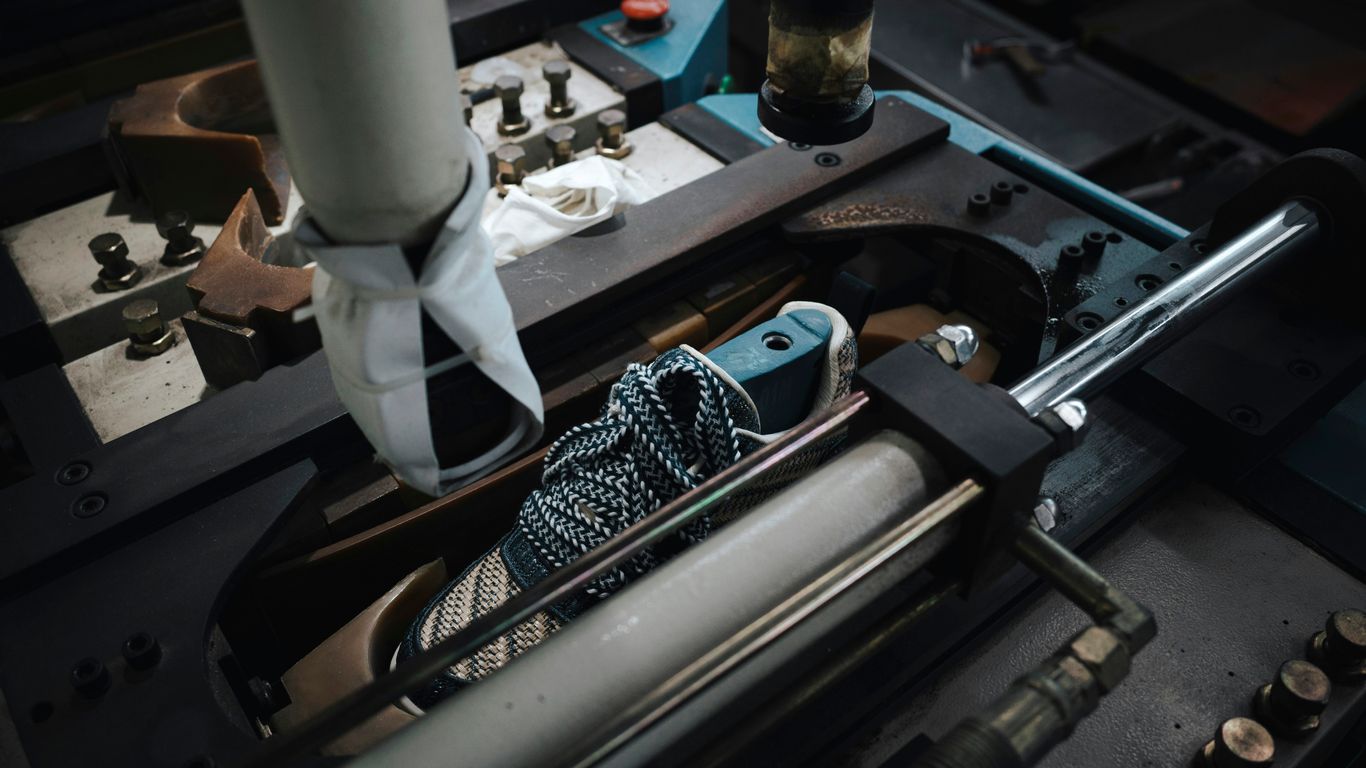
From manufacturing clusters to export-ready suppliers
The advantage of a cluster is practical: a brand may source rubber, EVA foam, mesh, synthetic leather, textiles, soles, packaging, and other inputs through nearby vendors. A factory can then coordinate cutting, stitching, lasting, sole attachment, finishing, and packing without building every capability internally. This can shorten communication paths during sampling, although it does not remove the need to confirm who owns each step.
Export readiness is a separate question. Ask whether the supplier has handled commercial shipments to your destination, can provide consistent carton information, and understands the documents your customs authority expects. A supplier’s location in Jinjiang is useful context, not proof of reliable export performance.
Footwear categories and production capabilities
Jinjiang is strongly associated with sports shoes and sneakers, including private-label and performance-oriented projects. Capability may include different upper materials, sole constructions, molded components, logo application, and custom packaging. The right fit depends on the design: a factory experienced with a simple textile upper may not be suitable for a technical sole or a complex layered construction.
Review the factory’s recent samples, equipment, and production photos against your specification. Jinjiang Xinchen Shoes Trade Co., Ltd. is one example of a supplier listing that describes sports-shoe manufacturing and custom services; treat such listings as leads to verify, not as independent proof of quality.
Benefits for emerging and established brands
A local network can help an emerging brand move from a drawing to a sample while keeping several component options open. Established brands may benefit from supplier comparison, split production, and consolidation when different factories make uppers, accessories, or packaging. The commercial benefit is usually flexibility rather than a guaranteed lower price.
For a new project, document the target retail market, expected order size, acceptable substitutions, testing requirements, and delivery window before requesting quotations. Clear inputs reduce avoidable revisions when the supplier, inspector, and forwarder review the same order.
Common sourcing challenges to anticipate
The same density that makes Jinjiang attractive can make sourcing confusing. A trading company may represent several factories, a factory may subcontract a process, and a catalog sample may not reflect the construction offered in your quotation. Material substitutions, inconsistent sizing, unclear ownership of molds, and incomplete carton data can all affect the eventual shipment.
Keep your research file disciplined. Separate supplier evidence from unrelated reference pages such as LANLocksmith.com, Shopify, NYC moving costs, California Appliance Repair, and Biome & Beyond terms. Those pages do not establish footwear capability, licensing, or export experience.
2. How to find and vet footwear suppliers in Jinjiang
Finding a supplier is only the first stage; the harder task is deciding whether its stated capability matches your order. Compare factories, trading companies, and sourcing agents using the same written brief. Request evidence in a form that can be checked later, rather than relying on a polished catalog or a verbal assurance.
The China Market & Suppliers archive provides broader sourcing context, including supplier evaluation and import considerations. Use that kind of general guidance alongside direct records from the businesses you are considering.
Using factories, trading companies, and sourcing agents
A direct factory may provide closer control over production, while a trading company may coordinate several factories or offer a wider catalog. A sourcing agent can help with communication, factory visits, sampling, and inspection, but you should clarify its fee, authority, and relationship with the supplier. Ask every party to identify the legal contracting entity and the location where your shoes will actually be made.
Do not assume that one structure is automatically better. The useful question is whether the arrangement gives you clear responsibility for quality, payment, production changes, and export paperwork.
Checking licenses, certifications, and export experience
Request the company’s business license, registered name, address, bank details, and export history where available. Certifications should be relevant to the product and destination, current, and traceable to the named entity. If your market requires testing for materials, labeling, chemicals, or children’s products, agree on who will arrange and pay for it before production.
Check that the name on the quotation, contract, invoice, and payment account is consistent. A mismatch may be explainable, but it should be documented before money changes hands.
Evaluating samples, materials, and production quality
A sample should be assessed against a written specification, not just general appearance. Check dimensions, sizing, stitching, bonding, sole hardness, odor, color, logo placement, insole details, and packaging. Keep an approved reference sample or signed specification so that production inspection has a defined comparison point.
Ask how defects are classified and what happens when a batch falls outside tolerance. A sample approval is not a substitute for in-process or pre-shipment inspection, particularly when materials or construction are new.
Confirming minimum order quantities and customization options
Minimum order quantities can vary by color, size run, material, sole mold, and packaging. Confirm whether the quoted MOQ applies per style, color, or total order, and ask which costs are one-time charges. Custom logos, brand names, designs, molds, and packaging should be described in writing, including ownership and approval stages.
Request a simple production summary covering these points:
- MOQ by style, color, and size range.
- Sample fee, mold fee, and whether either is refundable.
- Expected sample and bulk-production lead times.
- Accepted payment terms and balance trigger.
- Inspection standards and remedy for rejected goods.
This list gives the supplier a concrete way to answer and gives you a record for comparing quotations. It also exposes vague assumptions before they become shipping problems.
3. What to prepare before you ship sneakers from Jinjiang, Fujian
The handover from factory to forwarder should be planned before the goods are finished. When you ship sneakers from Jinjiang Fujian, the forwarder needs more than a product name: it needs the pickup address, cargo-ready date, carton count, dimensions, weights, destination, and commercial documents. Small discrepancies can affect booking, customs review, and the final invoice.
A shipping documentation guide can help organize export and import paperwork, but destination-specific requirements still need confirmation with the importer, broker, or customs authority. Treat the shipping file as part of the product order, not as an afterthought.
Finalizing product specifications and packaging
Before booking transport, freeze the style, color, size breakdown, materials, labels, accessories, and packaging. Record the number of pairs per inner box and carton, carton dimensions, gross and net weight, and any pallet details. If the supplier changes the carton size after the quote, ask the forwarder to recalculate chargeable volume.
Footwear cartons should be dry, strong enough for stacking, and marked consistently with the packing list. Photograph the finished cartons and palletization when practical, especially for a first order.
Building a commercial invoice and packing list
The commercial invoice should identify the seller, buyer, consignee, product description, quantity, unit value, currency, total value, and trade terms. The packing list should reconcile cartons, pairs, sizes or SKUs, net weight, gross weight, and dimensions. Avoid descriptions that are too vague for customs, such as “shoes” without a meaningful product description.
Read both documents against the purchase order. A forwarder can review obvious inconsistencies, but the importer remains responsible for supplying truthful commercial information and confirming the destination requirements.
Confirming HS codes and country-of-origin details
HS classification affects customs treatment, duty assessment, and documentation. Footwear classification may depend on construction, upper and outer-sole materials, and other product details, so do not select a code solely from a supplier’s old invoice. Confirm the code with a qualified customs professional or the relevant authority when the value or risk justifies it.
Country of origin should reflect where the goods underwent the applicable substantial manufacturing process. Keep supporting production and supplier records if origin claims, marking, or preferential treatment may be reviewed.
Aligning production completion with the shipping schedule
A booking made before the cargo is genuinely ready can create storage, amendment, or missed-cutoff costs. Ask the supplier for a realistic completion date, then leave time for final inspection, corrections, carton measurement, pickup, export handling, and the carrier schedule. Seasonal demand and port or airline capacity can change the plan.
Share updates when quantities or dimensions change. That allows the forwarder to revise the mode comparison before cargo is collected rather than after a booking has been issued.
4. Choosing the right freight forwarding method
There is no universal best method for footwear. The decision depends on order volume, carton density, cash-flow needs, launch date, destination, customs requirements, and tolerance for schedule variation. Compare a complete door-to-door estimate rather than looking only at the first transport leg.
A practical freight forwarding comparison can help frame the decision around modes, Incoterms, HS codes, and customs preparation. For a route-specific quote, use verified cargo details rather than an estimate based only on the number of pairs.
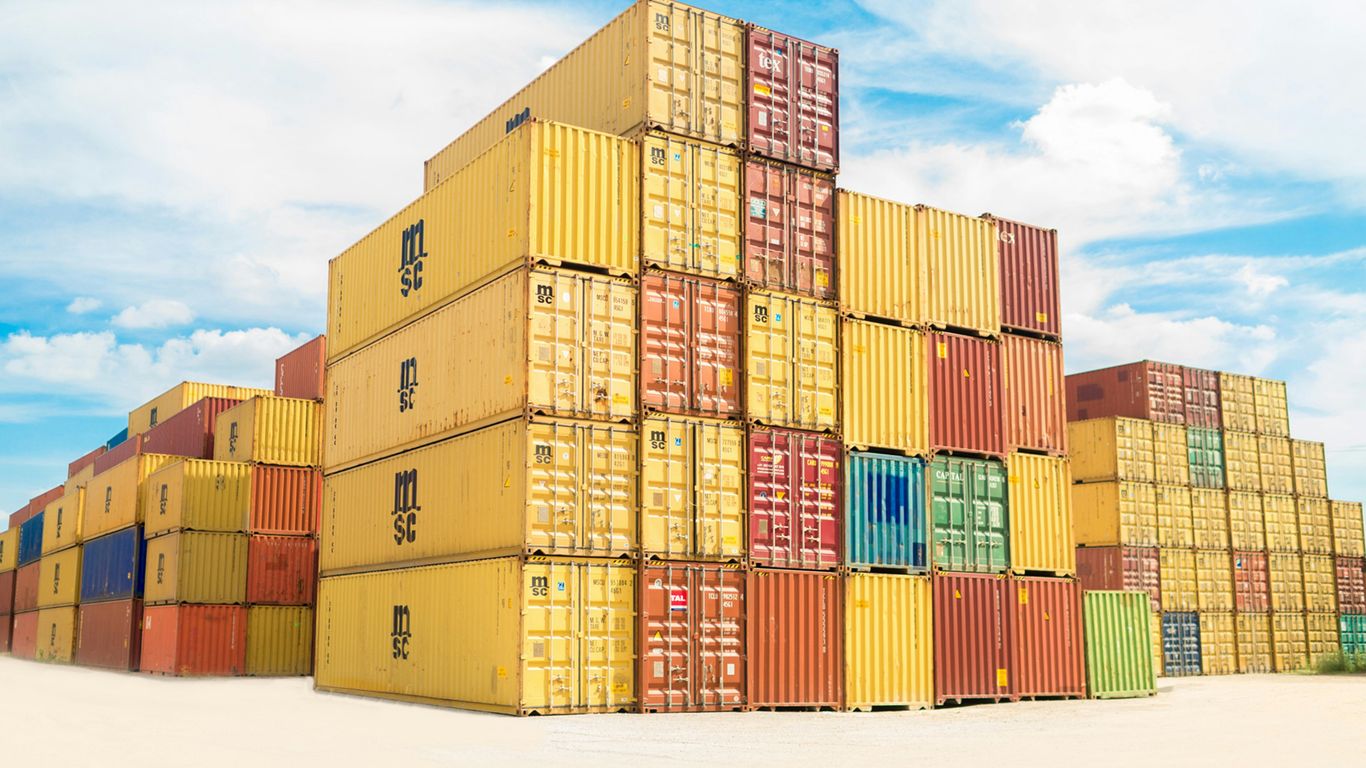
Comparing air freight, sea freight, rail, and multimodal shipping
Air freight is generally useful when speed and moderate volume justify a higher transport cost. Sea freight suits larger consignments when the schedule allows ocean transit, with FCL and LCL options depending on volume. Rail can be relevant on suitable China-to-Europe corridors, while multimodal routes combine modes to balance geography, capacity, and timing.
The quote should state origin handling, export fees, destination charges, customs scope, delivery terms, and any exclusions. Transit ranges are indicative because carrier schedules, congestion, weather, inspections, and destination handling can change the outcome.
When express shipping makes sense for samples and small orders
Express courier is often practical for samples, approvals, replacement pairs, and small urgent orders. It reduces the number of handoffs for a small parcel, but the price may rise quickly with multiple shoe boxes or dimensional weight. Confirm whether duties and taxes are included and who will act as importer.
For larger sample programs, compare express with air freight or consolidation. The faster option is not always the most cost-efficient once carton volume and destination charges are included.
Balancing delivery speed, cost, and shipment volume
A simple comparison table makes trade-offs easier to discuss with your supplier and finance team:
| Method | Typical fit | Main cost driver | Main planning concern |
|---|---|---|---|
| Express courier | Samples and urgent small parcels | Chargeable weight and surcharges | Customs data and recipient availability |
| Air freight | Time-sensitive commercial cartons | Actual or dimensional weight | Airport handling and capacity |
| Sea freight | Larger LCL or FCL orders | Volume, container, and destination fees | Longer transit and cutoff dates |
| Rail or multimodal | Suitable corridor and schedule | Route, volume, and terminal handling | Corridor availability and transfers |
Use the table as a first screen, then request itemized figures for the actual cartons. A method that looks attractive by transit time may be less suitable after pickup, customs, handling, and final delivery are included.
Selecting a forwarder with footwear-handling experience
Ask how the forwarder measures cartons, checks counts, handles supplier handover, consolidates goods, and manages damaged or short cargo. Experience with footwear is useful because cartons often contain many SKUs, size runs, and retail boxes that can be crushed or mixed during handling.
Kunpeng Freight provides China shipping services covering air, sea, rail, road, and express freight, with coordination from supplier pickup through final delivery. The relevant service should still be selected from your cargo details, route, and timing rather than assumed in advance.
5. How freight forwarding works from Jinjiang
A forwarding workflow is a chain of controlled handoffs. It begins with supplier information and cargo verification, continues through pickup and export handling, and ends with customs, delivery, and confirmation at the receiving address. Clear ownership at each stage helps prevent a missing document from becoming a missed sailing or flight.
The most useful updates identify what has happened, what is waiting, and what decision is required from you. That is more actionable than a tracking label alone.
Pickup and consolidation at the supplier’s facility
The forwarder confirms the factory address, contact person, cargo-ready date, carton count, and pickup instructions. At collection, the team may count cartons, photograph marks, and record measurements and weights. If several suppliers are involved, cargo can be brought together for consolidation, subject to compatibility and documentation.
Kunpeng Freight coordinates supplier pickup and consolidation as part of its China-to-destination logistics scope. Before pickup, provide the purchase order or packing list so the collected cargo can be matched to the expected shipment.
Moving cargo through Xiamen and other regional gateways
Jinjiang cargo may move by truck to a suitable regional gateway, including Xiamen, before the international leg. The choice depends on the booked mode, carrier schedule, cargo characteristics, and destination. Local trucking is not the same as international transit, so ask when the cargo leaves the supplier, reaches the gateway, clears export procedures, and departs China.
Gateway changes, terminal cutoffs, and carrier rollovers can alter the schedule. A realistic plan includes time for these operational steps instead of treating the factory pickup date as the shipping date.
Export customs clearance and documentation checks
Export handling normally requires a consistent invoice, packing list, shipment information, and exporter details. Customs may review the description, value, classification, origin, or supporting documents. If the goods contain regulated materials, branded goods, or other sensitive features, disclose them before booking.
Kunpeng Freight can provide customs documentation support, but the commercial information must still be accurate and the importer must meet destination obligations. Early review is especially valuable when the supplier has changed quantities or packaging.
Tracking milestones from factory to final destination
A useful milestone record includes pickup confirmed, cargo measured, consolidation completed, export declaration submitted, clearance completed, departure, arrival, import clearance, and final delivery. Ask who sends each update and how exceptions are escalated. Keep the booking, commercial documents, photos, and delivery confirmation in one shipment file.
This record helps reconcile the final invoice and supports a claim if cartons arrive short, wet, crushed, or visibly opened.
6. Managing express shipping for footwear samples and urgent orders
Express shipping works best when the parcel is prepared for a courier network rather than treated as an informal sample exchange. The sender must describe the goods accurately, package them securely, and provide a recipient who can respond to customs questions. The short transit does not eliminate documentation or import responsibility.
For urgent parcels, confirm the destination service level, pickup cutoff, weekend handling, remote-area fees, and whether duties and taxes are billed separately. A quote based on incomplete dimensions can change after the courier measures the cartons.
Preparing shoe cartons for courier networks
Use an outer carton that protects individual shoe boxes without leaving excessive empty space. Add internal cushioning where retail boxes may shift, seal the carton consistently, and apply a readable address label plus any required shipping marks. Record the number of pairs, sizes, declared value, materials, and intended use.
Before collection, photograph the closed carton and label. This simple record can help distinguish a packing problem from damage that occurred later in transit.
Comparing DHL, FedEx, UPS, and specialist services
Compare courier options using the same parcel details: origin, destination, carton count, dimensions, gross weight, declared value, contents, and delivery address. Review the quoted transit range, remote-area treatment, customs process, fuel or handling surcharges, and claims procedure. Specialist services may suit particular trade lanes, but their scope and destination coverage need direct confirmation.
Do not choose solely from a headline rate. The delivered cost and the quality of exception handling matter when a sample controls a production decision.
Understanding dimensional weight and surcharge calculations
Courier billing may use whichever is greater: actual weight or dimensional weight. Dimensional weight is calculated from the carton’s length, width, and height using the carrier’s divisor. Oversize, residential, remote-area, fuel, address-correction, and customs-related charges may also apply.
Measure the final packed carton, not an early estimate. If a supplier uses larger-than-expected shoe boxes, ask whether repacking is safe and permitted before changing the package.
Reducing delays caused by customs inspections
Use a specific description, truthful value, correct quantity, and consistent invoice and packing list. State whether the shoes are samples, commercial goods, returns, or replacements, and identify the importer or recipient responsible for clearance. Respond quickly if the courier requests a document or clarification.
Avoid vague descriptions, undervaluation, unexplained brand references, and mismatched weights. Those shortcuts can create more delay than the time saved during booking.
7. Controlling landed costs and delivery risks
Landed cost is the amount required to bring the goods to the agreed destination and make them usable for sale or fulfillment. It can include product price, domestic pickup, export charges, international freight, insurance, duties, taxes, brokerage, handling, storage, and final delivery. A sound estimate shows which items are included, excluded, variable, or payable by another party.
Request an itemized quote and update it when carton count, dimensions, value, or destination changes. This is especially important for footwear because many small cartons can produce a substantial dimensional charge.
Calculating freight, duties, taxes, and handling fees
Start with the supplier’s commercial value and verified packing data. Add origin charges, freight, insurance if purchased, customs-related fees, destination handling, duties, taxes, brokerage, and last-mile delivery. Confirm whether a quote is based on actual weight, dimensional weight, volume, container space, or a combination.
Keep a low, expected, and high scenario when schedules or customs treatment are uncertain. That gives finance and purchasing a more useful range than a single number that appears precise but depends on unconfirmed assumptions.
Choosing between DDP, DAP, FOB, and other incoterms
Incoterms allocate costs, tasks, and risk between seller and buyer; they do not replace a complete contract. Under FOB, the seller’s responsibility generally ends at the named port after the required export handover, while the buyer arranges the main carriage and destination process. DAP places delivery at the named destination with import clearance and import charges typically remaining with the buyer. DDP assigns more delivery and import responsibility to the seller, but its suitability depends on who can legally act as importer and pay destination taxes.
Ask the supplier and forwarder to write the named place, included charges, import responsibility, and risk transfer into the quotation. A familiar three-letter term is not enough without the named location and commercial details.
Protecting sneakers from moisture, crushing, and transit damage
Use dry cartons, suitable stacking, consistent palletization, and protection around retail boxes. Keep cartons away from direct exposure to rain during loading and inspect for wetness, crushing, broken seals, and count discrepancies at delivery. For valuable or time-sensitive cargo, discuss insurance scope and exclusions before dispatch.
The packing method should reflect the route. Multiple transfers, long storage, or mixed consolidation may require stronger outer cartons and clearer carton marks than a direct courier parcel.
Creating a backup plan for delays, shortages, and claims
Agree in advance on what happens if production slips, a carrier rolls the booking, customs asks for more information, or cartons arrive damaged. Keep an alternate mode or partial-shipment option in reserve when the launch date matters, and decide which SKUs are most urgent. Confirm the evidence needed for a claim, including photos, delivery exceptions, invoices, packing lists, and inspection records.
A forwarder should tell you when a decision is needed, but the final commercial choice remains yours. For shipment-specific routing and an itemized review, you can request a quote using the pickup address, destination, cargo-ready date, carton details, and preferred delivery method.
Conclusion
Sourcing in Jinjiang can give footwear brands access to a broad manufacturing network, but the shipment succeeds only when supplier verification, product records, packing data, customs documents, mode selection, and delivery controls work together. Prepare the file before production ends, compare methods using real cargo details, and keep responsibility clear from factory pickup through final delivery.
Frequently Asked Questions
Is Jinjiang a good place to source sneakers?
Jinjiang is a major footwear manufacturing cluster with access to materials, components, production services, and export-oriented suppliers. Its advantages still depend on selecting and verifying a supplier that matches your design, order size, quality requirements, and market.
What should I verify before placing a footwear order?
Verify the supplier’s legal identity, address, production capability, export experience, samples, quality process, MOQ, customization terms, payment details, and inspection arrangements. Make sure the contracting entity and payment account are consistent or properly explained.
Which shipping method is best for sneakers?
The suitable method depends on volume, urgency, destination, carton dimensions, and budget. Express or air freight may fit samples and urgent stock, while sea, rail, or multimodal options may suit larger shipments when the schedule allows.
What documents are needed to ship sneakers internationally?
Common documents include a commercial invoice, packing list, transport document, exporter information, and any destination-specific customs, testing, labeling, or origin records. Exact requirements vary by product details and destination.
How can I reduce footwear shipping costs?
Use accurate carton measurements, compare complete door-to-door quotes, consolidate compatible cargo, and select a mode that fits the shipment’s urgency. Avoid reducing declared value or using vague descriptions, since documentation problems can create additional cost and delay.
What is dimensional weight for shoe shipments?
Dimensional weight converts carton volume into a billable weight using the carrier’s formula. A courier may charge the greater of actual and dimensional weight, so compact, well-measured packaging can affect the final price.
What should I do if sneakers arrive damaged or short?
Record the exception at delivery when possible, photograph the cartons and contents, preserve the packing materials, and notify the supplier, carrier, and forwarder promptly. Compare the received goods with the packing list and follow the agreed claim procedure.
Plan Your Shipment
Send the pickup location, destination, cargo-ready date, carton measurements, weights, and preferred method to the logistics team. With those details, you can receive practical route guidance and a quote built around the shipment you actually need to move.