Key Takeaways
Sourcing freshwater pearls from Shanxiahu and Zhuji requires careful supplier checks, clear specifications, and a shipping plan made before production begins.
- Confirm whether you are buying from a factory, trading company, or market supplier.
- Compare pearls by shape, size, color, luster, surface quality, and repeatability.
- Approve samples and packaging before committing to a wholesale production run.
- Calculate the complete landed cost, including freight, duty, tax, and handling.
- Coordinate pickup, inspection, documents, and delivery as one connected workflow.
Understanding Shanxiahu’s freshwater pearl supply ecosystem
Shanxiahu, within Zhuji in Zhejiang, is widely associated with freshwater pearl cultivation, processing, and trading. For an overseas buyer, the local ecosystem matters because a single order may involve farms, pearl processors, jewelry workshops, wholesalers, and export intermediaries. Understanding those relationships helps you ask better questions and avoid treating every seller as a factory.
Why Shanxiahu is associated with freshwater pearl production
Shanxiahu has developed a strong identity around freshwater pearls, supported by local cultivation and a concentrated commercial network. The area is known not only for loose pearls but also for sorting, finishing, jewelry assembly, and wholesale trade. A buyer should still verify the exact source of each lot rather than assuming that a local address means every process takes place there.
A visit, video call, or detailed production discussion can reveal whether the supplier raises pearls, purchases them from farms, or specializes in downstream processing. The distinction affects lead times, customization options, and the level of control available over grading.
How Zhuji’s pearl market connects farms, factories, and exporters
Zhuji’s pearl market brings together different stages of the supply chain. Farms and primary suppliers provide raw or sorted material, while factories may drill, match, string, polish, assemble, and package it. Trading companies can combine products from several workshops, which may be useful when an order includes varied designs or modest quantities.
This structure creates flexibility, but it also makes documentation and quality definitions more important. Ask who owns the goods at each stage, where inspection occurs, and which company will issue the commercial documents.
For broader China sourcing context, buyers can review this China supplier archive when comparing supplier verification and logistics workflows across manufacturing regions.
Common freshwater pearl types and product categories
Freshwater pearls are sold in many combinations of shape, size, color, surface appearance, and luster. Common wholesale formats include loose drilled pearls, matched strands, finished necklaces, earrings, bracelets, rings, pendants, and components for jewelry assembly. The right category depends on whether your business sells finished products or performs its own design and production.
Do not rely on attractive sample photographs alone. Request measurements, close-up images, and a written description of treatments, drilling, matching, and acceptable variation.
When to source from a factory, trading company, or market supplier
A factory may offer stronger control over processing and private-label work, while a trading company may provide a wider assortment through several production partners. A market supplier can be practical for sampling, quick assortment building, or small purchases, but the buyer must determine how quality and replenishment will be managed.
The best choice depends on order size, product complexity, required customization, and the importance of repeat supply. Treat the first order as a qualification exercise, not merely a price comparison.
Finding and evaluating a Shanxiahu pearl factory
Finding a suitable Shanxiahu pearl factory takes more than searching for the right location. You need evidence that the supplier can produce the required item, maintain the agreed standard, and communicate clearly when an exception appears. A short qualification process at the beginning can prevent expensive corrections later.
What to verify about a supplier’s production capabilities
Ask the supplier to describe which steps are performed in-house and which are subcontracted. Relevant details include sorting, drilling, matching, stringing, jewelry assembly, plating or other finishing, quality inspection, and retail packaging. Request photographs or a video walkthrough that relates directly to the products you want to buy.
Capacity should be discussed in practical terms: normal monthly output, current production load, sample timing, and the size of the proposed order. A supplier that can make one attractive sample may not be able to repeat it across a large batch.
How to assess pearl quality, grading, and consistency
Quality should be assessed against a written standard rather than a vague grade such as “top quality.” Define the permitted range for diameter, shape, color, luster, blemishes, drilling, and matching. Then compare several samples from the same proposed production route, because one exceptional piece says little about a full lot.
A simple comparison sheet helps separate visual preference from measurable acceptance criteria. For example, you might record the target diameter, minimum luster, visible surface marks allowed, and the percentage of pieces that may fall outside the preferred grade.
The table below can serve as a starting framework, but your own market and product positioning should determine the final thresholds.
| Attribute | Sample question | Bulk-order check | Record |
|---|---|---|---|
| Size | What diameter range is required? | Measure a representative selection | Minimum and maximum |
| Shape | Which shapes are acceptable? | Separate rounds, ovals, drops, or baroques | Mix percentage |
| Surface | Which marks are visible at retail distance? | Check under consistent lighting | Defect tolerance |
| Luster | What level of reflection supports the target price? | Compare against the approved sample | Minimum standard |
| Matching | How close must a strand or pair be? | Review color, size, and surface together | Matching method |
After the comparison, send the completed standard back to the supplier for written confirmation. This creates a shared reference for production and later inspection.
Questions to ask about processing, customization, and packaging
Ask whether the supplier can drill particular hole sizes, match pairs or strands, assemble specified designs, and prepare the packaging format you require. Confirm whether findings are supplied by the workshop, selected from a catalog, or provided by you. Also ask how replacements, rework, and rejected pieces are handled.
Packaging questions should cover individual protection, separation of loose pearls from finished jewelry, carton labeling, moisture protection, and outer-carton measurements. Clear answers are especially valuable when multiple suppliers will be combined into one export shipment.
Supplier documentation, business credentials, and communication checks
Request the legal company name, operating address, business license details, invoice information, bank-account consistency, and export arrangements. The company receiving payment should be clearly connected to the company producing or supplying the goods. A brief video call can also confirm that the contact understands your specifications and can answer operational questions without repeated ambiguity.
Documentation habits matter beyond the supplier relationship. A general business compliance guide may help readers understand why company records deserve review, while this wildlife import FAQ illustrates why destination-specific compliance questions should not be ignored, even though its product category is unrelated to pearls. In practice, keep your own review focused on the supplier, jewelry classification, and destination requirements.
Choosing freshwater pearls for wholesale orders
Wholesale pearl buying is a merchandising decision as much as a purchasing decision. A low unit price is not useful if the color, shape, or finish does not suit your customers. Start with the product position you want to occupy, then select specifications that can be produced repeatedly at the required volume.
Matching pearl shapes, sizes, colors, and luster to your market
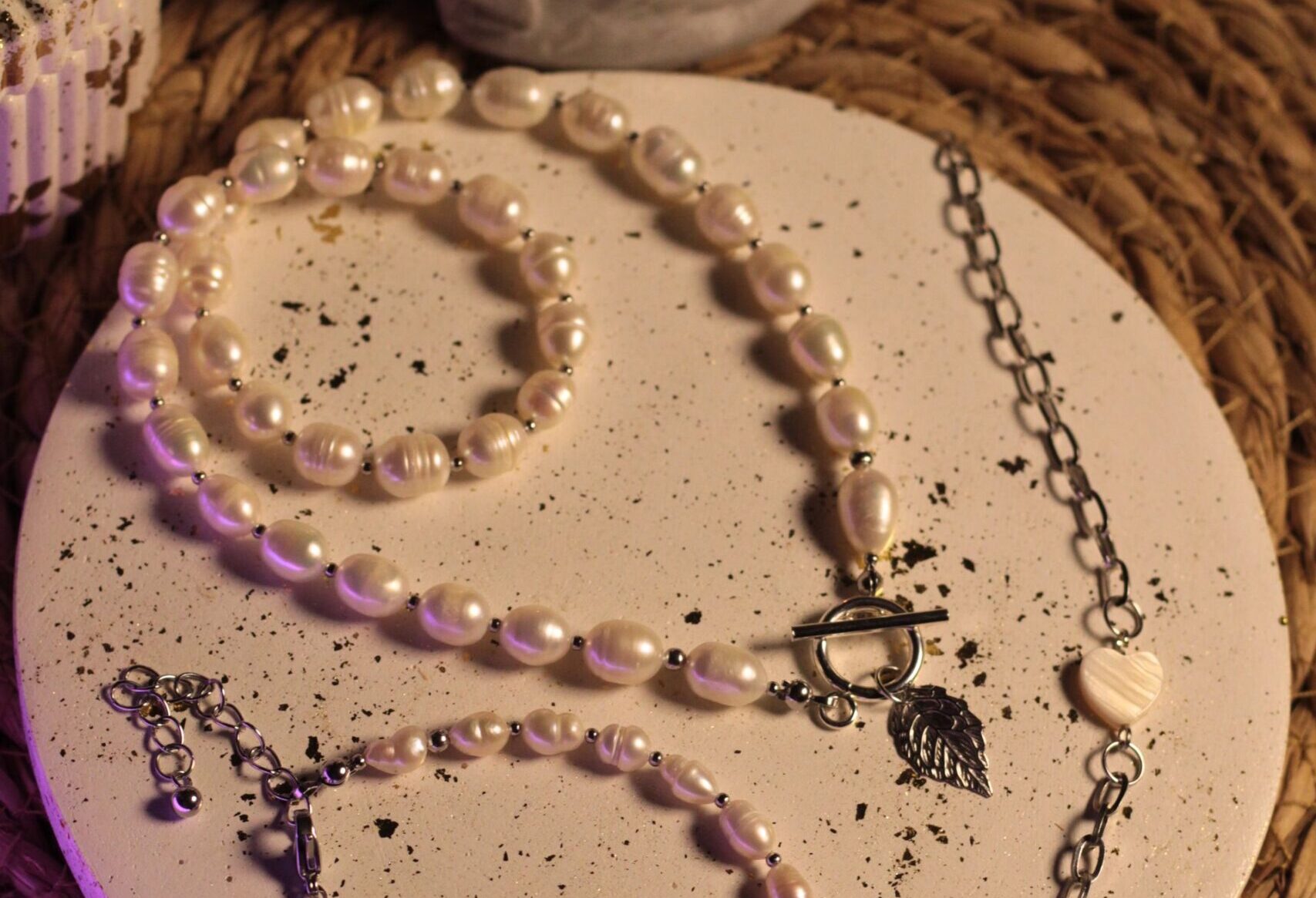
Round and near-round pearls may suit classic jewelry, while baroque, oval, drop, and irregular forms can support more distinctive designs. Size influences both appearance and cost, and color should be evaluated under lighting similar to the retail environment. Luster is subjective, so approve a physical reference or controlled image set rather than relying on a single descriptive word.
For inspiration on product categories, Zhuji pearl jewelry shows how loose beads, strings, bracelets, earrings, necklaces, and rings can be presented as separate commercial lines. Use those categories as a merchandising prompt, not as a substitute for your own specification.
Comparing loose pearls, strands, finished jewelry, and components
Loose pearls provide flexibility for designers but require your team to manage drilling, matching, findings, and assembly. Strands are easier to merchandise or use in production, although consistency across strands must be checked. Finished jewelry simplifies downstream work but makes the supplier’s design, finishing, and packaging capabilities part of the quality decision.
Components can be useful when you already have a production partner in your destination country. Compare the total work required after arrival, not just the quoted price of the pearl or piece.
Setting quality standards and acceptable defect levels
Every order should state what counts as acceptable variation. A natural pearl may show surface characteristics that are acceptable in one collection and unsuitable in another, so the standard must reflect the intended retail price and design. Include photos of acceptable and unacceptable examples whenever possible.
Separate cosmetic defects from functional defects. A small surface mark may be tolerable on a textured baroque pendant, while a poor drill hole or loose finding can make a finished item unsellable.
Balancing unit price, minimum order quantities, and repeatability
Ask for price breaks at realistic quantities and compare them with the minimum order quantity. A larger order may reduce the unit price but increase inventory exposure, especially when colors or shapes are trend-sensitive. Repeatability should be discussed alongside price: can the supplier reproduce the approved specification after several months?
A written replenishment plan can include the approved sample code, tolerance range, packaging format, and expected production window. This gives future inquiries a stable starting point instead of restarting negotiations from photographs.
Building a reliable wholesale purchasing process
A dependable purchasing process connects product decisions to production controls and shipping preparation. It begins with a complete inquiry and continues through sample approval, payment, manufacturing, inspection, and handover. Each stage should leave a written record that another person on your team can understand.

Preparing a clear product specification and inquiry
A useful inquiry identifies the product category, pearl material, shape, size, color, luster, findings, finish, quantity, packaging, destination, and required date. Include drawings, reference photographs, measurement tolerances, and any labeling requirements. Ask the supplier to quote the same configuration so that competing offers can be compared fairly.
For a shipment involving several suppliers, prepare a separate line for each product and supplier address. A freight planning guide for freshwater pearl shipping can help organize product details, quantities, packaging, documents, and delivery responsibilities before you request transport pricing.
Requesting samples and conducting a quality comparison
Order samples that represent the intended production method, not only the most attractive available pieces. Compare samples side by side under consistent lighting and record measurements, weight, finish, color, and visible defects. If jewelry is involved, test clasps, posts, soldered areas, plating, and packaging protection as well.
Use the approved sample as a physical control item where possible. Photographs are helpful for communication, but they may not capture luster, color variation, or the feel of a finished piece accurately.
Negotiating pricing, payment terms, and production timelines
Request an itemized quotation showing product cost, customization, packaging, tooling if any, and sample charges. Confirm the currency, payment stages, validity period, production start point, and what happens if approval or materials are delayed. A realistic timeline should distinguish sample development, buyer approval, bulk production, inspection, packing, and pickup.
Kunpeng Freight can be contacted when you need to discuss supplier pickup, cargo details, route selection, or a quote request before the goods are ready. Share the pickup location, destination, cartons, dimensions, weight, and preferred method so the shipping discussion is based on real cargo information.
Confirming inspection procedures before bulk manufacturing
Agree in writing on when inspection will occur, who performs it, what sample size is checked, and how nonconforming goods are treated. Inspection may cover counts, measurements, colors, surface quality, workmanship, labels, carton marks, and packing condition. If a third party is involved, confirm whether the supplier will provide access and correction time before dispatch.
A clear inspection procedure does not remove every dispute, but it gives both sides a common process. Keep the approved specification, inspection report, photographs, packing list, and final invoice together.
Managing customization and private-label requirements
Customization can make a pearl collection distinctive, but it also adds approval points and production dependencies. Before requesting a private-label quote, decide which details are essential to the product and which can remain standard. This keeps development manageable and makes supplier comparisons more meaningful.
Selecting jewelry designs, findings, and finishing options
Provide drawings or reference samples that identify dimensions, materials, stones if applicable, findings, plating color, clasp style, and finishing expectations. Ask which parts are made by the supplier and which are purchased from outside vendors. Confirm whether a design requires a mold, special tooling, or a minimum quantity.
For finished jewelry, inspect both the pearl and the construction. A well-matched pearl cannot compensate for weak attachment points, uneven plating, sharp edges, or a closure that does not operate smoothly.
Planning branded cards, boxes, pouches, and retail packaging
Packaging should be specified as carefully as the jewelry. State the dimensions, material, color, logo placement, print method, inserts, barcode or label requirements, and quantity per carton. Request a packaging sample or digital proof before mass printing.
Packaging also changes shipping volume and handling risk. Ask for final packed carton dimensions and gross weight before approving a freight quote, particularly when boxes or rigid inserts are part of the retail presentation.
Confirming color matching and sample approval procedures
Color approval should identify the reference, lighting conditions, acceptable variation, and who has final authority to approve. This applies to pearls, plating, thread, pouches, boxes, printed materials, and any stones or decorative elements. Keep approved images and physical references under a version number.
Do not treat a message saying “approved” as sufficient if several samples are circulating. Identify the exact sample, date, revision, and changes accepted so production staff are working from one instruction.
Protecting design details and clarifying ownership terms
Before sharing original artwork or a new design, clarify confidentiality, permitted use, tooling ownership, and whether the supplier may display the product publicly. These terms should be written into the purchase agreement or another document both parties accept. Keep source files, approvals, and revision history in your own records.
Ownership discussions should also cover leftover packaging, rejected components, molds, and unused branded materials. Small details can become difficult to resolve after production has finished.
Planning shipping from Shanxiahu and Zhuji
Pearls and finished jewelry are compact, but their value, fragility, and documentation requirements deserve careful handling. The shipping plan should begin while you are confirming the supplier, not after the cartons are closed. Mode selection depends on urgency, volume, destination, cargo value, and the level of delivery control you need.
Comparing air freight, express delivery, sea freight, and rail options
Express delivery is often convenient for samples or small urgent parcels, while air freight can suit time-sensitive commercial cargo. Sea freight may be more cost-efficient for larger volumes, with a longer and more schedule-dependent journey. Rail can be considered on eligible routes when its transit and cost profile fits the shipment.
Kunpeng Freight helps importers compare air, sea, rail, road, and express arrangements according to shipment details rather than applying one method to every order. Ask for the assumptions behind each quote, including pickup, consolidation, export handling, destination charges, and final delivery.
Preparing export packaging for pearls and finished jewelry
Loose pearls should be counted, separated, labeled, and protected against abrasion, moisture, and loss. Finished jewelry needs individual protection, secure closures, organized inner packaging, and cartons that resist crushing. Keep the packing list aligned with the actual carton contents and distinguish loose pearls, strands, components, and finished pieces.
Before dispatch, request photographs of the sealed inner packages and outer cartons. Confirm carton marks, gross weight, dimensions, and whether any special handling or insurance arrangement has been recorded.
Estimating lead times from production to final delivery
The total schedule includes sample approval, raw-material availability, production, inspection, rework if needed, packing, supplier pickup, export processing, transit, customs, and final delivery. Carrier schedules and inspections can change the actual result, so build in contingency rather than planning around a single optimistic date.
Ask the supplier and forwarder to identify the critical handoff dates. This makes it easier to distinguish a production delay from a documentation delay or a carrier schedule change.
Coordinating freight forwarders, shipping documents, and tracking
Give the forwarder the supplier contact, pickup address, cargo description, carton count, dimensions, weight, commercial invoice, packing list, and destination details. Confirm who prepares export documents and who is responsible for import paperwork at destination. Tracking should be paired with milestone updates, such as cargo received, measured, consolidated, departed, cleared, and delivered.
A forwarder that coordinates supplier communication can reduce fragmented updates, but you should still keep copies of every document. Kunpeng Freight provides a single contact point for pickup coordination, route discussions, paperwork support, and shipment updates.
Controlling landed costs and import risks
The quoted pearl price is only one part of the purchase decision. Landed cost can include packaging, inland pickup, inspection, export handling, freight, insurance, destination charges, duty, tax, brokerage, storage, and final delivery. Calculating these items before production helps you judge whether the wholesale price remains workable after import.
Calculating product, packaging, freight, duty, and tax costs
Build a cost sheet using the actual product configuration and expected packed cargo. Separate recurring costs from one-time charges, such as samples, molds, artwork, or inspection. Use realistic carton dimensions and weights rather than early estimates, since freight pricing can change when measured cargo differs from the quotation.
For a practical documentation reference, the freight documentation archive covers topics such as packing lists, pro forma invoices, customs procedures, and compliance considerations. Apply the relevant principles to your destination and product classification.
Reviewing Incoterms and choosing a suitable delivery arrangement
Incoterms define which party handles particular costs, risks, and tasks, but they do not replace a complete shipping agreement. Confirm the named place, export responsibility, destination charges, customs responsibility, and final delivery scope. Compare supplier-arranged delivery with a separately managed freight plan on the same cost basis.
The right arrangement depends on your import experience, destination regulations, supplier reliability, and need for shipment visibility. Ask questions whenever an offer uses a familiar term without explaining which charges remain outside it.
Checking destination-country customs and jewelry import requirements
Customs treatment may depend on the product form, material composition, jewelry classification, declared value, country of origin, and destination-country rules. Confirm whether finished jewelry, loose pearls, plated findings, branded packaging, or mixed cartons require different descriptions or documentation. Your customs broker or local authority should verify the applicable requirements before dispatch.
Do not assume that a supplier’s standard invoice is sufficient for every market. Accurate descriptions, consistent values, correct carton counts, and supporting documents reduce avoidable questions during clearance.
Reducing risks related to delays, damage, shortages, and quality disputes
Risk controls work best when they are agreed before the goods leave the supplier. Use written specifications, sample approval, inspection records, carton photographs, insurance decisions, and a clear claims process. Check the goods promptly after delivery and report shortages or damage with photographs and document references.
A practical risk checklist might include:
- Confirming the final quantity against the packing list.
- Photographing cartons before opening and products during inspection.
- Keeping the approved sample and purchase specification available.
- Recording deadlines for claims, rework, replacement, or credit.
These steps do not prevent every delay or dispute, but they make responsibility easier to establish. They also give the supplier and forwarder concrete information when corrective action is needed.
Conclusion
A successful Shanxiahu pearl purchase combines supplier qualification, measurable quality standards, disciplined approvals, and a shipping plan based on verified cargo details. When farms, factories, traders, forwarders, and customs responsibilities are clearly separated, wholesale buyers can make better decisions about price, timing, and risk.
Frequently Asked Questions
Is Shanxiahu the same as Zhuji?
Shanxiahu is an area associated with pearl production and trading within Zhuji, Zhejiang. Buyers may encounter suppliers, workshops, and market businesses across the wider Zhuji pearl ecosystem.
What should I ask a Shanxiahu pearl factory first?
Ask which production steps are performed in-house, what products and quantities the supplier can produce, and which steps are subcontracted. Then request documentation and samples tied to your intended order.
How can I compare freshwater pearl quality?
Compare size, shape, color, luster, surface condition, drilling, matching, and workmanship under consistent lighting. Record acceptable variation in writing before bulk production.
Should I buy loose pearls or finished jewelry?
Loose pearls offer more design flexibility but require additional assembly and quality control. Finished jewelry may simplify your workflow, though you must evaluate both the pearl and the construction.
What is the best shipping method for pearls?
There is no single best method. Express, air, sea, rail, or a combined arrangement should be selected according to volume, urgency, cargo value, route, documentation, and destination requirements.
How do I calculate the landed cost of pearl imports?
Add the product price, packaging, inland pickup, inspection, export handling, freight, insurance, destination charges, duty, tax, brokerage, storage, and final delivery. Use measured cargo details where possible.
How can I reduce quality disputes with a supplier?
Approve a representative sample, define measurable tolerances, agree on inspection procedures, keep written records, and check the shipment promptly after delivery. A documented process is stronger than relying on general quality language.
Plan Your Pearl Shipment
If you are ready to move a Shanxiahu order, send the supplier address, product details, carton information, destination, and preferred shipping method to Kunpeng Freight for a practical logistics discussion.