
Key Takeaways
Chenghai offers a dense supplier network, but successful importing still depends on careful product definition, verification, compliance, and freight planning.
- Compare factories and trading companies by capability, documentation, and communication—not price alone.
- Prepare clear specifications, samples, packaging details, and target-market requirements before requesting quotes.
- Verify factory identity, production capacity, subcontracting arrangements, and quality-control procedures.
- Treat toy safety testing, labeling, and technical records as part of product development.
- Calculate the full landed cost and build time for inspections, export handling, customs, and final delivery.
1. Understanding Chenghai’s plastic toy manufacturing ecosystem
Chenghai, in Shantou, Guangdong, is known for its concentrated toy supply network. Buyers can find product designers, component suppliers, molding workshops, assembly operations, packaging vendors, trading companies, and freight services within one regional ecosystem. That density creates useful sourcing options, but it also means that the company presenting a catalog may not be the factory making every item.
The practical question is not simply whether a supplier is located in Chenghai. It is whether its capabilities, controls, and commercial model match your product and destination market. The broader Chenghai sourcing and shipping guide provides useful context for connecting supplier selection with compliance and landed-cost planning.

Why Chenghai is a major toy production hub
Chenghai has developed around plastic toy manufacturing, trading, design, and supporting services. The local concentration can shorten the distance between product ideas, tooling, components, packaging, and finished assembly, while giving buyers access to a wide range of toy styles. Industry sources also describe a large wholesale and trading presence serving international buyers.
For an importer, the value is range and responsiveness rather than a guarantee of quality or speed. A cluster can make it easier to compare several approaches to the same product, but every shortlisted supplier still needs individual verification.
Product categories and factory specializations
Catalogs in Chenghai may cover construction toys, role-play items, vehicles, educational products, outdoor toys, electronic toys, remote-controlled products, and small novelty items. Specialization can vary at a much finer level: one supplier may be strong in injection molding, another in assembly, decoration, battery-powered functions, or packaging.
Ask what the supplier actually performs in-house. A broad catalog may represent a trading network, while a narrower catalog can indicate a factory focused on a particular process, material, or age group.
How trading companies differ from factories
A factory generally controls some combination of tooling, molding, assembly, testing, and packing. A trading company may coordinate products from several factories and can be useful when you need a mixed assortment, lower coordination overhead, or access to products that no single factory produces.
The distinction affects sampling, pricing, traceability, and corrective action. Request the legal entity on the quotation, the manufacturing address, and the identity of the party responsible for quality if production is subcontracted.
When a Chenghai toy factory is the right sourcing choice
A Chenghai toy factory may suit an importer seeking private-label development, repeat production, product variation, or close access to toy components and packaging suppliers. It may be less suitable when the order is too small for the supplier’s minimum, when the product requires a capability outside its line, or when the factory cannot support the destination market’s compliance needs.
A sound decision follows the product brief. Consider expected volume, customization, testing, packaging, replenishment, and shipping requirements together instead of choosing on unit price alone.
2. Finding and shortlisting qualified suppliers
Supplier discovery is usually broad at the beginning and highly structured later. Markets, trade fairs, referrals, and online catalogs can reveal possibilities, but a polished listing is only an opening lead. The shortlist should be built from evidence that can be checked: samples, licenses, production details, export records, and clear responses to the same questions.
Use a simple comparison file so each supplier is assessed against identical requirements. This reduces the risk of favoring the supplier with the best presentation rather than the one that can reliably make and ship the product.

Using wholesale markets, trade shows, and online platforms
Wholesale markets are useful for seeing product variety and identifying companies that can combine assortments. Trade shows allow faster comparison of samples, packaging, functions, and sales teams. Online platforms offer convenience and reach, but listings should be treated as lead-generation material until the supplier’s identity and capabilities are confirmed.
Record the supplier’s name, contact, catalog reference, sample source, and stated factory location. If a supplier changes its answer when asked about production, testing, or packaging, remove it from the active shortlist rather than trying to resolve every inconsistency later.
Evaluating product catalogs and manufacturing capabilities
Study the catalog for coherence. A supplier showing one recognizable production focus may be easier to qualify than a company presenting unrelated categories without explaining its manufacturing network. Ask for recent production photographs, equipment information, available materials, decoration methods, and examples of comparable orders.
A supplier’s ability to make a sample is not proof that it can repeat the result at scale. Confirm how tooling, assembly, inspection, and packing will be managed once the order moves beyond development.
Checking export experience and target-market knowledge
Export experience should be specific to the product and destination, not just a general statement that the company ships overseas. Ask whether the supplier has handled the relevant labeling, warnings, testing reports, carton marks, and documentation for your market. It should also be able to explain which information it provides and which obligations remain with the importer.
For buyers comparing different Chinese manufacturing clusters, a broader manufacturing cluster guide can help frame questions about regional specialization and supplier verification. The same principle applies in Chenghai: compare the ecosystem, then verify the individual company.
Comparing quotes, MOQs, lead times, and communication quality
Request comparable quotations using the same product specification, packaging assumption, quantity breaks, and delivery terms. A low quote may exclude tooling, inner packaging, testing, inspection, export charges, or changes required after sampling. Communication quality matters because unclear answers during quotation often become expensive decisions during production.
A practical shortlist should usually contain three to five credible candidates. Compare them across the following points before commissioning more samples:
- Product and tooling fit for the intended design.
- Minimum order quantity and price at realistic volume tiers.
- Sample timing, production lead time, and stated capacity.
- Testing support, export documentation, and target-market familiarity.
- Responsiveness, ownership of problems, and clarity of written answers.
This approach keeps the shortlist manageable while preserving a meaningful comparison. The best candidate is the one whose commercial offer and operating evidence remain consistent under detailed questions.
3. Defining product requirements before requesting quotes
A supplier cannot quote accurately from a product name alone. Plastic type, dimensions, moving parts, decoration, packaging, testing, and order quantity all affect cost and feasibility. A concise sourcing brief gives suppliers the same starting point and makes later sample approval much more objective.
The brief should distinguish fixed requirements from items open to recommendation. That distinction helps the factory price alternatives without silently changing the product you intend to sell.

Selecting materials, construction methods, and finishes
Specify the intended plastic material where it is known, along with any requirements for transparency, flexibility, texture, gloss, or surface treatment. Describe whether parts should be molded as one piece, assembled from multiple components, screwed, snapped, welded, or connected through another method.
Finishes should be described in observable terms. Color matching, printing, stickers, metallic effects, and painted details can each introduce different tolerances and durability concerns, so they should be included in the specification rather than left to a sales photograph.
Preparing drawings, reference samples, and packaging specifications
Provide dimensioned drawings, marked-up photographs, reference samples, or three-dimensional files when available. Identify critical dimensions and functional interfaces, since a small change can affect fit, safety, tooling, or packaging. If intellectual property matters, share only the files needed for quotation until confidentiality and ownership arrangements are clear.
Packaging deserves equal attention. State the inner pack, carton quantity, materials, artwork, language, barcode, warning placement, and carton dimensions you expect. Related purchasing projects, such as selecting plastic jewellery boxes, show why material, closure, compartment, and packing details should be defined before comparing prices.
Setting age grading, dimensions, colors, and functionality
State the intended age grade and explain how the toy is expected to be used. Include finished dimensions, weight, color references, operating instructions, battery details if relevant, and the functions that must work during sample approval. Age grading is not merely a marketing choice; it influences hazard assessment, warnings, and testing requirements.
Use a numbered specification sheet so revisions can be tracked. Each approved change should have a date, version number, and clear indication of whether it affects tooling, testing, packaging, or price.
Identifying customization, tooling, and private-label requirements
Separate one-time development costs from recurring unit costs. Identify whether the supplier will create a new mold, modify an existing mold, develop artwork, apply your brand, or provide a private-label package. Confirm who owns the tooling, where it is stored, who may authorize changes, and what happens if production moves to another supplier.
The final request for quotation should state the target quantity, sample expectations, testing responsibility, packaging configuration, trade term, and delivery destination. If these items are absent, two apparently comparable quotes may describe different products and different levels of service.
4. Verifying a Chenghai toy factory before placing an order
Verification is a process of matching documents to physical operations. A factory visit is useful, but it should not replace written records, samples, and production evidence. Remote buyers can still ask for dated videos, live walkthroughs, machine details, and documents that connect the legal entity to the manufacturing site.
The goal is to understand who will make the goods, who will inspect them, and who will correct a problem. That chain should be clear before a deposit is paid.
Confirming business licenses and factory identity
Request the registered company name, business license, address, contact details, and bank-account beneficiary. Compare these details across the quotation, pro forma invoice, sample paperwork, and payment instructions. Differences may be legitimate, but they should be explained and documented.
Check whether the quoted entity is the manufacturer, an export company, or a trading intermediary. If another party will receive payment or issue documents, define each party’s responsibility in the purchase agreement.
Reviewing production lines, equipment, and capacity
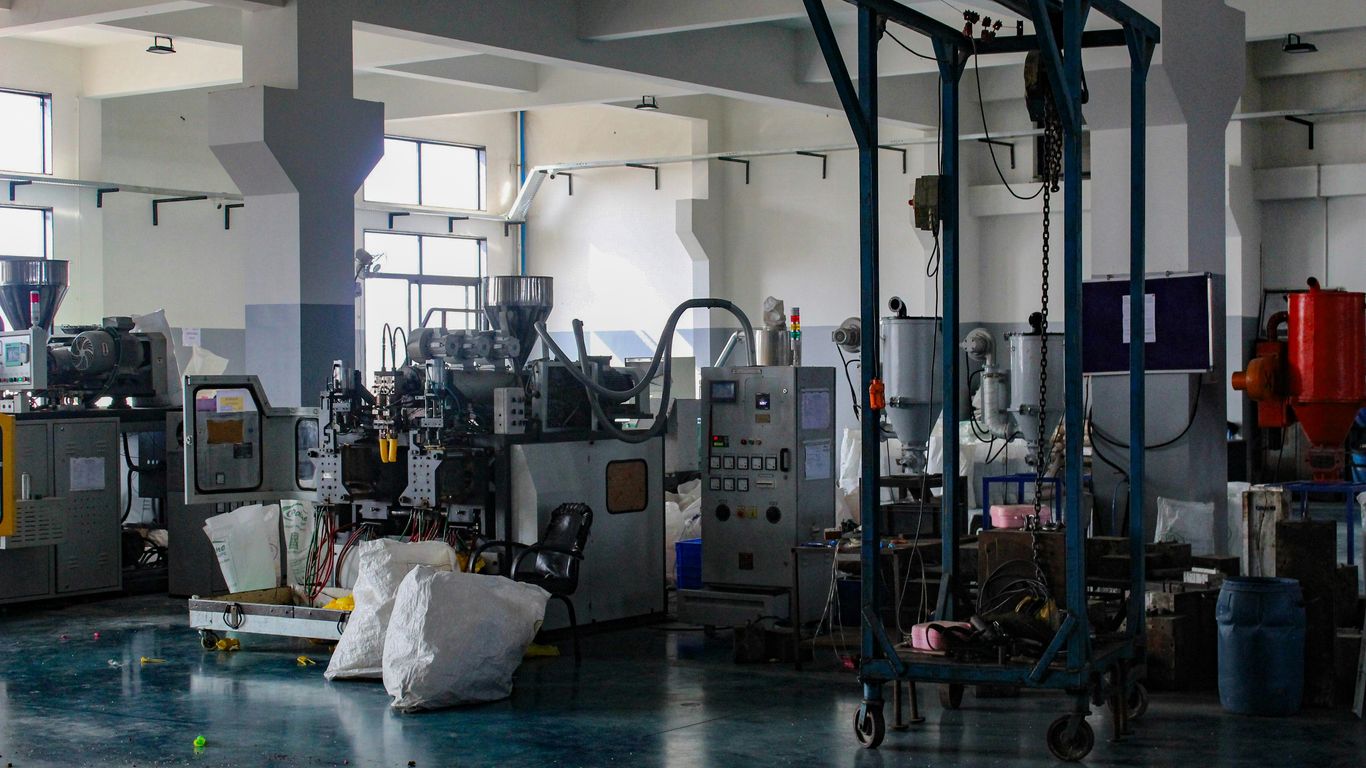
Ask to see the molding machines, assembly areas, decoration equipment, packing stations, warehouse, and inspection tools relevant to your product. Capacity should be discussed in relation to machine availability, staffing, tooling, material supply, and other orders—not as an unsupported monthly number.
The factory should explain its production sequence and the points where parts are checked. A clear process map often reveals more than a general claim about having a large facility.
Auditing subcontracting, labor, and quality-control processes
Subcontracting is not automatically a problem, but hidden subcontracting makes traceability difficult. Ask which stages are outsourced, how approved samples move between sites, who controls materials, and who signs off on finished cartons. Review the supplier’s process for worker training, inspection records, rework, and complaint handling without assuming that an audit label covers every risk.
A written quality plan should name the person responsible for release. It should also state what happens when a batch fails, including sorting, repair, replacement, credit, or another agreed remedy.
Using samples and video inspections to validate capabilities
Approve a production-representative sample rather than a hand-finished showroom piece whenever possible. Test the functions, fit, finish, packaging, instructions, and markings yourself, and retain the approved sample as the reference standard.
Video inspections can confirm that equipment and stock exist, but they have limits. For larger or higher-risk orders, use an independent inspection at pre-production, during production, or before shipment, with photographs and measurements tied to the purchase order.
5. Building a practical toy quality-control plan
Quality control begins before molding starts. The inspection plan should translate the product brief into observable checks and define which defects are unacceptable, major, or minor. It should also distinguish cosmetic preferences from safety-critical requirements.
A useful plan covers materials, dimensions, assembly, function, packaging, labeling, and quantity. It is easier to enforce a clear acceptance standard than to negotiate quality after the goods have been packed.
Checking plastic materials, molding, and assembly quality
Confirm that the material and color correspond to the approved specification. Inspect molded parts for short shots, sink marks, flash, warping, burn marks, contamination, and inconsistent wall thickness where those issues could affect appearance or function. Assembly checks should cover fit, fasteners, moving joints, battery compartments, and component count.
Keep records of the lot, production date, inspector, sample size, measurements, and photographs. Clear acceptance criteria make discussions with the supplier factual instead of subjective.
Testing for sharp edges, small parts, and mechanical hazards
Examine accessible edges, points, seams, hinges, springs, magnets, cords, and detachable components. Consider foreseeable misuse as well as intended use, especially when the toy includes mechanisms, projectiles, batteries, or parts that may become loose after repeated handling.
Testing must follow the requirements of the destination market and the toy’s age grade. Factory assurances are useful background, but they do not substitute for appropriate laboratory testing or documented risk assessment.
Managing color consistency, odor, durability, and finish defects
Compare production colors with the approved reference under consistent lighting. Check odor, surface feel, print adhesion, paint rub, sticker placement, and visible contamination. For functional products, perform repeated-use checks that reflect how a child or consumer is likely to handle the toy.
Agree in advance on acceptable color variation and cosmetic limits. Without a reference and tolerance, a supplier may reasonably interpret “match the sample” differently from the buyer.
Scheduling pre-production, in-process, and pre-shipment inspections
Each inspection stage answers a different question. Pre-production review confirms materials, tooling, artwork, and packaging before volume work begins; in-process inspection identifies recurring defects while correction is still possible; pre-shipment inspection checks finished goods, cartons, markings, and quantity before release.
Build inspection dates into the purchase schedule rather than treating them as an emergency service. If the shipment is being arranged through cargo inspection support, provide the purchase order, approved sample, packing expectations, and destination requirements early enough for the inspection scope to be agreed.
Documenting acceptance criteria and handling nonconformities
The purchase order should reference the approved sample, drawings, tolerances, defect classifications, testing documents, packaging standard, and inspection rights. If a nonconformity appears, record the affected lot, evidence, proposed correction, responsible party, and reinspection date.
Do not approve shipment solely because a supplier promises to improve the next order. Release should follow verified correction, an agreed concession, or a documented commercial remedy.
6. Meeting product safety and import compliance requirements
Toy compliance depends on the destination market, product design, age grade, materials, and claims made on the packaging. Requirements can cover mechanical and physical hazards, flammability, chemicals, electrical features, labeling, and technical documentation. The importer remains responsible for confirming the rules that apply to its sale.
Treat compliance as a design input, not a final paperwork exercise. A late change to plastic, paint, packaging, or function can invalidate earlier testing or require new labels.
Matching testing standards to the destination market
Identify the destination country and sales channel before finalizing the product. Ask a qualified laboratory or compliance specialist which standards and test methods apply, then confirm whether the supplier’s proposed materials and construction can meet them.
Do not assume that a report for one market automatically satisfies another. Products sold through marketplaces may also face additional documentation or listing requirements beyond the general legal standard.
Preparing certificates, test reports, and technical files
Maintain a technical file containing product specifications, drawings, bills of materials, risk assessments, test reports, certificates where applicable, artwork, and supplier declarations. Documents should identify the exact model and revision tested, not merely a similar item from the same catalog.
A supplier may provide supporting reports, but the importer should review the issuing laboratory, dates, model references, and scope. For general preparation, an import documentation archive can help organize recurring records such as invoices, packing lists, and customs paperwork.
Reviewing labeling, warnings, tracking marks, and packaging
Check the required language, importer information, age grading, warnings, tracking marks, barcode, country-of-origin information, and disposal or battery notices where applicable. Confirm that labels are durable, legible, correctly placed, and consistent with the technical file and sales listing.
Carton marks should also match the packing list and shipment documents. Small inconsistencies can create delays during warehouse receiving or customs review, even when the product itself is acceptable.
Avoiding restricted substances and unsupported compliance claims
Ask for material declarations and testing relevant to plastics, paints, coatings, adhesives, batteries, and other components. Avoid claims such as “non-toxic,” “safe,” or “fully compliant” unless they are supported by the correct evidence and permitted for the destination market.
When a supplier cannot explain the source of a certificate or the scope of a test report, pause the order. Replacing an unsupported claim with precise, verifiable documentation is safer than relying on attractive wording.
7. Managing costs, shipping, and delivery from Guangdong
The factory price is only one part of the import budget. Tooling, samples, testing, inspection, inland pickup, export handling, freight, insurance, duties, brokerage, storage, and final delivery can all affect the landed cost. A realistic quote begins with verified cargo details: cartons, dimensions, gross weight, pickup address, readiness date, and destination.
Kunpeng Freight coordinates supplier pickup, cargo inspection and consolidation, export handling, and international transport options. Its role is to connect the factory handover with the shipment plan, while the importer still needs to provide accurate commercial and product information.
Breaking down tooling, unit pricing, packaging, and inspection costs
Ask for a line-item quotation that separates one-time and recurring charges. Confirm whether the unit price includes assembly, inner packaging, carton packing, labels, testing, and export preparation. Calculate volume from actual carton dimensions rather than relying on an estimated number of pieces per container.
A simple cost table helps expose assumptions before production begins:
| Cost item | What to confirm | Why it matters |
|---|---|---|
| Tooling and samples | Mold ownership, revisions, sample quantity | Prevents hidden development costs |
| Unit and packaging price | Inclusions, quantity tier, packaging version | Makes supplier quotes comparable |
| Inspection and testing | Scope, laboratory, timing, reinspection | Protects quality and compliance budgets |
| Pickup and export handling | Address, loading terms, documents | Connects factory release to shipment |
| Freight and destination charges | Mode, route, duties, brokerage, delivery | Produces a more realistic landed cost |
After the table is completed, ask which figures are fixed, estimated, or dependent on carrier and customs conditions. That distinction is especially important for small shipments and mixed cartons.
Choosing payment terms and protecting production deposits
Use a written purchase order or contract that defines the product, quantity, price, milestones, inspection rights, packaging, delivery terms, and remedy for defects. Confirm the beneficiary before payment and be cautious when bank details change by email or messaging application.
Payment milestones should reflect verifiable progress where commercially possible. Keep records of invoices, approvals, inspection results, and correspondence so the transaction can be reconstructed if a dispute arises.
Comparing sea freight, rail, air, and express shipping
Sea freight is often suitable for larger, less urgent consignments, while air and express services may fit smaller or time-sensitive shipments. Rail and road options depend on the origin, destination, route, cargo characteristics, and available service. No mode is universally best; the decision balances cost, urgency, shipment size, handling risk, and documentation.
Kunpeng Freight offers air, sea, rail, road, and express shipping from China, with route selection based on the shipment details rather than a fixed recommendation. Request a comparison that states the assumed pickup date, cutoff, transit estimate, destination charges, and exceptions.
Coordinating consolidation, carton planning, and export documents
Consolidation can combine goods from multiple Chenghai suppliers into one shipment, but it requires accurate carton labels, supplier pickup windows, packing lists, and cargo readiness dates. Confirm whether cartons can be stacked, whether any items contain batteries or magnets, and how mixed products will be separated for receiving.
Kunpeng Freight can coordinate supplier pickup and cargo consolidation as part of the China-to-destination workflow. Provide commercial invoices, packing lists, product descriptions, values, HS-code information where available, and any required permits or test documents before cargo is collected.
Building buffer time for production and customs clearance
A delivery plan should include sample approval, tooling, production, inspection, rework, factory pickup, consolidation, export cutoffs, transit, customs processing, and final delivery. Carrier schedules and customs inspections can change, so a promised arrival date should not be treated as a fixed operational fact.
Use milestone updates to identify slippage early. The shipping planning checklist is a useful related reference when comparing consolidation, freight options, and documentation tasks across a China export shipment.
Plan Your Toy Shipment
For a coordinated pickup, inspection, consolidation, and international delivery plan, contact Kunpeng Freight with the supplier address, product details, cartons, destination, and preferred shipping method.
Conclusion
Sourcing from a Chenghai toy factory can provide broad product choice and access to a dense manufacturing network, but the outcome depends on disciplined execution. Define the product before quoting, verify who will make it, document measurable quality standards, complete market-specific compliance work, and calculate the full landed cost before committing. When factory release and freight planning are handled as one connected process, avoidable surprises become easier to identify and manage.
Frequently Asked Questions
Is Chenghai suitable for small toy orders?
It can be, particularly when a supplier offers stock products or works with a trading company that combines assortments. Confirm the minimum order quantity, packaging requirements, customization charges, and testing obligations before assuming a small order will be economical.
How do I find a reliable Chenghai toy factory?
Start with several candidates, then compare licenses, samples, production evidence, export experience, quality procedures, communication, and commercial terms. A supplier should be able to explain who manufactures the product and how defects will be handled.
Should I work directly with a factory or a trading company?
A direct factory relationship may provide clearer control over production and tooling, while a trading company may simplify mixed orders and supplier coordination. The right choice depends on your assortment, volume, customization, and need for traceability.
What information should I send when requesting a quote?
Include drawings or reference samples, materials, dimensions, age grade, functions, colors, packaging, quantity, destination market, testing expectations, and requested delivery terms. Also provide the target pickup location if freight pricing is needed.
What inspections should be performed for plastic toys?
Common stages include pre-production checks, in-process inspections, and pre-shipment inspections. The scope should cover materials, molding, assembly, functions, hazards, appearance, packaging, labeling, quantity, and carton condition.
Do toy imports need laboratory testing?
Many markets require testing or other evidence, depending on the product, age grade, materials, and functions. Confirm the applicable rules with a qualified compliance professional or laboratory before production is finalized.
How can I estimate the shipping cost from Guangdong?
Collect the pickup address, carton count, dimensions, gross weight, cargo-ready date, destination, delivery address, and product restrictions. Compare modes using both origin and destination charges, duties, brokerage, and final delivery—not freight alone.