Key Takeaways
Rail may be a useful middle ground for some commercial vape shipments, but the product, carrier, route, and destination rules must all be checked before booking.
- Rail acceptance is not automatic; it depends on the specific goods and the full route.
- Devices with batteries, liquids, and disposable formats need careful review and accurate declarations.
- European product compliance and transport acceptance are separate checks, and both matter.
- Customs documents should match the products, values, quantities, and importer details throughout.
- Compare rail with air and sea using the shipment’s urgency, volume, costs, and readiness.
How vape rail freight from China to Europe works
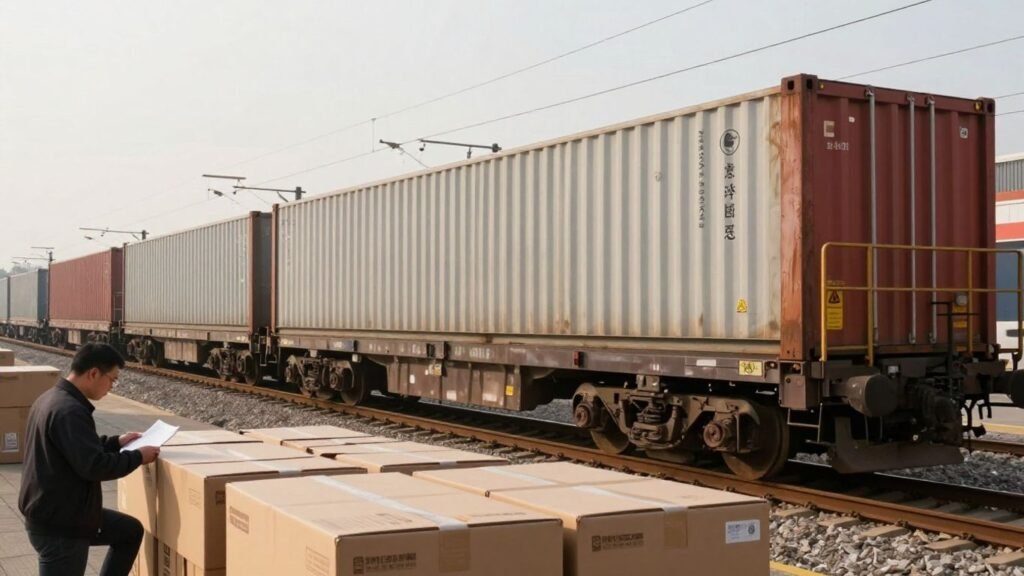
Vape rail freight China Europe shipments follow the same broad handoffs as other commercial cargo, but the product’s batteries and liquids can affect which services will accept it. A typical movement starts with collection from a factory or supplier warehouse in China, then export handling and rail transport through the planned corridor. After arrival in Europe, the cargo goes through import procedures and onward delivery. Kunpeng Freight coordinates rail freight and related supplier-to-destination logistics, subject to the cargo, route, and service details.
The main legs from factory pickup to European delivery
The journey usually begins with the supplier confirming carton counts, dimensions, gross weight, and a precise product description. A forwarder can arrange pickup, check or consolidate cargo, prepare export handling, and coordinate movement to the rail terminal. The shipment then travels by rail, with handling or transfers along the route, before import clearance and delivery to the consignee. For a broader view of route planning and rail freight terms, see this rail freight planning guide.
How rail compares with air and sea freight
Rail is often considered when air is too costly for the shipment’s size or budget, while sea transit does not suit the required schedule. That does not make rail the right answer for every vape product: carrier acceptance and handling conditions can outweigh a simple speed comparison. The broad trade-offs are useful at the start of planning, but the final choice depends on route and cargo specifics.
| Mode | Typical planning role | Considerations for vape cargo |
|---|---|---|
| Air | Urgent or smaller shipments | Battery and liquid restrictions can limit acceptance |
| Rail | Mid-priority commercial cargo | Route, terminal handling, and carrier approval need checking |
| Sea | Larger shipments with more schedule flexibility | Longer planning horizon and product-specific acceptance review |
Treat the table as a first comparison, not a quote or a promise of transit time. Ask for a route-specific schedule and confirm what is included in the service before comparing prices.
Transit-time factors, including border transfers and terminal handling
A rail schedule is shaped by more than the line-haul journey. Departure frequency, terminal cutoffs, border procedures, transfers between rail systems, customs checks, and the final delivery distance can all change the elapsed time. A cargo hold for missing or inconsistent product information can also disrupt a planned departure. The commercial vape shipment review offers related context on why product details, carrier policies, and destination requirements should be checked together.
When rail is a practical choice for vape shipments
Rail can be worth investigating when the shipment is commercial, the inventory is not extremely urgent, and the exact goods are eligible for the proposed route. It is more practical when product data and documents are available early, so the forwarder can check acceptance before cargo is collected. For an importer balancing stock availability against landed cost, a realistic route estimate matters more than a headline transit claim.
Whether rail carriers will accept vape products
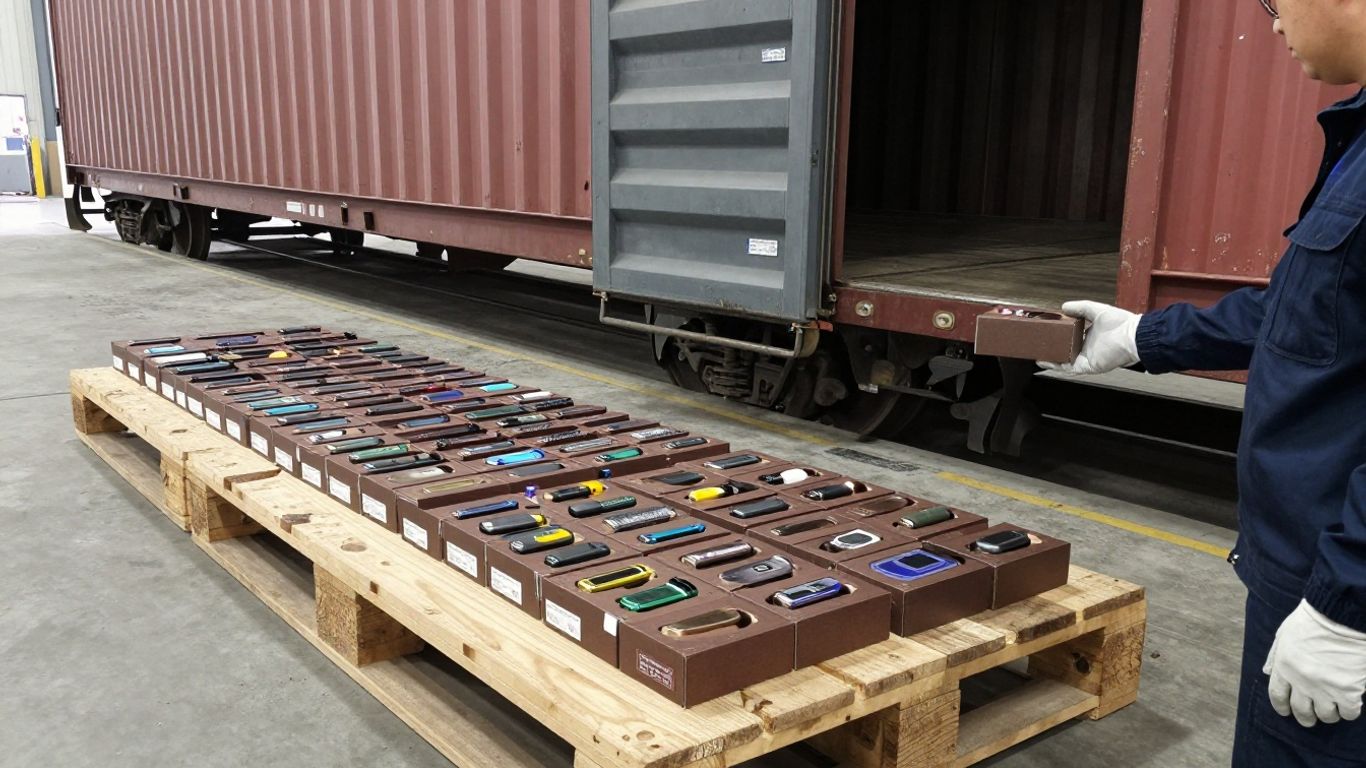
There is no single yes-or-no answer for every vape shipment. Acceptance can change with the product configuration, battery status, e-liquid contents, packaging, carrier, rail corridor, and any connecting road or terminal service. Provide the forwarder with exact specifications rather than a broad description such as “vape accessories.”
Why acceptance depends on the carrier, route, and product details
A route includes more than the train operator: collection, consolidation, terminal storage, border handling, and delivery may involve other parties, each with its own rules. One carrier’s decision does not necessarily apply to another route or later booking. Request written confirmation that identifies the products and planned service, and ask whether the approval covers every leg.
How nicotine e-liquid and nicotine-free products may be treated differently
Nicotine content matters for product and destination-market rules, while liquid contents and packaging can also affect transport review. Nicotine-free products are not automatically unrestricted, and a device containing liquid can raise different handling questions from empty hardware. Give the forwarder the formulation, liquid quantity, nicotine strength where applicable, and packaging format; avoid relying on a generic product label.
Why disposable vapes and devices with built-in batteries need extra review
A disposable unit combines a device, a battery, and often liquid in one item, while a reusable device may ship with a battery installed, packed alongside it, or separately. Those distinctions can affect transport classification and carrier acceptance. Describe each model and configuration, including whether spare or loose batteries are included, before a booking is requested.
What to confirm with a forwarder before booking
A useful pre-booking discussion resolves uncertainties before the supplier hands over the cargo. Share the product breakdown and ask the forwarder to confirm the applicable service and any restrictions for the complete route. In particular, check:
- Whether each product type and battery configuration is accepted on the proposed route.
- Which product, battery, and liquid documents are required before booking.
- Whether special packing, marking, labeling, or quantity limits apply.
- What happens if a carrier or terminal rejects the goods after inspection.
Keep the written response with the commercial documents. Kunpeng Freight can coordinate supplier pickup and rail freight planning, but any acceptance remains subject to the carrier and the verified shipment details.
Lithium battery and dangerous goods requirements
Vape devices commonly include lithium batteries, so do not treat them as ordinary electronics without checking the applicable transport rules. The requirements depend on the battery’s type and configuration, the product, the mode, and the particular route. Classification and documentation should be established before cargo is packed or booked, not guessed from a product photograph.
Identify the battery type, capacity, and configuration
Ask the manufacturer for the battery chemistry, watt-hours or other requested capacity information, and whether the battery is installed in equipment, packed with equipment, or shipped separately. Record how many units and batteries are in each carton, and distinguish built-in cells from spare batteries. These details help the forwarder and carrier assess the applicable rules; a model name alone is not enough.
Check the applicable transport classification and testing documentation
Transport classification should be confirmed against the actual product and current requirements for the chosen mode. The same vape model may need different review if its battery arrangement or packaging changes. Do not copy a classification from an older shipment unless the product, route, and applicable requirements are still the same.
Review packaging, labeling, and quantity requirements
Packaging must suit the goods and the rules that apply to the transport classification. Before production packing is finalized, confirm whether individual units need protection against damage or accidental activation, and whether carton markings or transport labels are required. An accurate packing plan also helps the forwarder match the declared battery quantity to what is physically inside.
Prepare for requests such as a UN 38.3 test summary or safety data sheet
The carrier or forwarder may request battery testing information, a UN 38.3 test summary, a safety data sheet, or other product-specific paperwork. Provide documents that correspond to the exact model and battery, and check that the manufacturer’s details agree with the invoice and packing list. If a document is unavailable or appears to cover a different model, resolve that gap before reserving transport.
European product and market compliance
Transport acceptance does not establish that a product may be sold in Europe. Market access depends on the product category, its ingredients and technical features, the destination country, and the importer’s obligations. Confirm applicable rules for each sales market before the goods leave China; requirements and enforcement can differ by country and may change.
Check applicable EU rules for e-cigarettes, liquids, and nicotine limits
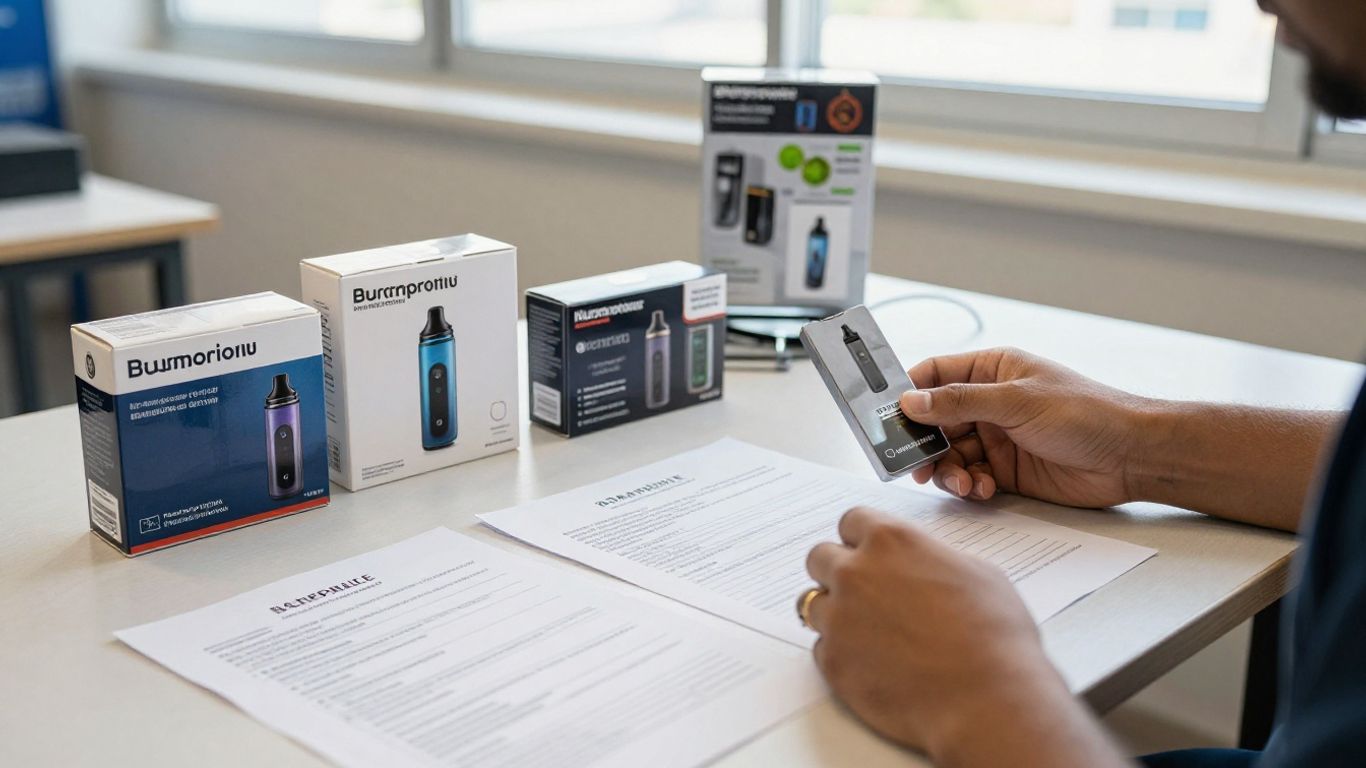
For products covered by the EU Tobacco Products Directive, rules include limits on nicotine concentration and container capacity, alongside other product requirements. The scope and application should be checked against the exact product and its intended market, including any national measures. Do not assume that a product accepted by a rail carrier is compliant for sale or distribution.
Verify product notifications, labeling, and packaging obligations
Check whether the relevant product notifications, warnings, and packaging requirements have been completed for the destination market. Confirm that the product name, nicotine information, ingredient details, and required local-language information are accurate where applicable. A label prepared for one country may not satisfy the requirements of another.
Assess battery, electronics, and producer-responsibility requirements
Vape devices may also raise obligations related to batteries, electrical and electronic equipment, and producer responsibility. Which requirements apply can depend on how the product is placed on the market and who acts as importer or producer under local rules. Get advice on registration and reporting duties early, rather than treating them as a customs-only matter.
Check destination-country restrictions, including rules on disposable vapes
National rules may restrict particular products or sales formats, including disposable vapes. Verify the current rules for the actual country of import and sale, not just a general EU overview. If the shipment is intended for more than one market, assess eligibility separately for each destination.
Customs clearance, documents, and importer responsibilities
Customs processing works best when the commercial paperwork describes the goods consistently and the importer is ready to act. Product names, quantities, values, and country-of-origin details should match across the invoice, packing list, transport records, and any supporting declarations. For general shipment planning, Kunpeng Freight provides customs documentation support and import paperwork assistance, with the importer responsible for its own legal and tax obligations.
Build a consistent document set for the shipment
Start with a commercial invoice, packing list, transport details, and the product or battery documents requested for the route. Check that the paperwork distinguishes devices, pods, liquids, and batteries rather than grouping everything under an unclear label. Documentation practices vary by task: cargo records are not interchangeable with guidance on WordPress help chat, dental materials, enzyme-free tissue decellularization, Tesla delivery day, or Proton Mail; each requires information relevant to its own purpose.
Confirm tariff classification, customs value, and country of origin
The importer should work with a qualified customs adviser or broker to determine the appropriate tariff classification and customs value for the actual goods. Provide accurate transaction and freight information, and confirm how the country of origin is established. Do not select a code simply because it appeared on a prior shipment of a product that looks similar.
Decide who handles import VAT, duties, and clearance under the Incoterm
The agreed Incoterm helps define which party arranges transport steps and handles specified costs or formalities, but it does not remove the need to understand local importer obligations. Confirm who will appoint the customs representative, pay import VAT and duties, and provide information for clearance. Make those responsibilities explicit in the quote and purchase arrangements to avoid last-minute assumptions.
Make sure the importer can meet local registration and compliance duties
Before dispatch, verify that the importer has any required registrations and can support applicable product compliance, tax, and reporting tasks. Customs release alone does not establish permission to sell. The importer should also retain product and shipment records in case authorities or business partners request them later.
Plan costs, risks, and shipment readiness
A useful quote begins with real cargo data and a clear description of what service is being priced. Vape shipments may involve charges beyond the rail line-haul, including pickup, consolidation, terminal handling, documentation, customs support, and final delivery. Compare like with like and keep a margin for inspections, revised schedules, or extra handling if these arise.
Request a quote that separates transport, handling, and clearance charges
Send carton count, dimensions, gross weight, pickup location, destination, product breakdown, and battery and liquid details. Ask the forwarder to itemize the transport and handling elements, state what customs assistance is included, and identify charges that could arise outside the quoted service. Kunpeng Freight prepares shipping guidance and quotes around cargo details and the requested route, so complete specifications help make the estimate more useful.
Compare rail, air, and sea based on urgency, volume, and acceptance
The most suitable mode depends on more than transit speed. First confirm the cargo is acceptable, then compare the schedule, total cost, shipment size, and delivery requirements. Air may fit urgent shipments if accepted; sea can suit larger loads with more schedule flexibility; rail may sit between them for eligible mid-priority cargo. The choice should follow the confirmed route and product rather than a general ranking.
Reduce delays with accurate product details and document checks
Small inconsistencies can lead to repeated questions or a booking pause. Review the shipment before handover, particularly where different vape models or battery configurations are packed together. A quick document check is useful when it tests the same details against both the goods and the planned route:
- Match product names and quantities across the invoice and packing list.
- Verify battery details and supporting documents for each model.
- Confirm liquid contents, nicotine details, and destination-market eligibility.
- Recheck the route, carrier acceptance, delivery address, and importer information.
Use the review to resolve open questions with the supplier and forwarder before cargo reaches the terminal. Clear details cannot prevent every inspection or schedule change, but they reduce avoidable uncertainty at handoff.
Create a pre-booking checklist for the supplier, forwarder, and importer
Assign each party a clear task: the supplier confirms specifications and packing; the forwarder checks the proposed route, acceptance, and logistics documents; and the importer confirms market eligibility, registrations, and customs arrangements. Keep written decisions together so a change in model, quantity, or destination triggers a fresh review. For a broader view of vape freight planning, the China-to-Europe vape shipping guide covers cargo details, mode comparison, and importer responsibilities.
Conclusion
Vapes may move from China to Europe by rail when the specific products, batteries, documents, route, carrier, and destination requirements all line up. Confirm acceptance and market compliance before booking, build a consistent document set, and compare the full service and cost against air and sea. That preparation gives the importer a clearer basis for deciding whether rail fits the shipment.
Frequently Asked Questions
Can vapes be shipped from China to Europe by rail?
Some commercial vape shipments may be eligible, but acceptance depends on the exact products, battery and liquid configuration, carrier, route, and destination rules. Get route-specific confirmation before dispatch.
Are disposable vapes accepted for rail freight?
They require additional review because they combine a device, battery, and often e-liquid. Carrier and destination restrictions vary, so provide the model and specifications before requesting a booking.
Do nicotine-free vapes have fewer shipping requirements?
Not necessarily. Nicotine content can affect market rules, but batteries, liquids, packaging, and carrier policies may still apply to nicotine-free products.
What battery documents might a forwarder request?
Depending on the product and route, a forwarder or carrier may request battery specifications, a UN 38.3 test summary, a safety data sheet, or other supporting information. Requirements should be confirmed for the exact model.
Does rail freight take less time than sea freight?
Rail is often considered for a shorter transit than sea, but actual timing varies with the route, departure schedule, border procedures, terminal handling, customs, and final delivery. Request a current estimate for the specific service.
Does carrier acceptance mean a vape can be sold in Europe?
No. Transport approval and legal eligibility for sale are separate checks. The importer must verify relevant EU and destination-country product, labeling, notification, and registration requirements.
Who pays import VAT and duties on a vape shipment?
Responsibility depends on the agreed Incoterm and service arrangement, as well as local rules. Confirm who handles clearance and payment before shipping, and ensure the importer is prepared to meet its obligations.