Key Takeaways
Express delivery is only one part of a vape shipment plan. Confirm the product is allowed, the carrier accepts it on the exact route, and the paperwork and landed costs are clear before dispatch.
- Check destination rules for each product type, including disposables and e-liquids.
- Give the carrier accurate details about nicotine, liquid volume, and batteries.
- Match customs documents to the shipment’s actual contents and value.
- Compare total charges and realistic delivery estimates, not just the quoted freight rate.
- Agree with the supplier on responsibilities and a plan for delays or rejected cargo.
Confirm the shipment can legally enter its destination
Before requesting a fast service, establish whether the goods can be imported and sold in the destination market. Rules may differ by country and by product configuration, so a device, a bottle of e-liquid, and a disposable vape should not be treated as interchangeable. Start with the destination authority’s current requirements, then confirm how they apply to the exact products you plan to ship.
Identify the destination country and applicable vape rules
A country name alone may not be enough: local or regional rules can also affect import eligibility, labeling, and sale. If the cargo will pass through one jurisdiction and enter another, ask which rules apply at each stage and who can confirm them. A destination-specific shipping guide can help you organize the questions around product eligibility, carrier acceptance, and importer responsibilities, but official requirements should be checked with the relevant authorities.
Check whether the product type is permitted, including disposables and e-liquids
Separate the shipment into product types before assessing it. Disposable devices, refillable hardware, prefilled pods, e-liquids, and loose batteries may face different import or transport conditions; a rule that covers one does not automatically cover another. For a wider view of the variables to disclose, this commercial vape shipping guide distinguishes product configurations and shipping considerations without replacing destination-specific checks.
Verify import, sales, and product authorization requirements
Permission to import does not necessarily mean permission to sell. Confirm whether the market requires product notification, registration, testing, a local importer, or other authorization before goods are dispatched. The importer or customs broker can help identify the applicable process, but get the requirement from a current official source rather than relying on a supplier’s general assurance.
Flag age restrictions and other market-specific obligations
Age limits, packaging rules, warnings, and tax obligations may affect the sale or handling of vape products. List these obligations early so that the supplier can confirm whether the products and packaging match the destination’s requirements. For comparison only, Falco Firearms publishes shipping restrictions and age requirements for a different regulated product category; those rules do not apply to vapes.
Verify product details before requesting a shipping quote
A carrier cannot assess a vape shipment reliably from a broad description such as “electronics” or “samples.” Prepare a specification for each model and liquid product, then make sure the details match what the supplier will actually pack. Accurate information supports a meaningful quote and helps surface restrictions before cargo reaches the carrier.
Record device type, nicotine content, and liquid volume
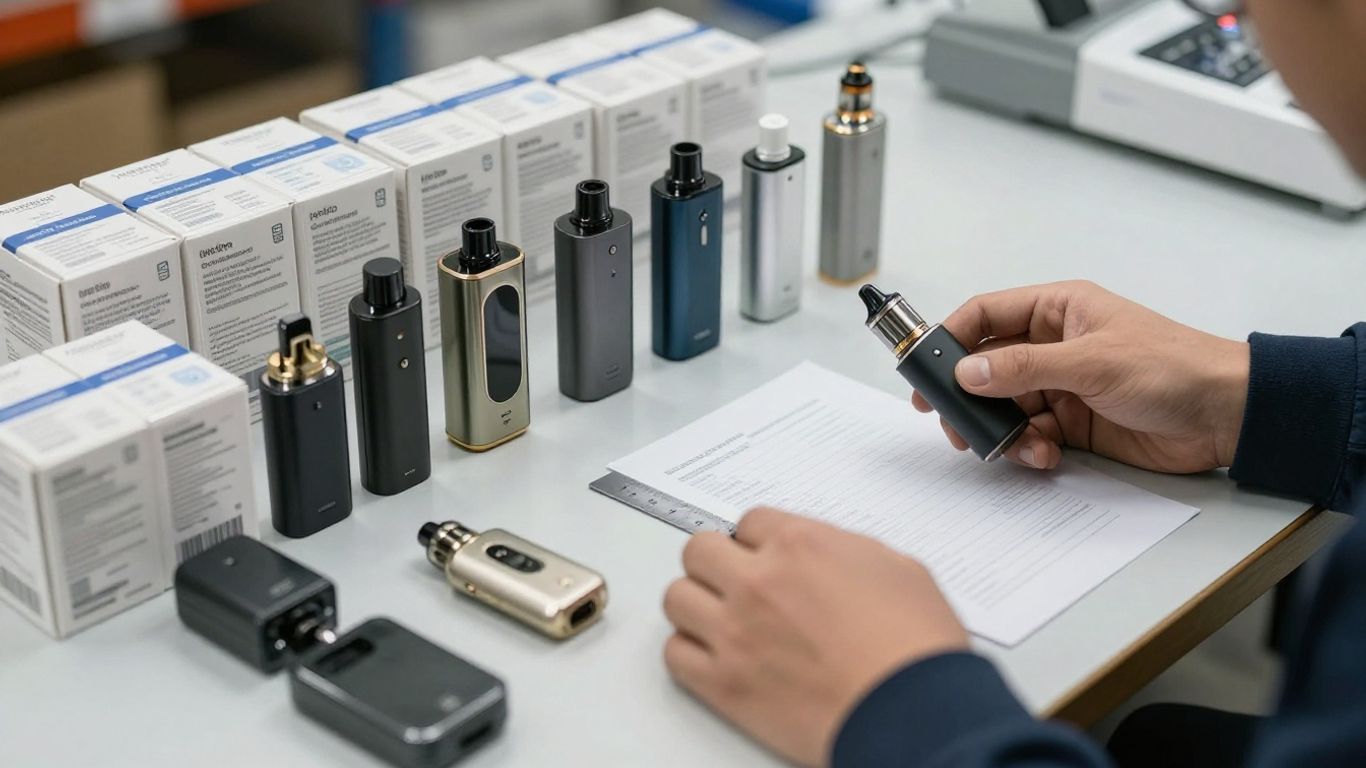
Write down the model and product type, whether it is disposable or refillable, and the liquid volume for each item. Record nicotine strength and whether the product contains nicotine or is nicotine-free; do not infer this from a product name or a sample image. These details can affect import rules, carrier screening, and the documentation requested for the shipment.
Confirm battery chemistry, capacity, and whether batteries are installed
Ask for the battery chemistry and capacity, and state whether the battery is installed in a device, packed with it, or shipped separately. These are not minor packing details: they can affect carrier acceptance and the transport conditions that apply. If a supplier cannot give product-specific battery information, resolve that gap before asking for final routing or dispatch.
Get accurate product specifications and safety data from the supplier
Request specifications and safety documents that correspond to the exact model and its components. A generic document may not describe the battery or liquid in the cargo, and a safety data sheet does not by itself authorize a shipment or guarantee a booking. The SDS and vape shipping document guide explains why carrier requirements vary and why product-specific records matter.
Check that product labels and packaging meet destination requirements
Compare the finished labels and retail packaging with the rules identified for the destination, including required warnings, language, and product information where applicable. Packaging also has a transport purpose: devices should be protected and liquids contained in a way that matches the carrier’s instructions. Keep a copy of approved packaging details with the final product specification so that shipping and customs information stays consistent.
Check express carrier acceptance and transport restrictions
Express service is not automatically available for every vape product or route. A carrier may assess the battery, liquid, destination, and shipment configuration together, and acceptance can vary across legs of a journey. Confirm the actual service before cargo is handed over; a general statement that a carrier “ships electronics” is not enough.
Ask carriers directly whether they accept vapes on the specific route
Give the carrier or forwarder the destination, product type, nicotine status, battery details, and shipment size. Ask whether the proposed express service accepts that exact configuration from the pickup location through final delivery, including any transfer points. A guide to express courier services describes coordination and delivery considerations, but route-specific acceptance still needs to be confirmed for your cargo.
Confirm rules for lithium batteries and nicotine-containing products
Ask what transport rules and supporting records apply to the battery and to any liquid in the shipment. Requirements may depend on battery chemistry, capacity, installation status, route, and service; nicotine-containing goods may also receive additional review. Do not assume that acceptance for a battery-powered device extends to liquids or a different product model.
Find out whether the shipment needs special packaging or handling
Request the carrier’s specific packing instructions before the supplier seals the cartons. Depending on the goods and route, the carrier may require particular packaging, labels, or handling arrangements. Communicate those instructions to the person packing the cargo, then verify the finished shipment rather than assuming that standard retail packaging is suitable for transport.
Get written confirmation of service availability before goods are dispatched
Ask for written confirmation that names the product configuration and route, along with any conditions attached to the booking. If an initial quote is conditional, identify what information or documents are still needed and who must approve them. This record gives the supplier and shipping coordinator the same basis for proceeding and makes it easier to pause if a key detail changes.
Prepare customs documents and product information
Customs paperwork should describe the same goods the carrier has accepted. Differences between the invoice, packing list, product specification, and physical cargo can prompt questions or delay review. Assemble the documents early and check each description against the supplier’s final packing details before the shipment leaves China.
Match the commercial invoice to the actual contents and value
Check that the invoice reflects the goods, quantities, and transaction value accurately. The packing list should also match the carton count and the items inside. Do not use vague descriptions or values chosen just to simplify clearance; consistent, truthful details give the broker and customs officials a clearer basis for reviewing the shipment.
Confirm the correct product descriptions and tariff classifications
Use descriptions that identify the goods plainly, such as the relevant device or e-liquid type, rather than an overly broad label. Ask the customs broker to confirm the tariff classification for the actual product and destination; classifications should not be guessed from a supplier’s old paperwork. Import paperwork assistance may involve document review and supplier coordination, while the final declarations still need to match the specific shipment.
Gather permits, test reports, and other documents that may be required
Create a document list based on carrier instructions and destination requirements. Depending on the cargo, the parties may be asked for permits, product records, battery test information, safety data, or dangerous-goods documents. A short working list can keep supplier follow-up focused:
- Product specifications for each model and liquid.
- Battery details and any requested test records.
- Safety data and transport documents requested for the route.
- Destination permits or product authorization, if applicable.
Use the list as a prompt, not a claim that every document is required for every shipment. Confirm the final set with the carrier, broker, and relevant destination authority.
Make sure the importer of record and customs broker are identified
Agree who will act as the importer of record and who will handle customs entries before the shipment is booked. Confirm that the importer can meet the destination’s requirements and that the broker has the product information needed to prepare the entry. AWTT delivery and order terms concern a different supplier context, so they should not be used as evidence of vape import or customs requirements.
Compare the full cost, timeline, and delivery terms
A fast-service quote is useful only when you know what it includes and what could be charged separately. Compare the stated transport charge with surcharges, clearance fees, duties, taxes, and any delivery-area or handling charges that may apply. Transit estimates also depend on route, carrier schedules, customs review, and the completeness of the shipment information.
Request a quote that includes surcharges and customs clearance fees
Provide the carrier or forwarder with confirmed dimensions, weight, carton count, product details, and destination. Ask for an itemized quote that identifies included services and possible additional charges rather than comparing a single headline price. Kunpeng Freight provides express courier services that can include coordination from supplier handling through customs clearance and final delivery; the exact service and charges should be confirmed for the shipment.
Clarify who pays duties, taxes, and brokerage charges
Agree in writing who pays import duties, taxes, and brokerage or clearance charges, and how those amounts will be handled if customs requests additional information. The delivery term should match the parties’ actual responsibilities, not just a shorthand on an invoice. Confirm whether the quote includes estimated duties and taxes or whether those are billed separately and may change after assessment.
Compare express air service with other permitted shipping options
Express may suit urgent, smaller shipments, but it is not automatically available or appropriate for every cargo configuration. Compare it with other options that the carrier permits, considering volume, urgency, route, and total landed cost. Kunpeng Freight coordinates air freight, including supplier coordination and export documentation, while the suitable mode depends on the cargo and route rather than on speed alone.
Check delivery estimates, tracking, and what happens if customs holds the shipment
Ask how the estimate is measured, when tracking becomes available, and what events could change the delivery date. Confirm who receives customs queries and how quickly the supplier can provide missing details. For a fuller comparison of routes and responsibilities, a China-to-Europe vape shipping guide illustrates why product configuration and import arrangements affect the shipping plan.
| Quote item | What to confirm | Why it matters |
|---|---|---|
| Transport charge | Service, route, and chargeable weight | Shows the basis of the freight price |
| Surcharges | Fuel, handling, or other applicable fees | Helps reveal costs beyond the base rate |
| Customs and brokerage | Included services and separate fees | Clarifies clearance responsibilities |
| Duties and taxes | Payer and whether amounts are estimates | Helps compare total landed cost |
| Delivery estimate | Start point, conditions, and tracking | Sets realistic expectations |
Use the comparison to identify gaps, not to assume all quotes cover the same services. A lower base charge may exclude costs that another quote includes, and no estimate should be treated as a guaranteed arrival date.
Compare express air service with other permitted shipping options
If the shipment is time-sensitive, weigh the time advantage against restrictions, availability, and cost. Kunpeng Freight’s service options include air, sea, rail, road, and express shipping; availability depends on the cargo and route. Choose only among methods that have been confirmed as permitted for the specific goods.
Vet the supplier and plan for shipping problems
The supplier has a direct role in whether the cargo details, packing, and export paperwork are usable. Ask for evidence of experience with similar product configurations and agree on responsibilities before production or dispatch. A clear handover process can reduce avoidable confusion, though it cannot eliminate customs checks or carrier changes.
Verify the supplier’s experience with vape export requirements
Ask what similar product types the supplier has prepared for export and what information they can provide for carrier review. A confident answer is not a substitute for product-specific records or written carrier acceptance. For a separate example of in-house manufacturing, The Drip Bros describes its own sports jewelry production; that page does not establish vape export experience or compliance.
Ask who is responsible for compliant packing and export documents
Set out who provides specifications, prepares the commercial invoice and packing list, follows carrier packing instructions, and checks the final carton details. If several suppliers are involved, confirm who consolidates the cargo and who sends the final combined document set. Kunpeng Freight’s Import Paperwork Assistance includes supplier coordination and document review; confirm the scope and responsibilities for your shipment before relying on any service.
Agree on inspection, insurance, and responsibility for delays or seizure
Before booking, agree whether the cargo will be inspected and what records or photographs will be shared. Ask what insurance is available, what it covers, and what exclusions apply; do not assume it covers customs seizure or every delay. Put responsibility for extra charges and decision-making in writing so that each party knows how to respond if the shipment is held.
Set a plan for customs questions, rejected cargo, and return or disposal costs
Decide who will answer customs questions, obtain missing documents, and communicate with the supplier if a carrier rejects the shipment. Ask in advance about possible storage, return, or disposal charges and who would authorize those steps. A written escalation contact and a realistic cost plan are more useful than assuming a shipment can always be redirected.
Conclusion
For vape express shipping from China, the most useful early work is verifying what the goods are, whether they may enter the destination, and whether the chosen carrier accepts them on the specific route. Match documents to the actual cargo, compare the full cost and delivery terms, and agree on responsibilities before dispatch. That preparation cannot promise a smooth clearance, but it gives every party clearer information to act on.
Frequently Asked Questions
Can I ship disposable vapes by express courier?
It depends on the product configuration, carrier policy, route, and destination rules. Give the carrier accurate details and obtain confirmation for the exact shipment before dispatch.
What information should I provide for a vape shipping quote?
Provide the product type, nicotine status and strength, liquid volume, battery chemistry and capacity, battery installation status, carton count, dimensions, weight, pickup point, and destination.
Are e-liquids subject to the same shipping rules as vape devices?
Not necessarily. Liquids and devices can have different transport and import considerations, so describe each item separately and ask the carrier and destination broker what applies.
Does an SDS guarantee that a carrier will accept the shipment?
No. An SDS may help a carrier assess a product, but it is not a universal shipping permit or booking approval. Requirements vary by product, route, and service.
Who is responsible for customs clearance?
That depends on the agreed delivery terms and import arrangement. Identify the importer of record and customs broker and clarify who prepares declarations and responds to customs questions.
What costs should I compare besides the freight rate?
Check for surcharges, customs clearance and brokerage fees, duties, taxes, storage, and possible return or disposal charges. Confirm which amounts are included, estimated, or billed separately.
Is an express delivery estimate guaranteed?
Usually, an estimate is a planning range rather than a promise. Carrier schedules, route conditions, shipment details, and customs review can affect the actual delivery date.