Key Takeaways
Combining vape orders can simplify a multi-supplier shipment, but it takes coordination before goods reach the warehouse. Plan around verified cargo details, destination rules, carrier acceptance, and the full landed cost.
- Confirm each supplier’s products, quantities, packaging, battery details, and ready date before arranging pickup.
- Use warehouse checks to compare cartons with packing lists and flag damage or sensitive goods.
- Verify destination requirements and make sure invoices, values, product descriptions, and transport documents match.
- Choose air, ocean, or express service only after checking carrier acceptance for the exact goods and route.
- Compare the complete shipment cost, including local transport, handling, customs, and final delivery—not just the freight rate.
How vape cargo consolidation from China works
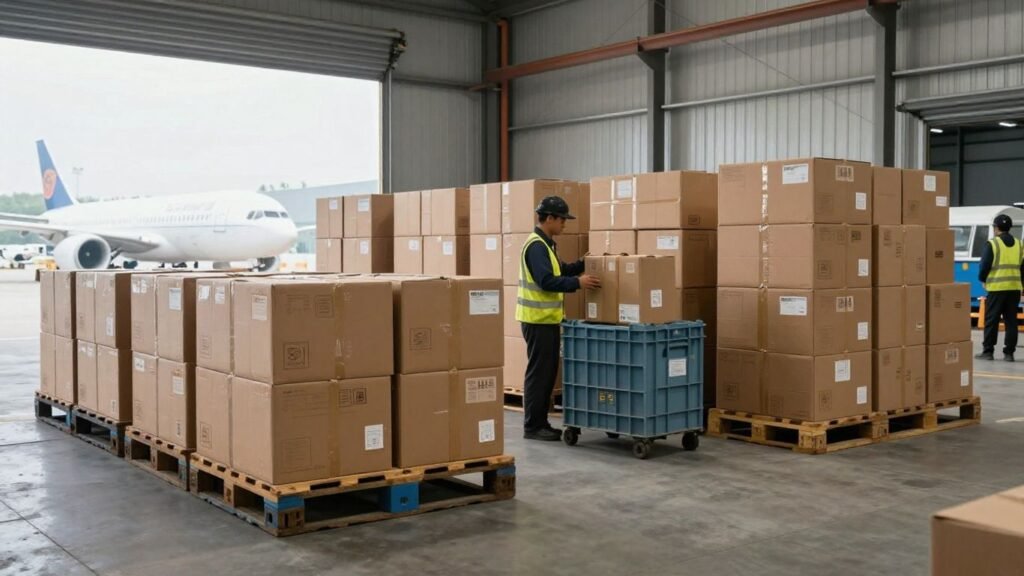
Vape cargo consolidation China brings goods from multiple suppliers together so they can move as one coordinated consignment. Instead of arranging a separate international shipment for every order, you can send the orders to a consolidation warehouse, where they are checked and prepared for export. Whether this reduces cost depends on shipment size, handling needs, route, and carrier rules. Consolidation also means you need a clear plan for what is arriving and when.
What a consolidator does between supplier pickup and export
The consolidator coordinates supplier handovers, receives cartons at a warehouse, and checks the cargo against the information provided. After the goods arrive, they may be measured, grouped, and prepared for the chosen route; the exact work depends on the booking and carrier requirements. Kunpeng Freight coordinates supplier pickup and cargo inspection as part of its China-to-destination freight service. A cargo consolidation service can also bring multiple suppliers’ orders into one shipment, but you should agree in advance on what inspection and repacking are included.
When combining orders can reduce shipping costs
Combining orders may reduce duplicated pickup or international handling charges, particularly when several small shipments would otherwise travel separately. The result is not automatic: a larger consolidated shipment can have different chargeable weight, storage, or destination costs, and delays in one supplier’s order can affect the group. Compare the full quotation line by line and assess how the charges change under each option. That makes the total landed cost more useful than a headline freight rate.
A simple comparison helps identify which fees are avoided and which remain when you combine orders:
| Cost item | Separate shipments | Consolidated shipment |
|---|---|---|
| Supplier-to-origin transport | May be charged for each order | May be combined or charged by pickup |
| International freight | Quoted per shipment | Quoted for the combined cargo and route |
| Warehouse handling | May be limited or absent | Receiving, storage, or repacking may apply |
| Destination charges | Can recur across shipments | Depends on clearance and delivery arrangement |
Use the comparison as a starting point, not a promise of savings. Ask for an itemized quote based on carton count, dimensions, gross weight, product details, and delivery location.
Which vape products may need separate handling
Devices, loose batteries, and e-liquids may be subject to different packaging, documentation, or transport conditions. Give the consolidator an accurate product breakdown, including battery configuration and liquid details, rather than describing every carton simply as “vape products.” Carrier acceptance can vary by product, route, and shipping method, so separate handling may be needed even when the goods belong to one purchase order. Check requirements before dispatch, not after the cargo has arrived at the warehouse.
When consolidation is a poor fit for urgent or restricted orders
Consolidation may be unsuitable when one order has a tight deadline, a carrier will not accept one of the products, or destination rules prevent import. Waiting for several suppliers to finish can add time, and splitting restricted or time-sensitive goods into separate shipments may be more workable. For an overview of the product and transport questions that can affect a shipment, review vape shipping regulations alongside destination-country guidance. Do not send goods on the assumption that one carrier’s acceptance applies to every product or route.
Prepare suppliers and orders before pickup
Good consolidation starts with consistent information from every supplier. Ask each one to confirm what is packed, when it will be ready, and how it is identified, then pass the same details to the freight coordinator. Kunpeng Freight coordinates pickup from Chinese suppliers and consolidation, so clear handover details help keep the separate orders associated with the correct shipment. The warehouse cannot resolve missing product or timing information as efficiently as the supplier who packed the goods.

Confirm product details, quantities, and ready dates
Build one order summary that lists each supplier, product type, quantity, carton count, dimensions if available, and expected ready date. Include device, battery, and e-liquid details where applicable; broad or inconsistent descriptions can complicate carrier review and document preparation. Ask suppliers to notify you before changing quantities or substituting a product. This gives the consolidator a reliable reference when cartons arrive.
Share packaging, labeling, and battery information
Tell suppliers how cartons should be marked for identification and share any handling or packaging instructions required for the planned route. Provide accurate battery and liquid information early, including details requested by the carrier or freight provider. For mixed-category businesses, keep product-specific checks distinct: guidance on hardwood indoor-air considerations, pool lounger dimensions, winter site preparation, chimney safety, and summer HVAC maintenance belongs to those separate workflows, not to vape cargo declarations. Separate records help prevent unrelated goods or requirements from being confused during receiving.
Set a delivery deadline for each supplier
A single overall shipping deadline is not enough when suppliers finish at different times. Give each supplier a warehouse delivery deadline and confirm whether the goods will arrive directly or require a pickup. A useful handover plan is short and specific:
- Confirm the supplier’s ready date and warehouse delivery deadline.
- Provide the receiving address and a shipment or order reference.
- Ask the supplier to report any quantity or packaging change before dispatch.
- Set a latest arrival date that leaves time for inspection and document checks.
Use those dates to decide when the consolidated shipment can be booked. If one order misses its deadline, you can then make a deliberate choice to wait, ship the ready goods, or arrange a separate movement.
Agree on who pays for domestic transport and export costs
Confirm whether the supplier, buyer, or freight provider arranges and pays for transport from the factory to the warehouse. Also clarify which party covers warehouse handling, export documentation, and any requested repacking. These responsibilities can differ between suppliers and orders, so write them down rather than relying on an informal assumption. Kunpeng Freight’s service scope includes supplier pickup and export handling, while the actual charges depend on the shipment details and agreed service.
Receive, inspect, and pack goods at the consolidation warehouse
Warehouse receiving is the point where separate supplier orders become one controlled shipment. Each carton should be matched to an order record before it is stored or repacked, and any mismatch should be raised while the supplier can still clarify it. Inspection can identify count differences and visible damage, but it does not replace a technical product test or guarantee that goods meet destination rules. Keep the receiving record alongside the supplier’s packing list.
Match incoming cartons to supplier packing lists
Use supplier names, purchase-order references, carton marks, and packing-list details to identify each delivery. If labels are missing or several suppliers use similar packaging, pause and ask for confirmation rather than assigning cartons by appearance alone. A receiving record should show what arrived, when it arrived, and which order it belongs to. This makes later questions about a shortage or delayed order easier to investigate.
Check quantities, visible damage, and product identifiers
Compare the received carton count and visible product information with the supplier’s list. Note crushed packaging, leakage, broken seals, or other visible damage, and take photographs when the agreed receiving process allows it. The warehouse check is a practical handover record, not proof of internal product condition or regulatory compliance. Kunpeng Freight’s cargo inspection and consolidation workflow supports checking incoming goods before the export shipment is prepared.
Flag lithium batteries, e-liquids, and other sensitive goods
Sensitive cargo should be identified before the shipment is booked. Share the exact product configuration and any carrier-requested battery or liquid information, and keep documentation tied to the correct cartons. If the product description, quantity, or configuration differs from the booking details, stop and resolve the discrepancy before tendering the cargo. Requirements depend on the carrier, route, and destination, so avoid treating a previous shipment as automatic approval for a new one.
Repack or separate cargo when carrier rules require it
Repacking may help organize cartons or meet an agreed packaging requirement, but it should not obscure the original product identity or shipment records. Ask the carrier or freight provider whether the goods can travel together and whether any carton needs separate treatment. Record any new carton count or dimensions after repacking, since these details can affect booking and charges. Keep the updated packing information available for the invoice and consolidated packing list.
Confirm compliance and shipment documents
A consolidated shipment still needs accurate information for every product within it. Before booking, compare supplier descriptions and quantities with the destination requirements, carrier instructions, and proposed shipping documents. Kunpeng Freight provides import paperwork assistance and customs documentation support as part of its freight-forwarding services; the importer remains responsible for providing complete and accurate product information and confirming that the goods may be imported. Early review gives you time to resolve missing or conflicting details before dispatch.

Check destination-country rules for vapes and e-cigarettes
Rules can differ by country and product type, including devices, disposables, and e-liquids. Confirm import eligibility, any required authorizations, and restrictions that apply to the specific products and quantities before shipping. If a market’s rules are unclear, seek guidance from the relevant authority or a qualified customs professional. Carrier acceptance does not by itself establish that goods may be imported or sold at destination.
Verify product descriptions, tariff classifications, and declared values
Use descriptions that identify the goods clearly and consistently across the invoice, packing list, and transport records. Verify the tariff classification and declared value with the appropriate customs resource or advisor; do not select a code just because it was used on a different product. Check that supplier documents, order quantities, and the consolidated shipment summary agree. Any discrepancy should be corrected before the export declaration is submitted.
Prepare commercial invoices and a consolidated packing list
The commercial invoice should reflect the actual goods, values, and parties involved in the transaction. The consolidated packing list should show how the suppliers’ cartons have been combined, including carton counts and cargo details required for the route. Have suppliers confirm the information they provide, then reconcile it against warehouse receiving records. A customs documentation support process can help coordinate document review, but the underlying data must still be accurate.
Confirm battery declarations and other required transport documents
Ask the carrier or freight provider which battery declarations, test summaries, safety data, or other transport documents apply to the exact shipment. Requirements can depend on battery chemistry, configuration, packaging, and route; do not assume every vape device needs the same documents. Provide requested documents before booking and check that identifiers and product descriptions align with the cargo. For a closer look at air-freight battery preparation, consider the specific carrier and destination requirements for your shipment.
Choose a shipping method and plan the route
The right route depends on urgency, shipment volume, product acceptance, and the time needed for customs and final delivery. Air, ocean, and express services differ in cost structure and handling, and not every service accepts every vape product. Kunpeng Freight coordinates air, sea, rail, road, and express shipping, with the suitable option determined by cargo details and route. Compare service scope and total charges before choosing a mode.
Compare air, ocean, and express services for the shipment
Use a like-for-like comparison that includes the same cargo details, destination, and delivery scope for each quote. Ocean service may suit some larger shipments with more lead time, while air or express can be considered when timing is tighter and the carrier accepts the goods. The table below is a planning aid; it does not predict transit time or establish acceptance for a specific vape shipment.
| Service type | Common planning consideration | Confirm before booking |
|---|---|---|
| Air freight | Transit and handling needs for the route | Battery and liquid acceptance, documents, chargeable weight |
| Ocean freight | Shipment volume and longer planning horizon | Cargo classification, sailing schedule, destination charges |
| Express | Door-to-door scope and service limits | Product acceptance, restrictions, duties, and delivery coverage |
Compare the complete service and exclusions, not just the quoted transport leg. For ocean options, a vape sea-freight planning guide can help frame questions about shipment size, lead time, and landed charges.
Check carrier acceptance for the exact products and destination
Before dispatch, send the carrier or service provider a precise product description, battery details, liquid contents, quantities, and destination. Request confirmation that the proposed service accepts those goods on that route and ask about packaging and documentation. Do not infer acceptance from a general service description or an earlier shipment to another country. Written confirmation can clarify the booking conditions, though it does not replace import compliance checks.
Weigh transit time against handling and customs requirements
A faster quoted transit option may involve different acceptance limits, handling steps, or customs arrangements. Allow time for supplier delivery, warehouse receiving, document review, export processing, and destination clearance when setting an arrival target. Published transit estimates are not fixed promises; carrier schedules, inspections, and incomplete cargo information can affect progress. Choose a plan that leaves room for those stages rather than using the transport time alone.
Confirm import clearance, delivery terms, and last-mile arrangements
Before cargo leaves China, confirm who will act as importer, arrange customs clearance, and pay duties and taxes. Make the delivery term and destination address clear, including whether the goods are going to a business, warehouse, or fulfillment center. Check whether unloading, appointment booking, or other final-mile services are included. Resolve these details in the quote and shipping instructions so there is no uncertainty when the shipment arrives.
Calculate costs and manage shipment risks
Consolidation shifts some work to the origin warehouse, so a meaningful cost comparison has to include more than the international freight rate. Request an itemized quotation based on actual cargo measurements and the full delivery scope. Also consider the time cost of waiting for suppliers and the possibility that one order will arrive late or require special handling. Clear tracking and agreed escalation contacts make exceptions easier to manage.
Compare consolidation fees with individual supplier shipments
Compare the proposed consolidated charge with separate shipment quotations for the same goods and delivery destination. Include pickup, receiving, storage, export handling, and any repacking in the consolidated option, then compare destination charges and customs costs on both sides. A cost comparison for vape shipments can help identify variables such as product type, chargeable weight, route, and surcharges. Savings depend on the actual cargo and service terms, so treat them as a calculation rather than an assumption.
Include origin transport, storage, repacking, and destination charges
Ask the provider to identify which fees are included and which may be billed separately. These can include domestic pickup, warehouse receiving or storage, remeasurement, repacking, export documentation, destination handling, customs clearance, duties, taxes, and final delivery. Match the quotation to your intended delivery term so you can see which costs remain your responsibility. Kunpeng Freight provides freight coordination from supplier handover through final delivery, with charges based on shipment details and the selected services.
Allow for customs inspection, delays, or incomplete supplier orders
Set aside time and budget for circumstances that cannot be fully controlled, including customs inspection, carrier schedule changes, and supplier delays. Agree on what happens if one order arrives late: wait for it, ship the available cargo, or move it separately. Also decide whether extra storage or a change to the booking requires your approval. These decisions are easier to make before the warehouse is holding goods from several suppliers.
Track the consolidated shipment and resolve exceptions promptly
Keep one shipment reference, a current supplier-order summary, and the agreed contact for status updates. When tracking shows a delay or a document or delivery exception arises, compare the latest status with the booking details and respond to the party responsible for that step. Save updated invoices, packing lists, and receiving notes in the same shipment file. This gives all parties a consistent record while the issue is being resolved.
Conclusion
Consolidating vape orders from multiple Chinese suppliers is most effective when product details, ready dates, warehouse checks, documents, carrier acceptance, and delivery responsibilities are coordinated before export. Compare the full landed cost and leave room for delays or product-specific handling, so the shipment plan reflects the cargo you actually have rather than the one you expected.
Frequently Asked Questions
What does vape cargo consolidation mean?
It means collecting orders from multiple suppliers at a warehouse, checking and preparing them, then shipping them together as one consignment when the products and route allow it.
Can different vape products travel in one shipment?
Sometimes, but acceptance depends on the exact products, batteries or liquids involved, carrier rules, packaging, and destination requirements. Confirm before suppliers dispatch the goods.
What information should I collect from each supplier?
Collect product descriptions, quantities, carton counts and dimensions, ready dates, battery or liquid details, and any documents required for carrier and customs review.
Does consolidation always lower shipping costs?
No. It may reduce duplicated charges, but warehouse handling, storage, repacking, chargeable weight, and destination fees can change the total. Compare itemized quotations for the same goods and delivery scope.
Should I wait for every supplier before shipping?
That depends on the deadline, the cost of storage, and whether a partial shipment is practical. Agree on a latest arrival date and decide in advance how to handle a supplier that misses it.
Which documents may be needed for a vape shipment?
Requirements vary by product, carrier, route, and destination. Common planning documents include a commercial invoice, packing list, and any applicable battery or transport declarations; confirm the exact requirements before booking.
Who is responsible for import duties and final delivery?
Responsibility depends on the agreed delivery terms and service scope. Confirm who handles import clearance, duties and taxes, and last-mile delivery in writing before the shipment leaves China.