
Key Takeaways
Shipping vapes internationally requires checking destination rules and carrier acceptance before goods leave the supplier. Treat classification, documents, costs, and delivery roles as one connected plan.
- Confirm the exact product, nicotine content, and intended market before booking.
- Get destination-specific import guidance and written carrier acceptance.
- Verify battery status, packaging rules, and required transport documents.
- Compare freight options using cargo details, route, timing, and handling needs.
- Assign customs and delivery responsibilities clearly, then keep complete records.
Confirm the products can legally ship to your destination
Before you arrange to ship vapes from China, establish what the goods are and where they are going. Rules can differ for devices, liquids, nicotine products, samples, and commercial inventory, and they may govern importation as well as sale or promotion. Confirm the requirements for the destination market before production or dispatch. A freight booking cannot make a prohibited or non-compliant product acceptable.
Identify the vape type, nicotine content, and intended use
Ask the supplier for a precise description of each item: device type, whether it is disposable or refillable, whether liquid is included, nicotine concentration if applicable, and whether batteries are installed or packed separately. Record the intended use, such as a commercial sale, sample evaluation, or another permitted purpose. Avoid relying on a broad description like “electronic goods”; customs and carriers need details that match the physical cargo.
Check that product names, quantities, and descriptions are consistent across the purchase order, invoice, packing list, and transport booking. That consistency helps the parties assess the shipment against both destination rules and transport restrictions.
Check destination rules for importing, selling, and marketing vapes
Import rules are country-specific and can change. Check the destination authority’s current requirements for product registration, age restrictions, permitted ingredients, nicotine limits, packaging, labeling, and advertising before committing to a shipment. A product allowed for personal use may still be restricted for commercial import or sale.
If the rules are unclear, ask a qualified customs broker or the relevant regulator to review the product details in writing. For broader context on vape export guidance, use a source as a starting point, not a substitute for confirmation from the authorities responsible for your destination.
Verify export requirements with the supplier and relevant authorities
Ask the supplier which export documents and product records are available, and confirm whether any Chinese export procedures apply to the specific goods. The supplier should provide accurate composition and battery information rather than relying on a generic product description. Where needed, confirm the requirements with the relevant authorities or a qualified trade professional.
Keep the supplier’s written answers with your shipment file. Resolving a missing certificate or unclear description before pickup is usually easier than trying to reconstruct product details after cargo has entered a transport network.
Get written confirmation that your carrier will accept the shipment
A carrier’s general willingness to move electronics does not mean it will accept every vape product or battery configuration. Provide a complete cargo description, battery details, packaging information, route, and destination, then request written acceptance for the actual shipment. Ask whether the booking has restrictions on nicotine liquids, installed batteries, quantities, or service types.
Before handing over the cargo, verify four points with the carrier or its authorized booking channel:
- The exact vape and liquid description is acceptable.
- The battery configuration and documents meet the service conditions.
- The selected route and destination are available for this cargo.
- Any special packaging, labels, or handling instructions are understood.
Save the acceptance and any conditions with the booking record. If the goods or route change, ask for approval again rather than assuming the original confirmation still applies.
Choose a freight method and shipping provider
The right shipping method depends on the destination, shipment size, battery configuration, urgency, and carrier rules. Compare the full service—not just the quoted transport price—including pickup, export handling, customs support, and final delivery. Transit schedules and acceptance conditions can vary by route and carrier. Confirm the details for your own cargo before choosing.
Compare air freight, ocean freight, and express courier options
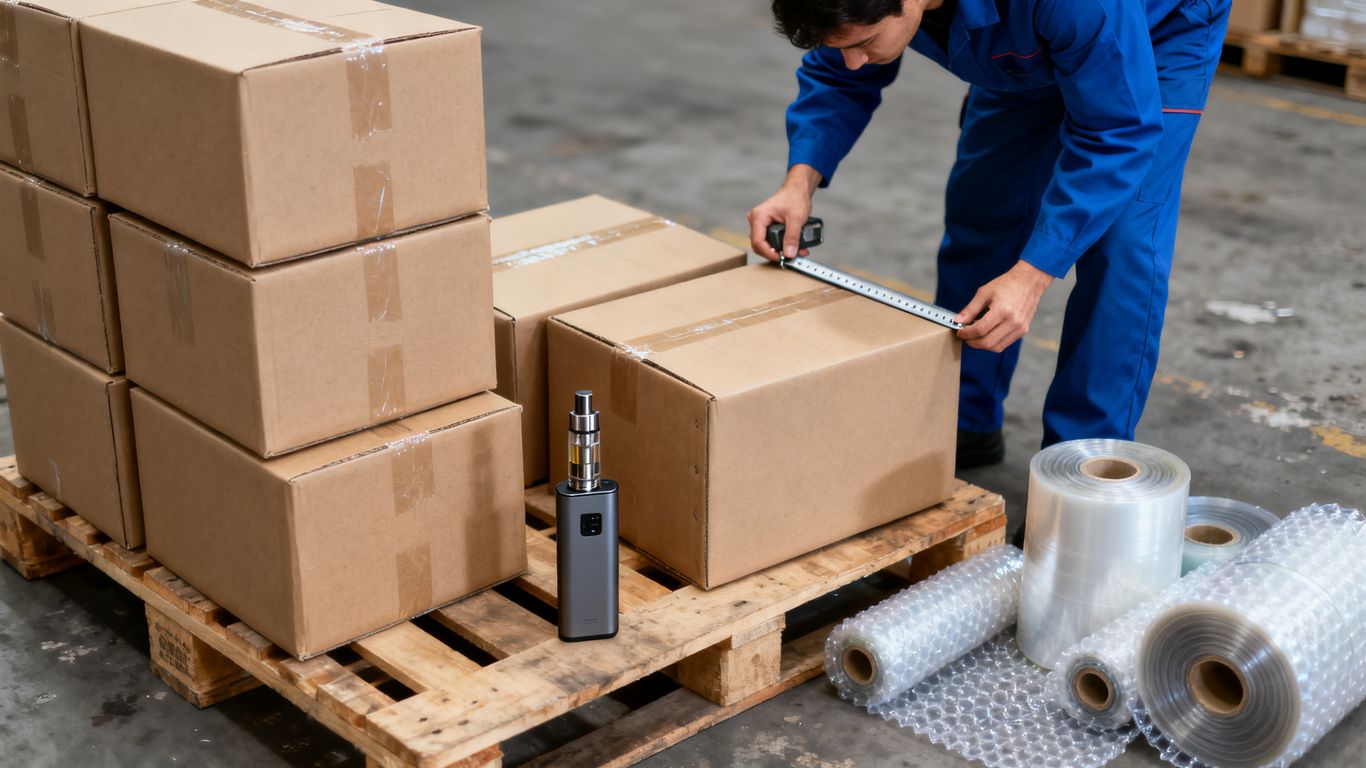
Air freight can suit time-sensitive cargo when the carrier accepts the products and the shipment meets its requirements. Ocean freight may be worth comparing for larger or less urgent consignments, while express courier can be convenient for smaller shipments if the service accepts the goods. Each mode has different capacity, handling, routing, and cost considerations.
Use a comparison like this to frame the discussion with providers; it is not a promise of service availability or transit time.
| Method | May suit | Confirm before booking |
|---|---|---|
| Air freight | Shipments where timing matters and air acceptance is confirmed | Battery rules, route, handling, and flight availability |
| Ocean freight | Larger shipments with more flexible timing | Cargo acceptance, sailing schedule, port handling, and destination charges |
| Express courier | Smaller consignments needing a door-to-door service | Vape and liquid restrictions, address coverage, and included customs services |
The practical choice is the service that accepts the precise product and fits your delivery plan. Compare itemized quotes using the same cargo dimensions, weights, declared contents, and destination so the differences are meaningful. For a broader comparison of air and sea freight options, consider the trade-offs beyond the headline rate.
Account for battery and vape restrictions when selecting a service
Vapes may contain lithium batteries, and some shipments include liquids; either can affect carrier acceptance and handling. Do not classify the goods based only on how a supplier has shipped similar products before. Confirm the battery configuration, product classification, applicable transport rules, and route requirements with the carrier or a qualified dangerous-goods professional. A useful starting point is this guide to battery shipping requirements.
A service that accepts one device configuration may not accept another. Include the exact model, battery details, and whether batteries are installed, packed with equipment, or shipped separately when requesting a quote.
Choose a forwarder with experience handling regulated products
Ask prospective providers how they review cargo details, confirm carrier acceptance, coordinate supplier handover, and handle documents before dispatch. You should know who will check the packed shipment and who will contact you if the declared cargo differs from what is received. Specific answers are more useful than a general assurance that the goods can be shipped.
Kunpeng Freight coordinates supplier pickup, export handling, and air, sea, rail, road, and express shipping. Its role should be discussed against your exact cargo and route: confirm acceptance, service scope, and any exclusions before you authorize the booking.
Compare transit times, service scope, and handling requirements
Ask for an estimated transit range and what the estimate includes. Pickup, export processing, consolidation, customs review, inspection, and final delivery can all affect the overall schedule, while carrier timetables can change. Confirm whether the quote covers door-to-door delivery or only transport between particular points.
The comparison should also identify who handles each handoff. A low initial quote can leave separate costs or tasks outside the service, so request an itemized breakdown and note the assumptions behind it.
Prepare vapes and batteries for transport
Packaging and classification have to match the actual device and battery, not a generic category supplied during an early price inquiry. Verify the transport rules before packing, because the accepted packaging and labels depend on the cargo classification and selected service. Build enough time into the plan for document review or repacking if the first version does not meet carrier conditions.
Confirm battery classification and transport eligibility
Ask the manufacturer for the battery type, chemistry, configuration, and relevant capacity information, and establish whether each battery is installed in a device, packed with it, or shipped separately. A qualified dangerous-goods professional or carrier can help determine the applicable classification and whether the proposed service may carry it. Do not guess from the device’s appearance or product listing.
Make the resulting classification clear to the forwarder and carrier before booking. If the shipment includes more than one model or battery arrangement, identify each configuration separately so one item does not obscure another.
Check applicable lithium battery testing and documentation requirements
Check which battery test records and transport documents apply to the specific configuration and mode. A UN 38.3 test summary may be required in relevant circumstances, but its applicability and any additional documentation should be confirmed with the carrier and the rules governing the shipment. The supplier should provide records that correspond to the batteries actually being shipped.
Keep the test information available for review before dispatch. If a document lists a different model or battery than the goods, ask the supplier to resolve the discrepancy rather than submitting a record that only appears similar.
Pack devices and batteries to prevent damage or accidental activation
Use packaging appropriate to the verified transport classification and carrier instructions. Protect devices from movement and impact, prevent terminals from contacting conductive material where applicable, and secure switches or controls against accidental activation. Keep products dry and intact, and ensure the outside package is suitable for the route and handling plan.
Have the supplier share packing details or photographs before collection when practical. The final packed cargo should match the description and declared quantities, not simply the original purchase order.
Apply required dangerous goods labels and handling marks
Do not apply labels based on a template or assumption. Confirm the required marks, labels, and package documentation for the classified goods, packaging, and selected mode with the carrier or qualified specialist. Incorrect or missing marks can delay acceptance, trigger repacking, or lead to the cargo being held.
Check that labels are legible and placed as instructed, and that package marks agree with the accompanying documents. Keep a record of the final package condition and any carrier instructions for your shipment file.
Gather shipping and compliance documents
Prepare the documents from one verified set of cargo details. Product names, quantities, weights, battery descriptions, shipper and consignee information, and package counts should align across the paperwork. A document review before dispatch can expose mismatches while the supplier can still correct them.
Prepare an accurate commercial invoice and packing list
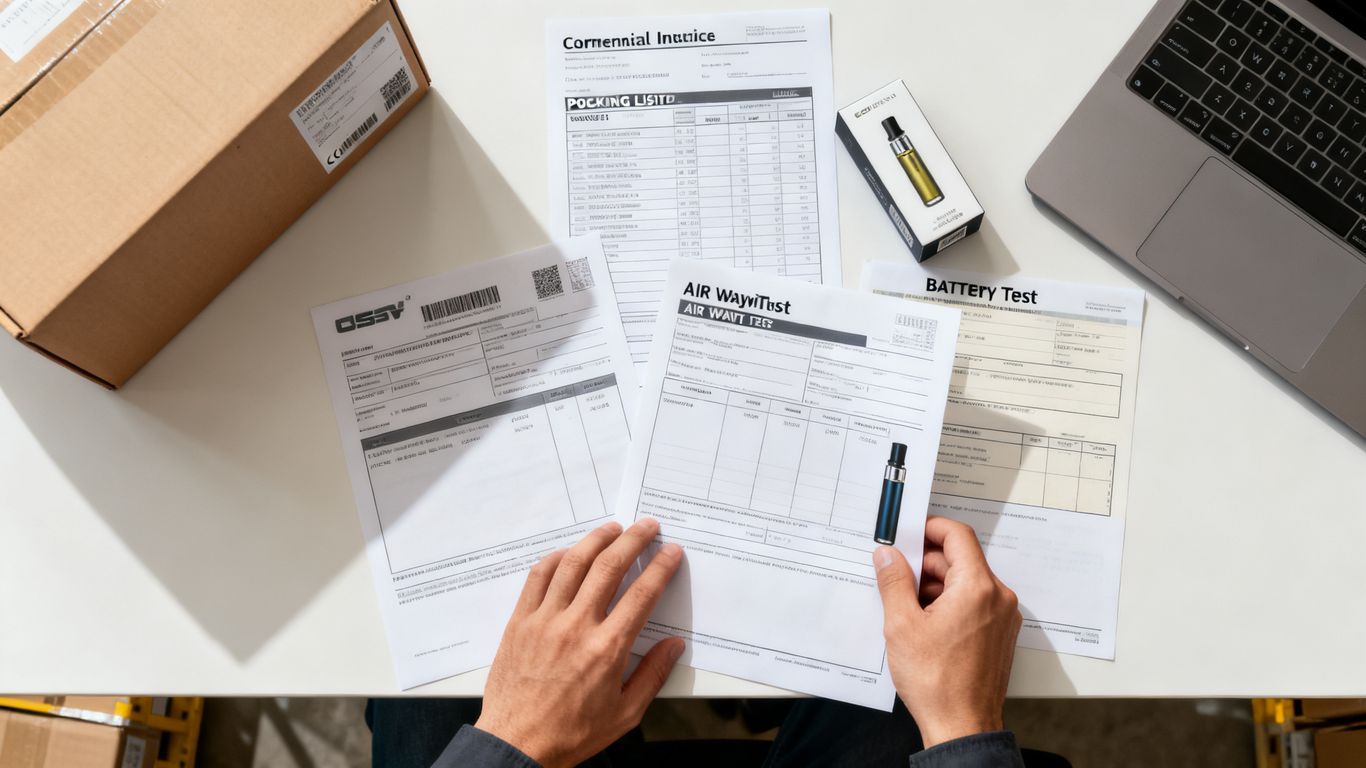
The commercial invoice should describe the goods plainly and accurately, with values, quantities, seller and buyer details, and other information requested for the destination. The packing list should show how the cargo is physically packed, including carton counts, contents, weights, and dimensions. Do not use vague descriptions that conceal what the shipment contains.
For a useful cross-check, review packing list accuracy against the invoice and the supplier’s final packing details. The documents should describe the cargo that is actually handed over, including any differences between models or package contents.
Confirm the bill of lading or air waybill matches the shipment details
Review the draft transport document before it is finalized. The shipper, consignee, destination, package count, cargo description, and other shipment details should reflect the booking and supporting documents. If a forwarder issues the document, confirm who is responsible for checking the draft and correcting errors before departure.
Once the details are confirmed, retain the final bill of lading or air waybill with the invoice, packing list, and booking correspondence. If anything changes after the draft is reviewed, request a corrected version where applicable.
Collect battery documents such as UN 38.3 test summaries when required
Request battery test summaries and any other records the carrier or applicable rules require for the specific goods. Verify that the documentation corresponds to the battery manufacturer, model, and configuration in the shipment. Additional safety data or dangerous-goods paperwork may also be needed depending on the products and route, so confirm the exact document set before collection.
A document is only useful if it matches the cargo. If the supplier provides a record with a different battery model or incomplete details, pause the booking and seek clarification rather than assuming it will be accepted.
Include destination-specific permits, registrations, or product evidence
Check whether the destination requires permits, product registrations, test evidence, or other compliance records for import or sale. Keep copies available for the importer, broker, and carrier as appropriate. Requirements can differ between product categories and intended uses, so confirm the list for the specific goods instead of copying paperwork from a previous shipment.
Kunpeng Freight provides customs documentation support and import paperwork assistance, which can help coordinate document review as part of a shipment workflow. Confirm with the provider which documents it will review and which approvals remain the importer’s responsibility.
Calculate landed costs and assign responsibilities
The landed cost is more than the main freight charge. It can include origin handling, transport, destination charges, duties, taxes, brokerage, insurance, storage, and inspection-related costs. Ask for a quote based on measured cargo and a defined service scope, then identify who is responsible for each amount and task.
Estimate freight charges, surcharges, and handling fees
Request an itemized quote using confirmed carton count, dimensions, gross weight, product details, origin, destination, and delivery address. Ask which charges are estimates, which are fixed at booking, and which may change based on carrier schedules, inspection, or actual measurements. Check whether pickup, consolidation, export handling, terminal fees, and final delivery are included.
The same cargo information should be used when comparing providers. If the supplier’s final packed dimensions differ from the quote assumptions, ask for an updated cost before shipment rather than relying on an outdated estimate.
Check tariff classification, duties, and import taxes
Work with a qualified customs broker or relevant authority to determine the correct tariff classification for each product. Duties and taxes depend on classification, customs value, origin, and destination rules; avoid estimating them from a broad product label alone. Make sure the declared description and value are accurate and supported by the commercial documents.
Keep the classification decision and valuation assumptions with your records. If the destination authority or broker requests more product information, use the supplier’s verified specifications to respond consistently.
Use Incoterms to define who handles freight, customs, and delivery
Incoterms clarify which party arranges and pays for specified parts of the shipment, but they do not replace a complete plan for customs declarations or product compliance. Confirm the named place and agreed term with the supplier, then spell out any responsibilities that still need to be assigned, including import clearance and final delivery. Make sure the purchase agreement and freight booking do not contradict each other.
A written responsibility map helps prevent handoff gaps. Both sides should know who provides export documents, who pays destination charges, and who will act when customs or the carrier asks for more information.
Budget for customs brokerage, insurance, and possible inspections
Include brokerage and delivery costs in the estimate, and ask whether insurance is available and what it covers. Customs inspections or document requests can add time or charges, but the extent depends on the shipment and authorities involved. Budget with a contingency rather than treating an inspection-free clearance as certain.
Kunpeng Freight can coordinate shipping and delivery services from China; confirm which brokerage, insurance, and destination-side tasks are included in the particular quote. Clear scope makes it easier to compare the total expected cost rather than one transport line.
Clear customs and manage delivery
Customs clearance depends on accurate declarations, complete support documents, and a clearly identified importer. Before departure, agree who submits each declaration and who responds if officials request clarification. Once the goods are moving, keep the responsible contacts reachable and track updates through the carrier or forwarder.
Make sure declarations match the products and supporting documents
Check that the customs declaration uses a specific, truthful description and aligns with the invoice, packing list, and transport record. The declared quantity, value, origin, and classification should be supportable from the documents and product information. Avoid changing descriptions simply to make the goods sound less restricted or easier to clear.
If the physical cargo differs from the paperwork, correct the documents through the proper channel before the declaration is submitted. Consistency is especially important when a shipment contains different models or battery arrangements.
Confirm the importer of record and customs broker responsibilities
Identify the importer of record and confirm who is authorized to provide information to customs. Agree whether the importer, a broker, or another appointed party will prepare and submit declarations, pay duties and taxes, and communicate with officials. Do not assume the freight provider automatically takes on the importer’s legal obligations.
Record the broker’s contact details and the documents it expects. A clear division of work reduces duplicated submissions and helps the right person answer a request quickly.
Respond promptly to customs requests or inspection notices
A request for additional information or an inspection notice is not something to leave until the next routine update. Confirm what is being requested, who must respond, and the deadline, then provide accurate supporting records through the broker or authority’s specified process. Keep copies of the response and related correspondence.
If the request concerns product composition, battery data, or intended use, ask the supplier for verified details and check that the response matches the documents already submitted. Do not speculate when an official clarification is needed.
Arrange compliant final-mile delivery and keep shipment records
Before cargo is released, confirm the delivery address, receiving hours, unloading arrangements, and any restrictions at the destination site. Check that the final-mile provider can handle the shipment as declared and that the consignee is ready to receive it. Coordinate changes to the address or delivery contact before the cargo is dispatched for its final leg.
Keep the booking, acceptance, invoices, packing list, transport document, compliance records, customs entries, and delivery confirmation together. Kunpeng Freight coordinates final delivery as part of its logistics services; confirm the exact destination scope and handoff details for your shipment.
Conclusion
A well-planned vape shipment starts with product and destination checks, then carries those verified details through carrier approval, packing, documents, cost planning, customs, and delivery. Confirm responsibilities in writing and treat every quote or transit estimate as specific to the cargo and route, not a universal promise.
Frequently Asked Questions
Can I ship vapes from China to any country?
No. Destination rules may restrict or prohibit particular vape products, nicotine content, imports, or commercial sales. Check the applicable requirements before booking.
What information should I give a freight provider for a quote?
Provide the product type, liquid and nicotine details if applicable, battery configuration, package count, dimensions, weight, origin, destination, and requested delivery scope.
Are vapes treated as dangerous goods?
They may be subject to dangerous-goods transport requirements because of batteries or other product contents. Classification and carrier acceptance depend on the specific goods and shipment arrangement.
Do vape shipments need a UN 38.3 test summary?
A test summary may be required for relevant lithium battery shipments. Confirm the applicable requirement with the carrier or a qualified dangerous-goods professional for the actual configuration.
Is air freight or ocean freight better for vapes?
Neither is best for every shipment. Compare service acceptance, route, volume, timing, handling requirements, and total charges before choosing.
What documents are commonly requested for vape shipments?
Common documents can include a commercial invoice, packing list, bill of lading or air waybill, and applicable battery or destination compliance records. The exact set varies by cargo and destination.
Who pays duties and handles customs clearance?
That depends on the agreed Incoterm and shipment arrangement. Identify the importer of record, broker, payment responsibilities, and clearance tasks before dispatch.