
Key Takeaways
Sourcing daily-use ceramic tableware from Chaozhou requires decisions about product standards, supplier control, packing, freight, and import paperwork before the cargo is ready.
- Write product, quantity, packaging, and destination requirements before requesting quotations.
- Compare suppliers through factory evidence, samples, capacity, compliance records, and quality controls.
- Select freight according to volume, urgency, breakage risk, and total landed cost.
- Treat packing, carton data, and inspection records as part of the product specification.
- Review customs documents and shipment milestones early rather than waiting for a problem.
1. Plan your Chaozhou tableware sourcing project
Chaozhou offers a broad manufacturing base for plates, bowls, cups, serving pieces, and related ceramic goods. The first task is not finding the lowest quotation; it is defining what the shipment must accomplish in its destination market. A clear brief gives suppliers comparable information and gives the forwarder realistic cargo data. If your goal is to ship ceramic tableware from chaozhou, begin with decisions that can be measured and checked.

Define product specifications, quantities, and target markets
List each item by name, dimensions, capacity where relevant, material, finish, color, decoration, and intended use. State whether the order is for retail, food service, hospitality, or household distribution, because handling expectations and packaging may differ. Quantities should include the first order, expected replenishment, and any mixed-SKU constraints. Give the supplier the destination country and, if known, the final warehouse or fulfillment address.
A buyer should also identify the target market's food-contact rules, labeling requirements, and tolerance for cosmetic variation. For a multi-country program, do not assume one test report or one label will satisfy every market. Put the requirements into a document that can later become the approved product specification.
Choose ceramic types for everyday use
Everyday tableware is selected for a balance of function, appearance, weight, and price. Porcelain, stoneware, earthenware, and bone china can behave differently during firing, handling, washing, and transport, so the material should be agreed before sampling. Ask for the supplier's material description and test evidence rather than relying on a marketing term alone.
Consider stacking height, rim strength, handle geometry, glaze consistency, and resistance to staining. A lighter piece may reduce freight weight but can require more careful protection. A heavier piece may feel more substantial while increasing carton weight and handling exposure. The right choice depends on the use case and the destination buyer's expectations.
Compare factory-direct, trading company, and sourcing agent options
A factory-direct purchase can provide direct access to production information, while a trading company may combine products from several workshops. A sourcing agent can help coordinate communication, sampling, inspections, and pickup, but the responsibilities and fees should be written clearly. Ask who owns the tooling, who approves substitutions, and who is accountable when a batch does not match the sample.
Supplier research benefits from a repeatable process. This Chaozhou sourcing guide provides useful regional context, while a broader supplier verification guide can help structure checks around licenses, capabilities, samples, and production standards. These references do not replace your own verification, but they can help organize the questions.
Build a landed-cost and lead-time target
A purchase price is only one part of the decision. Estimate the factory price, local pickup, export handling, freight, insurance if selected, destination charges, duties, taxes, customs brokerage, and final delivery. Include inspection, repacking, labeling, and storage when those services may be needed. Use carton count, dimensions, gross weight, and cubic meters rather than an optimistic estimate based only on unit quantity.
Set a practical production window and a cargo-ready date. Then allow time for sample approval, production variation, inspection, booking, port cutoffs, customs review, and delivery appointment scheduling. A landed-cost planning resource can help keep purchasing and logistics assumptions in one working model.
2. Evaluate Chaozhou ceramic tableware suppliers
Supplier evaluation should connect what a company promises with what it can repeatedly produce and ship. A polished catalog is useful for finding styles, but it is not evidence of capacity or compliance. Request records, samples, and process details in a consistent format. The goal is to identify risks early enough to change the order, packaging, or supplier before production begins.
Verify factory capabilities and export experience
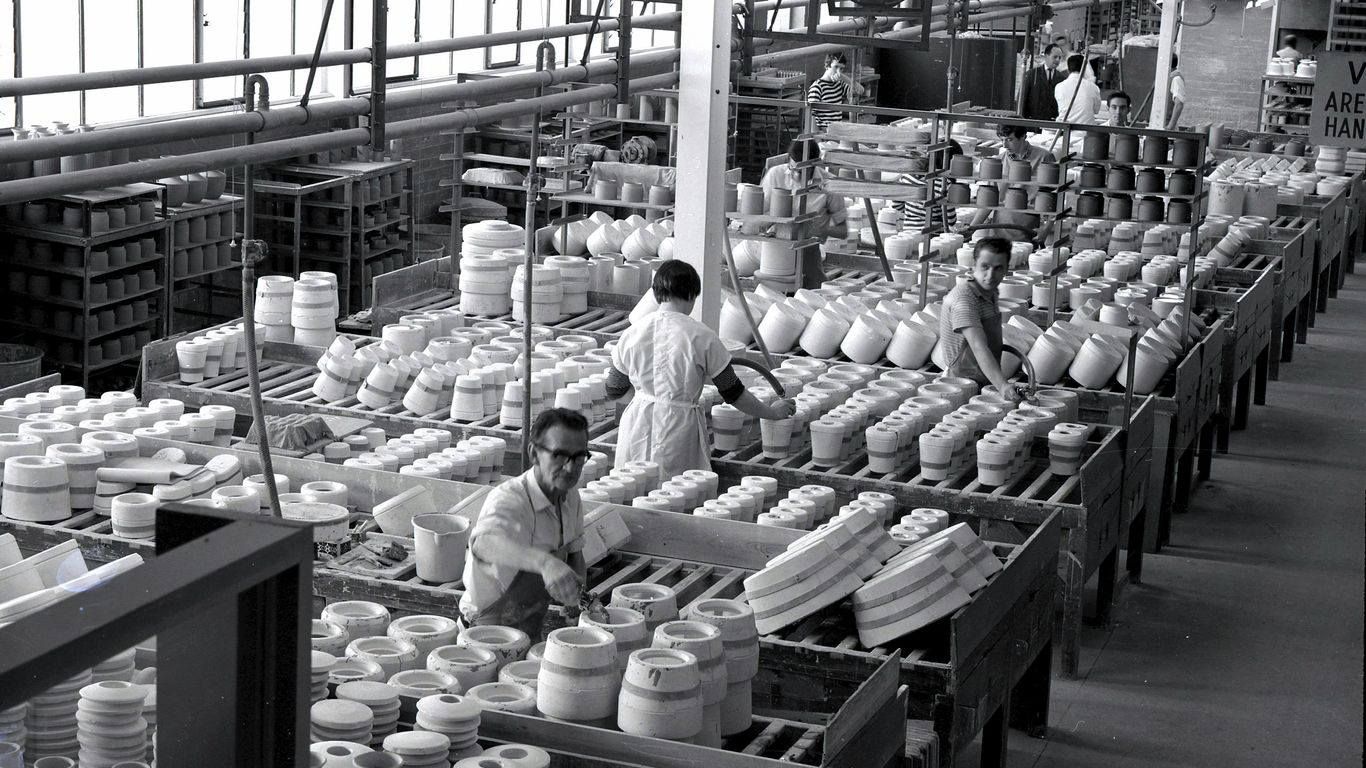
Ask for the legal company name, factory address, production photographs or video, main product categories, and export markets. Confirm whether the quoted goods are made in-house or sourced from another workshop. Export experience matters because a supplier familiar with commercial documentation, carton marking, and container loading may communicate cargo information more reliably.
If the order involves several product types, ask which production lines or workshops handle each one. A factory that is strong in simple plates may not have the same experience with decorated mugs, large serving pieces, or complex handles. Verify the capability that matches your actual order rather than accepting a general claim about ceramics.
Review certifications, testing reports, and food-contact compliance
Request current documents that identify the tested product, material, test methods, laboratory, and date. Check whether the report covers the glaze, decoration, and intended food-contact use. Lead and cadmium limits, migration testing, microwave or dishwasher claims, and labeling rules can vary by destination, so the importer remains responsible for confirming local requirements.
The document should be traceable to the item being purchased. A report for a similar-looking cup is not necessarily evidence for a different glaze or decoration. Ask how production changes are controlled and whether a new test is needed after changing materials, colors, or firing conditions.
Assess production capacity, minimum order quantities, and customization
Ask for a realistic monthly capacity for the specific items, not just the facility's total output. Confirm minimum order quantities by style, color, decoration, and packaging configuration. Custom logos, shapes, decals, and color matching may require tooling, approval cycles, and separate minimums.
Clarify how mixed cartons and mixed containers will be handled. A lower MOQ may be useful for a market test, but it can create more picking, labeling, and packing complexity. A high-volume order may improve production efficiency while increasing exposure if the specification has not been tested carefully.
Confirm quality-control procedures before placing an order
Request the supplier's inspection stages, including checks after forming, glazing, firing, decoration, and packing. Ask how it records dimensional variation, color differences, cracks, pinholes, glaze defects, warping, and carton damage. Agree on when an inspection can occur and what happens if the results fall outside the written limits.
For independent control, arrange cargo inspection before final payment or dispatch when commercially appropriate. Kunpeng Freight coordinates cargo inspection and consolidation as part of its China-to-destination logistics workflow, so a buyer can discuss pickup counts, photographs, measurements, and combining goods from multiple suppliers before booking freight. Keep the inspection scope specific: sample size, checks, photographs, and reporting format should all be agreed.
3. Select products and approve samples
Samples are where attractive ideas become measurable goods. Review them under the conditions in which customers will use and handle the tableware, not only under showroom lighting. The approved sample should be accompanied by written dimensions, materials, finish, decoration, packaging, and inspection criteria. That record is the reference point for production and for resolving disagreements later.

Specify dimensions, glaze, color, decoration, and packaging
Record diameter, height, capacity, weight, rim profile, foot ring, handle dimensions, and nesting or stacking requirements. Describe the glaze as precisely as possible and use a physical color standard when color consistency matters. Decoration instructions should identify placement, scale, method, and acceptable registration or print variation.
Packaging belongs in the same specification. State the inner carton dimensions, divider layout, protective wrap, carton strength, marks, labels, pallet requirements, and number of pieces per carton. If retail packaging is required, approve its artwork and barcode placement before mass production.
Test samples for durability, flatness, staining, and thermal shock
Inspect samples for rocking, uneven bases, sharp edges, visible cracks, glaze pinholes, and inconsistent decoration. Test flat pieces on a level surface and measure representative dimensions rather than relying on one sample. For cups and bowls, check nesting, handle strength, and whether the shape creates pressure points inside the carton.
Staining and thermal-shock tests should reflect the intended use and local compliance requirements. Do not treat a household test as a formal certification. Instead, use it to identify obvious weaknesses and then ask the supplier or an accredited laboratory for the appropriate testing route.
Set acceptable quality limits for common ceramic defects
A quality limit should distinguish critical, major, and minor defects. A food-safety failure, sharp fragment, or structural crack may require rejection of the affected piece or batch. Cosmetic issues such as small pinholes or slight color variation need a defined standard based on viewing distance, location, size, and intended sales channel.
Use photographs and measurement examples so inspectors and suppliers interpret the limits consistently. A table can make the discussion clearer when several defect types are involved:
| Check area | Example acceptance rule | Inspection method | Typical action |
|---|---|---|---|
| Structure | No cracks, sharp fragments, or unstable bases | Visual and hand inspection | Reject affected pieces |
| Dimensions | Within the written tolerance | Caliper or scale measurement | Segregate and review |
| Glaze | No prohibited contamination or severe exposed body | Visual and applicable testing | Hold for decision |
| Decoration | Placement and color within approved reference | Compare with sample and standard | Rework or classify |
The table is only a starting framework; the actual limits should match the product, market, and approved sample. Put the rules in the purchase order and inspection plan so they are not left to an informal conversation.
Approve a pre-production sample and written product specification
Before the full run, approve a pre-production sample made with the intended materials, decoration, firing process, and packaging. Sign or otherwise identify the reference sample, and retain photographs and measurements. Any later change should require written approval rather than being treated as an acceptable production convenience.
The specification should also state the order quantity, tolerance, packing count, carton data, marks, and documentation required at dispatch. This record links the purchasing decision to inspection, freight quotation, and customs description.
4. Choose the right freight method
Ceramic tableware is usually dense, fragile, and sensitive to handling, which makes freight selection a balance rather than a simple speed comparison. Ocean freight often suits planned commercial volumes, while air or express services may fit samples, urgent replenishment, or smaller shipments. The route, destination, season, carrier schedule, and cargo readiness date can all change the practical choice.

Compare ocean freight, air freight, and express delivery
Ocean freight generally provides a cost-efficient structure for larger volumes, but it requires planning around sailing schedules, port cutoffs, and destination handling. Air freight can reduce transit time for urgent or valuable cargo, although the chargeable weight and breakage exposure may make it less suitable for dense tableware. Express delivery is convenient for samples and small parcels but is rarely the natural method for a large commercial order.
Compare the whole route, not only the headline freight rate. Ask whether the quote includes pickup, export handling, documentation, destination charges, customs support, and final delivery. Kunpeng Freight lists sea, air, rail, road, and express options, allowing the mode discussion to be based on cargo volume, urgency, route, and delivery requirements rather than on a single default service.
Decide between full-container load and less-than-container load
Full-container load, or FCL, gives one shipment control over the container and can reduce transfer points. It may suit a large order that fills a meaningful portion of the available space. Less-than-container load, or LCL, combines cargo with other shipments and can work for smaller volumes, but consolidation and deconsolidation add handling stages.
Use the actual packed volume and weight to compare both options. A container that is only partly filled may still be reasonable when the cargo is fragile or the buyer needs control over loading. Conversely, LCL may be practical when the order is too small to justify a dedicated container and the packing system is strong.
Plan inland transport from Chaozhou to the export port
Confirm the supplier's exact address, loading conditions, truck access, operating hours, and cargo-ready date. Chaozhou pickup planning should allow time for counting cartons, checking dimensions, securing documents, and reaching the port before the relevant cutoff. If several suppliers are involved, sequence the pickups so consolidation does not create avoidable storage or missed booking risks.
The inland plan should identify who loads the truck, who provides the loading list, and who reports discrepancies. A forwarder can coordinate supplier pickup and provide practical route guidance, but the shipper still needs to confirm that the cargo is complete, correctly packed, and ready for handover.
Calculate freight costs using volume, weight, and shipment terms
For ceramics, both weight and volume can affect the quote. Measure the packed cartons, record gross and net weight, and state the number of pieces per carton. Then compare the quote under the selected Incoterm, because EXW, FOB, CIF, and DDP distribute costs and responsibilities differently.
The following freight cost guide illustrates why carton data, FCL or LCL choice, inland trucking, and shipment terms belong in the same calculation. Ask for an itemized quotation and check which charges are estimates, variable destination fees, or excluded services.
5. Pack ceramic tableware for international transport
Packing is a product-protection system, not merely a carton purchase. The system must control movement inside the box, separate hard surfaces, protect rims and handles, and withstand stacking and handling. It should also be practical for the supplier to reproduce at production speed. A packing standard that cannot be inspected is difficult to enforce.
Design inner cartons, dividers, and protective materials
Start with the most vulnerable features: rims, corners, handles, feet, and protruding decoration. Use dividers or molded compartments to prevent pieces from striking one another, and select cushioning that fills voids without placing pressure on fragile edges. Separate each piece where contact could cause abrasion or chipping.
Carton size should balance protection and wasted space. Oversized cartons may permit movement and increase dimensional freight cost; undersized cartons can compress the contents. A useful ceramic packing guide can help structure decisions about layered protection, cartons, crates, and vulnerable areas.
Select pallet and container-loading methods
Decide whether cartons will be palletized, floor-loaded, or placed in a hybrid arrangement. Pallets can simplify handling and reduce direct contact with warehouse floors, but they consume space and add weight. If pallets are used, specify dimensions, wrapping, corner protection, load height, and whether the destination can handle the pallet type.
Inside the container, distribute weight evenly and avoid placing heavy cartons on fragile pieces. Use appropriate blocking or bracing where movement is possible. Photograph the loading pattern and record the container number and seal so the shipment file contains evidence of how the cargo left the supplier.
Reduce breakage through drop testing and compression testing
Testing should reflect the packed configuration, not just an unpacked product. Drop testing can expose weak dividers, poor void control, and carton corners that fail during handling. Compression testing helps assess whether lower cartons can support the planned stack without collapsing or transferring damaging pressure to the tableware.
A test failure is useful only if it leads to a change. Revise the divider, cushioning, carton board, or stacking height, then repeat the test on the revised pack. Do not approve a packing design because one sample survived a gentle handling sequence.
Document packing standards and pre-shipment inspections
Create a packing sheet with photographs, carton dimensions, piece counts, materials, marks, pallet instructions, and loading photographs. The inspector should be able to compare the production cartons with the approved standard without guessing. Record any substitutions and obtain written approval before dispatch.
A pre-shipment inspection should reconcile product quantity with carton quantity and check visible damage, labels, and packing integrity. Kunpeng Freight can coordinate inspection and supplier handover within its broader freight workflow; the exact scope should be agreed before the inspection date. If repacking is required, document who authorizes it and how the revised carton data will reach the customs and freight documents.
6. Prepare export documents and customs clearance
Customs clearance depends on consistent information across the commercial invoice, packing list, transport document, and import entry. Ceramic tableware should be described accurately by material and use, without vague wording that makes classification difficult. The importer should confirm destination requirements with the relevant broker or authority before the cargo departs.
Confirm HS codes, product descriptions, and customs values
An HS code is a classification used for customs purposes, but the correct code can depend on the product's material, function, composition, and destination tariff schedule. Confirm the proposed classification with a qualified customs professional or the importing authority. Do not choose a code only because it produces a more attractive duty estimate.
Descriptions should identify the goods plainly, such as ceramic plates, bowls, mugs, or serving pieces, with relevant material and quantity details. Customs value should reflect the applicable transaction and valuation rules. Keep invoices, payment evidence, and purchase terms available if questions arise.
Prepare commercial invoices, packing lists, and transport documents
The invoice should show the seller, buyer, goods, quantities, unit values, total value, currency, and agreed trade term. The packing list should show cartons, contents, gross and net weight, dimensions, and marks. A packing list review guide is useful for checking mismatched quantities, weights, dimensions, and physical descriptions before submission.
The transport document must match the shipper, consignee, notify party, packages, weight, and routing instructions. Review drafts before issuance. A small mismatch can create a larger problem when customs, a warehouse, or a delivery appointment relies on a different version.
Check country-specific duties, taxes, and import requirements
Import rules differ by destination and may cover food-contact testing, labeling, packaging materials, product safety, duties, value-added tax, and importer registration. Confirm whether the goods need a declaration, test report, marking, or special record before production is finalized. If the order is sold through a marketplace or fulfillment network, check that channel's receiving and labeling rules as well.
Leave time for customs questions and possible inspections. A forwarder may assist with documentation and coordination, but the importer remains responsible for the accuracy of its entry and compliance obligations. This customs and HS code resource offers a broader checklist for classification, Incoterms, and international shipping documents.
Clarify responsibilities under Incoterms such as FOB, CIF, and DDP
Incoterms allocate defined costs, tasks, and risk points between seller and buyer, but they do not replace a complete service agreement. Under FOB, for example, the buyer generally manages the main carriage after the agreed port handover, while CIF includes specified insurance and freight to the destination port. DDP places more delivery responsibility on the seller, subject to the seller's ability and legal position to handle import formalities in the destination.
Write the named place and term clearly, then list any services that sit outside it. Confirm who arranges pickup, export clearance, insurance, destination customs, duties, storage, and final delivery. The import paperwork service can be discussed when you need help organizing the shipping file, but the commercial responsibilities should still be confirmed by all parties.
7. Manage the shipment from Chaozhou to final delivery
A shipment is not complete when the container leaves the factory. Production status, cargo readiness, booking, loading, documents, port movement, customs, and final delivery all need connected records. Clear milestone ownership helps the buyer distinguish a production delay from a carrier schedule change or a customs query. It also creates useful evidence when the next order is planned.
Coordinate production schedules, booking, and cargo readiness
Agree on the production completion date, inspection date, packing completion, and cargo-ready date. Book freight only after the likely volume and weight are sufficiently reliable, while leaving room to revise the booking if production changes. Confirm the supplier's pickup address, contact person, loading hours, and final carton count.
If multiple suppliers are involved, use one consolidation plan with separate counts for each supplier. Kunpeng Freight's documented workflow includes supplier pickup, cargo inspection, consolidation, export handling, and final delivery coordination, which can be relevant when the shipment needs one accountable operating sequence across several handovers.
Track loading, departure, transshipment, and arrival milestones
Track the milestones that affect decisions: pickup completed, cargo received, inspection completed, container loaded, gate-in, vessel or flight departure, transshipment if applicable, arrival, customs release, and delivery appointment. Ask for updates when a milestone changes rather than relying on a single estimated arrival date.
Carrier schedules can move, and customs inspections or document corrections can add time. Maintain a shipment file with booking confirmation, loading photographs, seal information, document versions, and communication records. This turns updates into an operational record rather than a series of disconnected messages.
Inspect goods at destination and document damage claims
Inspect cartons and representative pieces promptly after arrival, following the carrier, insurer, warehouse, or sales agreement deadlines. Photograph the outer carton, marks, pallet or container condition, and internal damage before disposal or repacking. Record carton numbers and quantities so the claim can connect the damage to the shipping documents.
Separate transport damage from production defects where possible. A cracked glaze found in an undamaged inner carton may require a different response from a crushed carton with several broken pieces. Notify the responsible parties in writing and retain inspection reports, invoices, photographs, and delivery records.
Improve future orders using freight, breakage, and customs data
After delivery, compare quoted and actual carton data, freight charges, handling events, breakage by SKU, inspection findings, and clearance questions. If one carton configuration performs poorly, change the packaging specification rather than simply accepting a higher damage allowance. If a document mismatch caused a delay, update the document checklist and assign an owner.
Keep a short post-shipment review for each order. The China shipping archive can provide additional reference material on freight modes, Incoterms, and customs planning, while your own shipment history should guide the next quotation. Continuous improvement is usually a series of small corrections: better measurements, clearer terms, stronger packing, and earlier document review.
A Practical Shipping Partner
When you are ready to compare a route, arrange supplier pickup, or review cargo documents, contact Kunpeng Freight with the supplier address, destination, carton count, dimensions, weight, cargo-ready date, and preferred method. The team can help coordinate China pickup, freight options, documentation support, customs paperwork assistance, and final delivery planning around the shipment's actual details.
Conclusion
A reliable Chaozhou tableware shipment begins with a precise product brief and ends with verified delivery records. Supplier checks, approved samples, protective packing, accurate carton data, suitable freight, and consistent customs documents work together; neglecting one stage can undermine the others. Plan the handovers early, record what actually happens, and use the results to make the next order more predictable.
Frequently Asked Questions
Is Chaozhou suitable for sourcing daily-use ceramic tableware?
Chaozhou is a major ceramic manufacturing center with suppliers offering varied tableware styles and production approaches. Suitability depends on matching a supplier's actual capabilities, quality controls, minimum order quantities, and export experience to your requirements.
What information should I request before asking for a freight quote?
Provide the pickup address, destination, number of cartons, carton dimensions, gross weight, cargo-ready date, product description, and preferred freight method. If the goods are not packed yet, identify the assumptions clearly so the quote can be revised when final measurements are available.
Should ceramic tableware move by sea or air freight?
Sea freight commonly suits planned, heavier commercial volumes, while air freight may suit urgent replenishment or smaller shipments. Compare the total route cost, handling, breakage exposure, schedule, and destination charges rather than choosing solely by transit speed.
How can I reduce breakage during international transport?
Use separated pieces, strong dividers, appropriate cushioning, controlled void space, suitable cartons, and a tested stacking method. Validate the packed configuration through drop or compression testing, then inspect production packing against the approved standard.
What should a ceramic tableware packing list include?
It should normally identify the shipper and consignee, invoice reference, carton marks, carton count, contents, quantities, gross and net weight, and carton dimensions. The information must match the physical cargo and the commercial invoice.
When should product samples be approved?
Approve samples before mass production and use a written specification that records dimensions, materials, glaze, decoration, packaging, tolerances, and inspection limits. If production changes after approval, request a revised sample or written authorization before continuing.
Who is responsible for import duties and customs requirements?
Responsibility depends on the agreed transaction structure and Incoterm, but the importer generally needs to understand and satisfy destination-country requirements. Confirm classification, valuation, duties, taxes, testing, labeling, and importer obligations with a qualified customs professional or relevant authority.