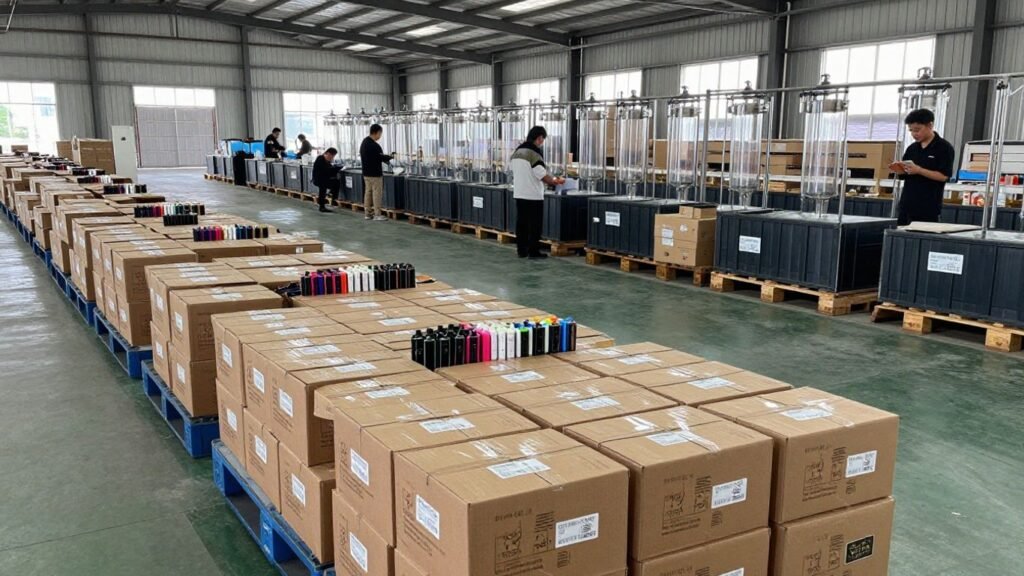
Key Takeaways
Separate battery-containing devices from battery-free accessories before asking for freight quotes. Confirm the product details, destination rules, carrier acceptance, and all-in costs before cargo is handed over.
- Record whether each item has a battery, includes one in its package, or has none.
- Keep e-liquids and other potentially restricted goods separate from ordinary hardware in your planning.
- Provide accurate battery specifications and supporting documents when applicable.
- Compare shipping methods using total cost, likely handling time, and route availability.
- Match customs paperwork to the actual goods and respond promptly to requests for information.
Plan vape accessories shipping from China by product type
Vape accessories shipping from China starts with a useful distinction: what is in the shipment, not just what the supplier calls it. A carton of glass tanks has different handling considerations from a device with a lithium battery, and a mixed order may need to be described as several product types. Before booking, share a clear item list with your supplier and ask the carrier or forwarder to review the exact goods. A little sorting at the outset can prevent avoidable quote changes later.
Identify products with built-in, packed-with, or no batteries
Review each item and its packaging, then mark it as containing a battery, packed with a battery, or battery-free. Some hardware can look like an accessory but include a rechargeable component, so check the model details rather than relying on a broad category name. For a mixed order, keep separate counts and descriptions for each configuration. This item-by-item record gives the forwarder a practical basis for checking service availability and estimating handling needs.
When gathering those details, a short list makes it easier to compare the supplier’s packing information with the final cartons:
- Device model and quantity, including whether a battery is installed.
- Spare batteries, if any, and whether they are packed separately.
- Battery-free components, such as tanks, coils, cases, or glass.
- E-liquids or other goods that may need a separate review.
Use the list to resolve mismatches with the supplier before the cargo is packed. For broader shipment planning, shipping vapes from China also involves checking battery configuration, documents, routes, and destination requirements.
Separate vape hardware from e-liquids and other restricted goods
Do not assume that hardware, liquids, and battery items can all move under the same booking or description. E-liquids and other regulated or restricted products may face different carrier rules, documentation requests, or destination checks. Ask the supplier for precise product information, including liquid contents where relevant, and have the forwarder confirm whether those goods can travel on the proposed route. Keeping product groups distinct in your records helps the carrier assess each one on its own terms.
Confirm destination, shipment size, and delivery deadline
A quote depends on where the goods are going, how many cartons or pallets are involved, their dimensions and weight, and when you need delivery. Give the forwarder the delivery ZIP code or full address, plus any receiving-hour or warehouse requirements. State whether the deadline is firm or simply preferred; customs review and carrier schedules can affect the actual timeline. Kunpeng Freight coordinates China-origin shipping options and delivery planning, so provide these details early if you are arranging a quote through its team.
Check U.S. federal, state, and carrier requirements before ordering
Verify whether the products may be imported to the intended destination and whether any applicable federal, state, or local rules affect the goods. Requirements can vary by product and destination, and a carrier’s willingness to transport cargo does not establish that the goods meet import rules. Ask the supplier and your customs or compliance adviser to confirm the product’s status before you commit to an order. Also request written confirmation of carrier acceptance for the specific route and shipment configuration.
Classify products before requesting a shipping quote
A useful quote begins with cargo facts that can be checked, not a broad label such as “vape parts.” Give the forwarder the function, materials, battery status, quantity, and dimensions for each line item. If the supplier is sending multiple product types, ask for each to appear separately on the packing information. Kunpeng Freight can coordinate supplier pickup and cargo inspection, but clear product details are still essential to an accurate review and booking.

List each item’s materials, function, and battery status
Build a line-by-line product list that names what each item is made of, what it does, and whether it includes or ships with a battery. Avoid umbrella terms that could describe unrelated goods; a tank, a glass replacement piece, and a powered device should not be collapsed into one vague entry. Add model numbers where available and make sure the supplier’s list agrees with the goods being prepared. This level of detail gives a forwarder and carrier something concrete to assess.
A simple working table can make gaps visible before the supplier seals the cartons. Treat it as a planning aid, then confirm final quantities and specifications against the actual packed shipment.
| Item group | Details to record | Battery status to confirm | Packing information |
|---|---|---|---|
| Powered device | Model, function, quantity | Installed, included, or none | Device carton and protection |
| Spare battery | Chemistry, model, quantity | Shipped alone or with equipment | Individual protection and outer pack |
| Glass or tank part | Material, dimensions, quantity | No battery, unless combined with electronics | Cushioning and breakage protection |
| Coil or small component | Material, function, quantity | Confirm if any powered feature exists | Inner bags, trays, or dividers |
Review the table with the supplier rather than copying it forward automatically. If a product description, battery status, or packaging detail remains uncertain, flag it for the carrier before requesting a final booking.
Gather battery chemistry, watt-hours, and test documentation when applicable
For battery-containing items, ask the manufacturer for the battery chemistry, model, quantity, and watt-hour rating where applicable. Request the relevant test summary or other documentation the carrier asks for; requirements depend on the battery and shipping configuration. A safety data sheet may be requested for some goods, but it does not by itself guarantee carrier acceptance or replace other required documents. Check what the selected service needs before cargo is handed over.
Ask the supplier to identify applicable dangerous-goods classifications
Ask the supplier to provide the classification it believes applies and the documents supporting that assessment. Treat this as information for review, not as a substitute for the carrier’s own acceptance decision. Confirm that the item description, battery configuration, packaging, and transport documents all agree. If details conflict, pause the booking and resolve them with the supplier and freight provider.
Verify that the freight forwarder accepts the specific product category
Ask the forwarder to confirm acceptance for the exact item, route, transport mode, and packing configuration. A general statement that a company handles electronics is not enough to establish that it will accept a particular vape product or battery arrangement. Share the product list and available documents before pickup so the carrier can review them in time. A fuller shipping preparation guide can help organize the product, packaging, and document checks before dispatch.
Ship battery-containing products with the right controls
Battery cargo needs a more specific review than ordinary accessory freight. The governing details may include battery chemistry, watt-hours, whether batteries are installed or separate, packaging, documents, and the route offered by the carrier. Do not assume a service that accepted one device will accept another configuration. Confirm the requirements for the actual shipment before the supplier releases it.
Distinguish batteries shipped alone from batteries installed in devices
Separate batteries shipped on their own from batteries installed in or packed with equipment in your records and booking request. These configurations can be subject to different transport conditions and carrier acceptance processes. Give the forwarder an accurate count and describe how each battery is presented with the goods. Keep spare batteries distinct from devices with installed batteries rather than combining them under a single generic description.
Review applicable UN 3480 or UN 3481 requirements with the carrier
UN 3480 and UN 3481 designations relate to lithium-ion batteries shipped alone and batteries shipped with or contained in equipment, respectively. Ask the carrier or a qualified dangerous-goods specialist which classification and requirements apply to your specific shipment. Do not select a designation based only on a product name or a supplier’s informal note. The carrier should confirm the documents, packing, and labels it expects before the booking proceeds.
Compare air, ocean, and specialized battery service availability
Battery restrictions can affect which routes and services are available, and the options may vary by carrier. Ask for a comparison that accounts for the shipment’s configuration, volume, urgency, and destination rather than assuming every mode can carry the cargo. For air transport, air freight planning includes checks on classification, documents, packaging, carrier acceptance, and destination import requirements. Confirm the specific service and schedule in writing before coordinating pickup.
Confirm packaging, labels, and documents before cargo handoff
Before cargo handoff, compare the supplier’s final packing with the carrier’s instructions. Confirm that required protection, marks, labels, and paperwork are complete and consistent with the battery configuration. Keep copies of the final product list and shipment documents available to the person arranging pickup. Kunpeng Freight’s coordination process includes export handling and documentation support; provide the supplier’s confirmed cargo details early so the shipment can be reviewed before dispatch.
Move battery-free accessories through standard freight channels
Battery-free components are often simpler to assess, but “no battery” does not mean “no preparation.” Fragile glass, small parts, and mixed cartons still need suitable packing and accurate descriptions, while chargers or powered components may require further checks. Ask the forwarder to review the full item list instead of treating every accessory as unrestricted general cargo. Then compare standard freight options using the shipment’s size and delivery needs.
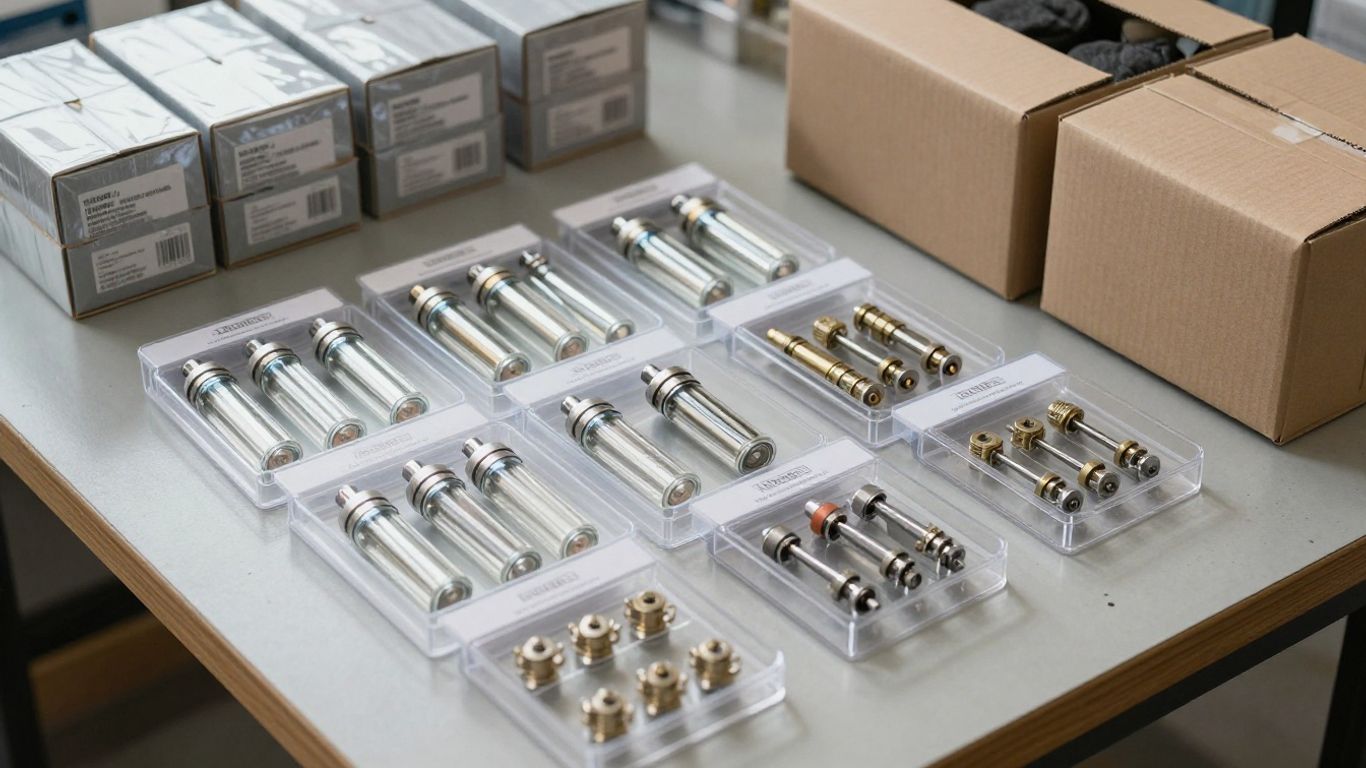
Package tanks, coils, glass, and other components to prevent damage
Ask the supplier how delicate parts are protected inside the carton, especially glass tanks and small components that can shift in transit. Use dividers or cushioning where appropriate, keep small items grouped, and ensure outer cartons can withstand normal handling. Record the packing method and final carton dimensions so the freight quote reflects the shipment as prepared. For higher-value or fragile goods, ask whether cargo inspection or additional protection is available before pickup.
Check whether chargers or electronic parts trigger additional restrictions
A charger or electronic component may contain circuitry, a battery, or another feature that changes how a carrier reviews it. Confirm the model and power source with the supplier rather than assuming that an accessory is battery-free based on its size or name. If a product has a plug, rechargeable function, or built-in cell, send its specifications to the forwarder for a separate review. Keep the final description aligned with the actual product and its packaging.
Compare consolidated air freight with ocean freight for larger orders
For a modest shipment, consolidated air freight may be worth comparing when speed matters; for larger orders, ocean freight can be considered alongside the longer transport and handling process. The right fit depends on volume, deadline, route, and total landed cost, not mode alone. When sourcing from a wholesaler, a China-based wholesale supplier can be one source of product information, but supplier availability does not confirm that a carrier will accept the goods. Compare the packed dimensions and receiving deadline before deciding.
Keep product descriptions specific and consistent across shipping documents
Use descriptions that identify the actual goods, such as glass tank components or replacement coils, rather than relying on a broad phrase like “accessories.” Keep those descriptions consistent on the commercial invoice, packing list, and booking information. If a product name differs between supplier documents and the carton labels, resolve the difference before export. Consistency makes it easier for the carrier and customs officials to understand what is being shipped.
Compare shipping methods, costs, and delivery trade-offs
The advertised freight rate is only one part of a shipping decision. Transit time, cargo acceptance, handling, customs review, delivery arrangements, and possible surcharges all affect the final result. Ask for the assumptions behind each quote, including the shipment’s chargeable weight or volume and the services included. Then compare options against the actual business need: a target delivery date, a replenishment plan, or a larger stock order.
Evaluate transit time alongside customs and handling delays
Ask for an estimated transport range and clarify which steps it covers, such as origin handling, the main journey, customs processing, and final delivery. A faster line-haul does not remove the possibility of inspections, document requests, or schedule changes. Leave time for supplier preparation and export handling as well as transit. Treat estimates as planning inputs, not guaranteed arrival dates.
Compare quotes for surcharges, duties, insurance, and final-mile delivery
Ask each provider to separate freight charges from likely additional costs and explain which charges are estimates. Compare duties and taxes, insurance, origin handling, destination handling, and final-mile delivery where they apply. Check whether the quote includes pickup from the supplier and delivery to your intended address or warehouse. A like-for-like comparison is more useful than choosing by the headline rate.
Choose between express courier, air freight, and ocean freight
Express courier may suit smaller, time-sensitive shipments if the product and route are accepted. Air freight can be a middle option for suitable cargo, while ocean freight may make sense for larger orders when the schedule permits. Compare actual service availability and total charges for your shipment, not just a general promise about a mode. This freight cost comparison covers factors such as shipment size, batteries, surcharges, and delivery when weighing options.
Ask how battery restrictions may affect routing and available carriers
For mixed or battery-containing cargo, ask whether restrictions limit the carriers, routes, or services available. A route that works for battery-free components may not be available for the same order once powered devices or spare cells are added. Request a quote based on the complete, accurate cargo profile, and ask what happens if the carrier declines an item. Separating eligible goods may be an option, but check the added handling and cost before splitting an order.
Prepare customs paperwork and manage delivery
Accurate documents help customs and carriers identify the shipment, though complete paperwork cannot guarantee that cargo will clear without review. Ask who prepares each document and who will respond if customs or the carrier requests clarification. Make sure the importer’s details and delivery instructions are settled before the goods leave the supplier. Keep a copy of the final documents and the contact details for the people managing each handoff.
Match the commercial invoice and packing list to the actual shipment
Check that the invoice and packing list reflect the goods actually packed, including quantities, descriptions, package counts, and weights. If the supplier changes the order or substitutes a model, update the documents before dispatch. Confirm that the battery status and product groupings are not contradicted by another shipping record. A final comparison against the packed cartons can catch simple but costly discrepancies.
Confirm importer details, product descriptions, and declared values
Verify the importer’s legal name, address, contact details, and any requested tax or customs identifiers with the party responsible for entry. Declared values should be accurate and supported by the transaction records; do not use an informal value simply to reduce an estimate. Check that product descriptions are specific enough to identify the goods, and ask your customs adviser to confirm any tariff classification. Keep the commercial terms and delivery responsibility clear between buyer and supplier.
Plan for U.S. customs review and any applicable agency requirements
Before ordering, confirm whether the specific products meet applicable U.S. import and agency requirements, and ask a qualified customs professional about classification and entry obligations. Customs may request more information or examine a shipment, which can affect timing and costs. Do not assume that clearance of a previous shipment establishes eligibility for a new product or order. Some unrelated pages are not freight authorities: HVAC questions, Penn Center House, Intrepid Mental Wellness, Solution Based Plumbing, and a winter building-envelope checklist do not determine vape import rules.
Track the shipment and resolve documentation requests promptly
After dispatch, monitor the tracking updates and keep the supplier, forwarder, and importer contacts reachable. If the carrier requests a document or clarification, send a complete response promptly and make sure any revised paperwork matches the shipment. Record delivery exceptions and confirm who is responsible for arranging storage, redelivery, or other next steps. Kunpeng Freight coordinates international delivery and import paperwork assistance, so agree in advance on the communication path for updates and document requests.
Conclusion
Reliable vape accessory shipping starts with an accurate picture of the goods: which items contain batteries, which are battery-free, and which need a separate compliance review. Use that information to confirm carrier acceptance, compare realistic freight options, and prepare consistent paperwork before pickup. With the details checked early, you can make a more informed choice about cost, timing, and delivery responsibilities.
Frequently Asked Questions
Can battery-free vape accessories ship by standard freight?
Often they can be considered for standard freight, but the carrier still needs an accurate product description and may review materials, packaging, and destination rules. Confirm acceptance for the exact goods and route before booking.
What information should I provide for vape products with batteries?
Provide the battery chemistry, model, quantity, watt-hour rating when applicable, and whether the battery is installed, packed with equipment, or shipped alone. Ask the carrier which supporting documents and packaging details it requires.
Do vape accessories and e-liquids use the same shipping process?
Not necessarily. E-liquids may have different carrier restrictions or documentation needs from hardware and battery-free components, so list them separately and have the forwarder assess each category.
What is the difference between UN 3480 and UN 3481?
They refer to different lithium-ion battery shipping configurations: batteries shipped alone versus batteries shipped with or contained in equipment. Confirm the correct classification and current transport requirements with the carrier or a qualified specialist.
Which shipping method should I choose for an order from China?
Compare express courier, air freight, and ocean freight based on the shipment’s size, urgency, accepted cargo, route, and total charges. There is no single method that fits every order.
What documents are commonly needed for an international shipment?
A commercial invoice and packing list are commonly used, and battery-containing or otherwise restricted goods may require additional records. Confirm the exact document set with the forwarder, carrier, and customs adviser for your shipment.
Can a freight quote guarantee a delivery date?
A quote can provide an estimated schedule, but carrier schedules, customs review, inspections, and document requests can affect arrival. Ask what the estimate includes and leave time for possible delays.